NHS-Recommended Pregnancy Support
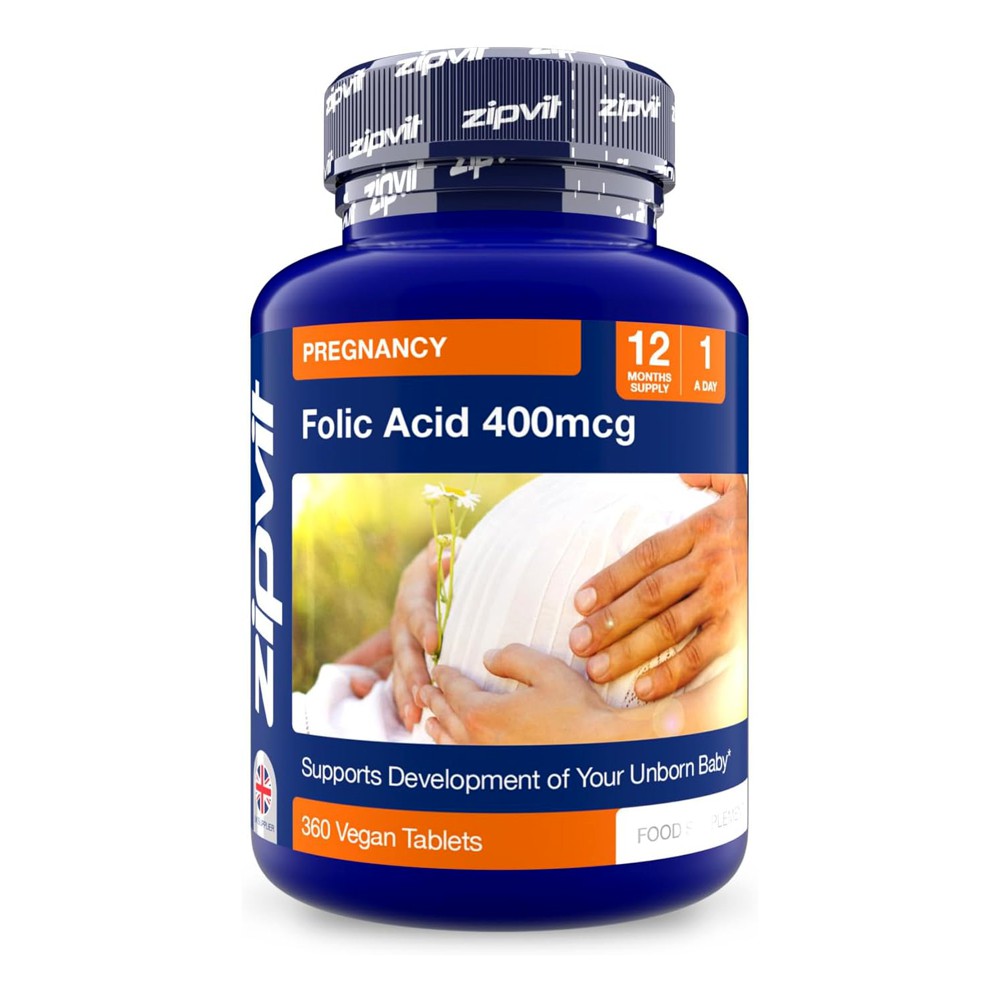
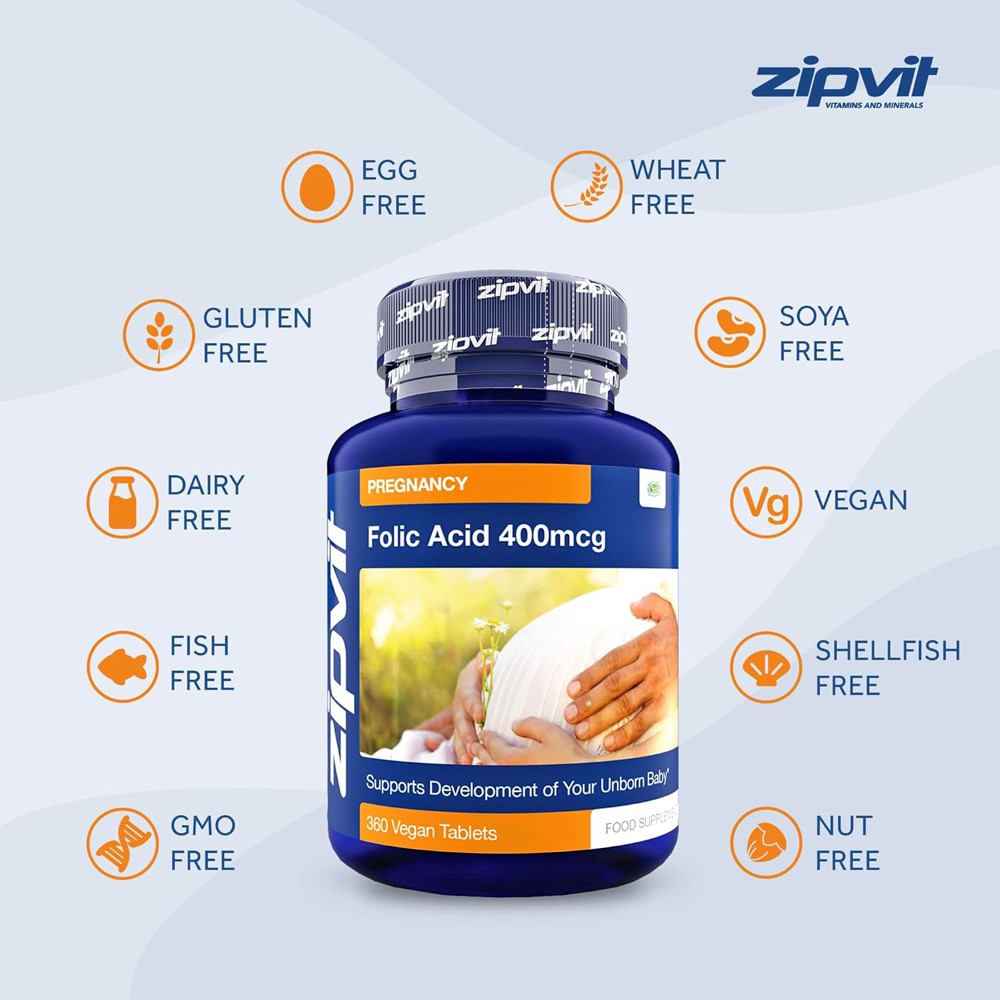
These folic acid tablets deliver 400mcg per serving, the dose recommended by the NHS for women planning pregnancy and during the first trimester. This standardised amount supports maternal tissue growth and foetal development during critical early stages.
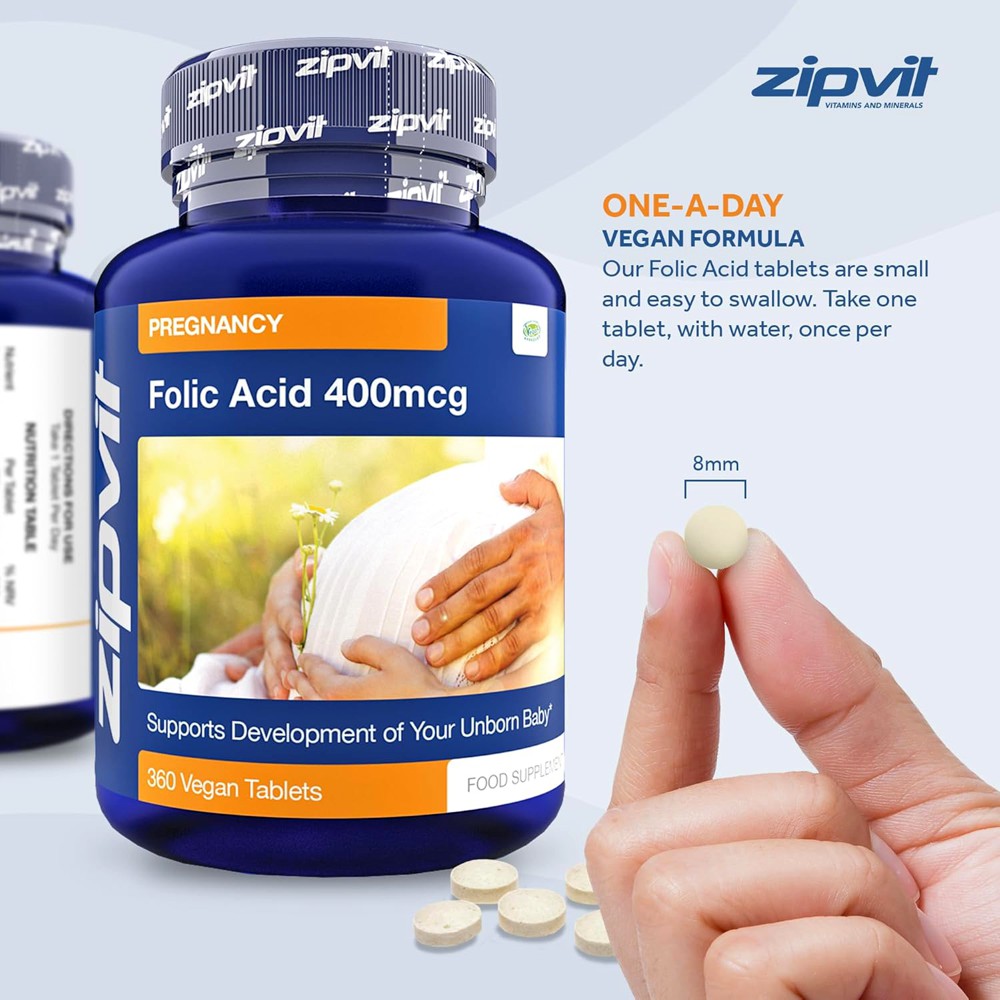
Each jar contains 360 tablets, providing a full 12-month supply at one tablet daily. The straightforward dosing schedule makes maintaining consistent folic acid intake simple.
Folic Acid and Pregnancy
Folic acid (vitamin B9) plays an essential role in foetal development, particularly during the first 12 weeks of pregnancy when the neural tube forms. The neural tube develops into the baby’s brain and spinal cord.
Adequate folic acid intake before conception and during early pregnancy reduces the risk of neural tube defects. The NHS advises women to start taking 400mcg daily when trying to conceive, ideally beginning three months before conception.
Critical Timing Neural tube development occurs during weeks 3-4 of pregnancy, often before women realise they are pregnant. Starting supplementation before conception ensures adequate folate levels during this crucial period.
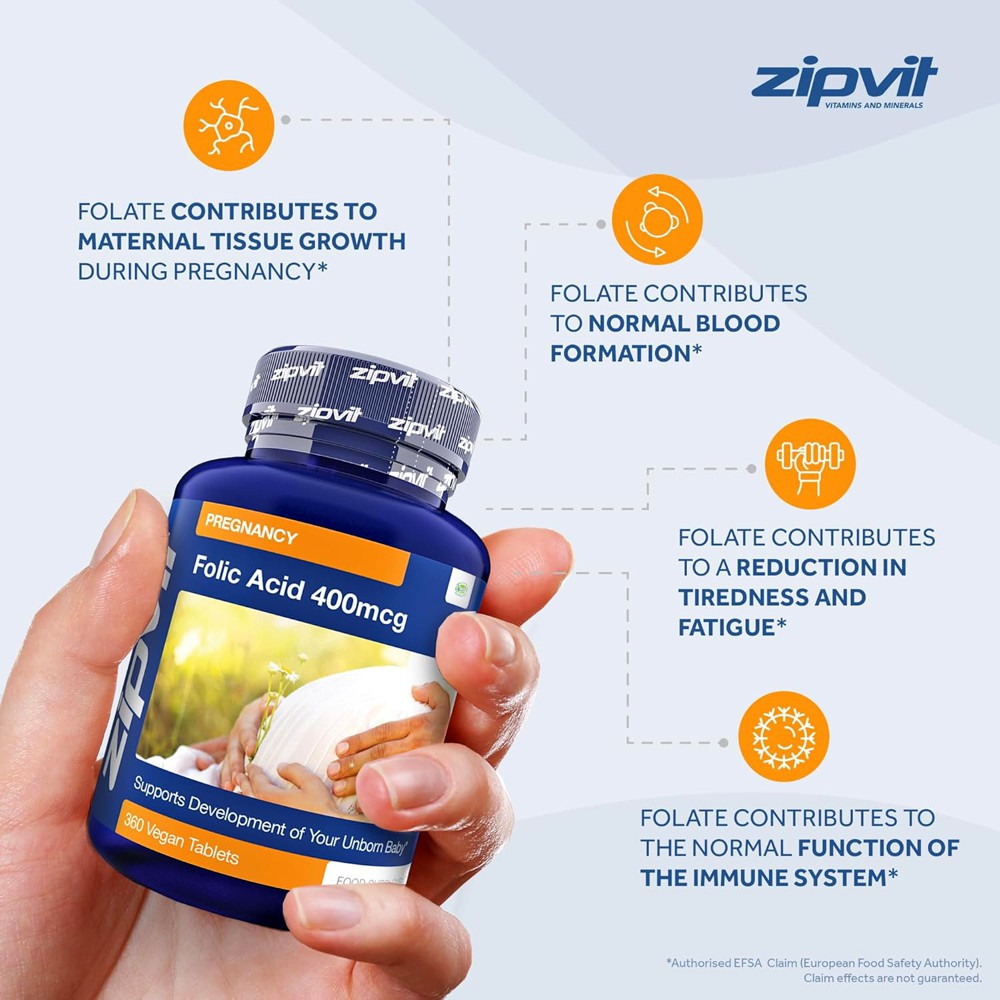
Maternal Tissue Growth During pregnancy, your body produces additional blood volume and develops the placenta. Folic acid supports the rapid cell division and tissue growth required for these changes.
Beyond Pregnancy: Universal Health Benefits
While pregnancy support represents folic acid’s primary use, this vitamin serves essential functions for everyone.
Immune System Function Folic acid contributes to normal immune system operation. The vitamin supports white blood cell production and immune response mechanisms.
Psychological Function Vitamin B9 participates in neurotransmitter synthesis, supporting normal psychological function and mental wellbeing.
Fatigue Reduction Folic acid contributes to normal red blood cell formation. Adequate folate levels help reduce tiredness and fatigue by supporting oxygen transport throughout the body.
Cell Division Folate plays a role in the process of cell division, supporting tissue maintenance and repair throughout the body.
Folic Acid vs Folate
Folate is the natural form of vitamin B9 found in foods including leafy greens, legumes, citrus fruits, and fortified cereals. Folic acid is the synthetic form used in supplements and food fortification.
Your body converts folic acid into active folate forms through enzymatic processes in the digestive system and liver. While some individuals have genetic variations affecting this conversion, the 400mcg dose aligns with NHS recommendations for general pregnancy support.
For those specifically requiring methylated folate forms, alternative supplements containing L-methylfolate are available. This standard folic acid formula suits most women planning pregnancy or in early pregnancy.
Dosage and Usage Guidelines
For Pregnancy Planning Start taking one 400mcg tablet daily when you begin trying to conceive. Ideally, begin supplementation three months before planned conception to build adequate folate stores.
During Pregnancy Continue taking one tablet daily through the first 12 weeks of pregnancy (first trimester). This covers the critical neural tube development period.
After 12 Weeks Many healthcare providers recommend continuing folic acid throughout pregnancy, though requirements may vary. Consult your midwife or GP about supplementation needs beyond the first trimester.
General Health Support Men and non-pregnant women take one tablet daily with water to support immune function, psychological health, and fatigue reduction.
Who Should Take Folic Acid
Women Planning Pregnancy All women trying to conceive benefit from 400mcg daily folic acid supplementation, starting before conception.
Women in Early Pregnancy Continue supplementation through at least the first 12 weeks of pregnancy to support foetal neural tube development.
Higher-Risk Groups Some women require higher doses (5mg) if they have diabetes, BMI over 30, family history of neural tube defects, or take certain medications. Consult your GP if these apply to you. Do not exceed 400mcg without medical advice.
General Population Men and non-pregnant women seeking immune support, psychological function maintenance, or fatigue reduction.
Clean Formula Composition
These tablets use a straightforward formulation with minimal ingredients. Each tablet contains folic acid with dextrose as a base, microcrystalline cellulose for structure, and magnesium stearate as a flow agent during manufacturing.
The formula contains no animal-derived ingredients, making tablets suitable for vegan diets. Free from gluten, dairy, and GMO ingredients.
No artificial colours, flavours, or sweeteners appear in the formulation. The simple composition reduces potential allergen exposure and unnecessary additive intake.
Quality and Manufacturing Standards
Zipvit has manufactured supplements in the UK for over 25 years, establishing consistent quality standards and transparent labelling practices.
The company focuses on providing research-backed supplements at accessible prices. Each batch undergoes quality control testing to verify ingredient identity and potency.
Products meet UK food supplement regulations and Good Manufacturing Practice (GMP) standards. The company maintains transparent ingredient disclosure and clear dosage information.
Vegan and Allergen-Free
These tablets suit various dietary requirements. The vegan formula contains no animal products, gelatin, or animal-derived processing aids.
Free from common allergens: no gluten, wheat, dairy, lactose, soya, or nuts. The clean ingredient list accommodates restricted diets and reduces reaction risk for sensitive individuals.
Storage and Safety
Store tablets in a cool, dry place away from direct sunlight. Keep the jar tightly closed to protect tablets from moisture.
Keep out of reach of children. While folic acid is water-soluble and your body excretes excess amounts, supplements should remain inaccessible to young children.
Do not exceed one tablet (400mcg) daily unless directed by your GP. Some medical conditions require higher doses, but these should only be taken under medical supervision.
When to Consult Healthcare Providers
Consult your GP or midwife before taking folic acid if you:
- Take medication for epilepsy (some anticonvulsants interact with folic acid)
- Have a family history of neural tube defects
- Have diabetes or BMI over 30
- Previously had a pregnancy affected by neural tube defects
- Take methotrexate or other medications affecting folate metabolism
Your healthcare provider may recommend a higher 5mg dose in these circumstances. Do not increase your dose without medical advice.
Expected Outcomes
Folic acid works preventatively rather than producing noticeable immediate effects. Taking 400mcg daily before and during early pregnancy significantly reduces neural tube defect risk.
For general health benefits (immune support, fatigue reduction), consistent daily intake over weeks to months allows your body to maintain adequate folate levels for these functions.
Blood folate levels typically increase within 2-4 weeks of starting supplementation. Maintaining consistent intake ensures stable folate status.
Key benefits list
- NHS-Recommended Dose 400mcg per tablet matches NHS guidance for pregnancy planning and early pregnancy. Standardised dose ensures appropriate intake.
- Neural Tube Defect Prevention Reduces risk of neural tube defects when taken before conception and during the first 12 weeks of pregnancy. Critical for foetal development.
- Maternal Tissue Growth Supports rapid cell division and tissue expansion during pregnancy. Aids placental development and increased blood volume production.
- Preconception Preparation Starting three months before conception builds adequate folate stores. Ensures sufficient levels during early critical development periods.
- Immune Function Support Contributes to normal immune system operation. Supports white blood cell production and immune response mechanisms.
- Psychological Function Participates in neurotransmitter synthesis. Supports normal psychological function and mental wellbeing for both women and men.
- Fatigue Reduction Supports red blood cell formation and oxygen transport. Helps reduce tiredness and fatigue through adequate folate levels.
- Cell Division Support Plays a role in normal cell division processes. Supports tissue maintenance and repair throughout the body.
- 12-Month Supply 360 tablets provide a full year of daily supplementation. Reduces reorder frequency and ensures consistent availability.
- Vegan-Friendly Formula No animal-derived ingredients. Suitable for vegetarian and vegan diets without compromising nutritional support.
- Allergen-Free Free from gluten, dairy, soya, and nuts. Accommodates various dietary restrictions and reduces reaction risk.
- Simple Dosing One tablet daily with water. Straightforward regimen supports consistent compliance.
- 25-Year Track Record Zipvit has manufactured supplements since 1999. Established quality standards and transparent practices.
- Accessible Pricing Quality supplementation without excessive cost. Makes pregnancy preparation affordable and accessible.
Frequently Asked Questions
Start taking 400mcg daily as soon as you begin trying to conceive. Ideally, begin three months before planned conception. The neural tube develops during weeks 3-4 of pregnancy, often before you know you’re pregnant. Starting early ensures adequate folate levels during this critical period. Continue through at least the first 12 weeks of pregnancy.
Yes, folic acid supports several functions beyond pregnancy. The vitamin contributes to normal immune system function, psychological health, and helps reduce tiredness and fatigue. Both men and non-pregnant women benefit from adequate folate intake for these general health functions. One 400mcg tablet daily provides supplemental support.
400mcg suits most women planning pregnancy or in early pregnancy. However, some women require 5mg (5000mcg) daily if they have diabetes, BMI over 30, family history of neural tube defects, previously had an affected pregnancy, or take certain medications like anticonvulsants. Consult your GP if any of these apply. Do not increase your dose without medical advice.
Folate is the natural form of vitamin B9 found in foods like leafy greens and legumes. Folic acid is the synthetic form used in supplements and fortified foods. Your body converts folic acid into active folate forms through digestive and liver enzymes. The 400mcg dose of folic acid provides the NHS-recommended amount for pregnancy support.
Yes, folic acid works alongside other pregnancy supplements. Many women take folic acid with prenatal multivitamins, vitamin D, or omega-3 supplements. Check that your total folic acid intake from all supplements does not exceed 1000mcg daily (unless prescribed higher doses by your GP). Most prenatal multivitamins contain 400mcg folic acid, so taking both would be unnecessary duplication.