Holy basil (tulsi) is an adaptogenic herb from Ayurvedic tradition, studied for a role in stress response and, less commonly known, blood sugar regulation. Below you’ll find our picks, along with an important correction: this herb isn’t a treatment for asthma, bronchitis, or any other diagnosed respiratory condition, despite sometimes being marketed that way.
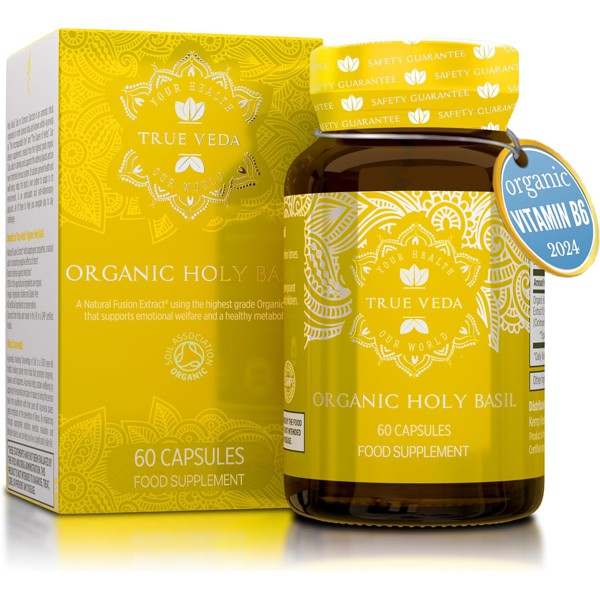
Herbal Supplements
Holy Basil (Tulsi): What Research Actually Shows
Holy basil (Ocimum sanctum, also called tulsi) is revered in Ayurvedic tradition as a rasayana, or rejuvenative herb, and is genuinely one of the more interesting adaptogens for stress specifically — as covered in more detail in our comparison of ashwagandha, rhodiola, and holy basil, a well-known 2017 systematic review of 24 human studies found favourable evidence for its traditional adaptogenic use, with some trials finding measurable cortisol changes at 300-600mg daily over 4-8 weeks.
It’s important to correct a claim sometimes made about holy basil: while it has traditional use in respiratory contexts, it is not an established treatment for asthma, bronchitis, or any other diagnosed respiratory condition, and shouldn’t be used as a substitute for prescribed treatment if you have one — persistent respiratory symptoms need proper medical assessment, not a herbal supplement. Similarly, while holy basil is studied for cortisol regulation and general stress-related wellbeing, it isn’t an established treatment for diagnosed hormonal conditions, and general immune-related antioxidant content is a more accurate description than “boosting” immunity or preventing infections outright.
One consideration worth knowing that’s often left out: holy basil is also studied for effects on glucose metabolism alongside its stress-related research, which means it may influence blood glucose levels. If you’re diabetic or take blood sugar medication, it’s worth mentioning holy basil to your GP before regular use, since combining the two could affect your blood sugar control.
Holy basil is generally well tolerated, with mild digestive upset the most commonly reported effect. Pregnant or breastfeeding women should check with their GP before use, given limited safety data for these groups. It’s available as capsules, tea, or tinctures — tea is a gentler, traditional approach well suited to an evening wind-down routine, while capsules suit consistent daily dosing regardless of time of day; morning or evening timing comes down to personal preference rather than a research-backed “correct” time.