Eye health rarely gets its own conversation in the supplement world, overshadowed by immunity, energy, and sleep. That’s a genuine gap, because some of the research behind eye-specific ingredients is more solid than you’d expect — and one common claim in this category is worth correcting directly, because it risks encouraging behaviour that isn’t actually safe.
Eye Complex 7 — Research-Backed Ratios, Traditional Additions
Lutein, zeaxanthin, and meso-zeaxanthin are the three carotenoids the macula — the central part of the retina responsible for detailed vision — specifically concentrates as natural protection against blue and UV light. The body can’t produce them itself, so diet or supplementation is the only source.
A Genuinely Well-Documented Ratio, Without an Authorised Claim
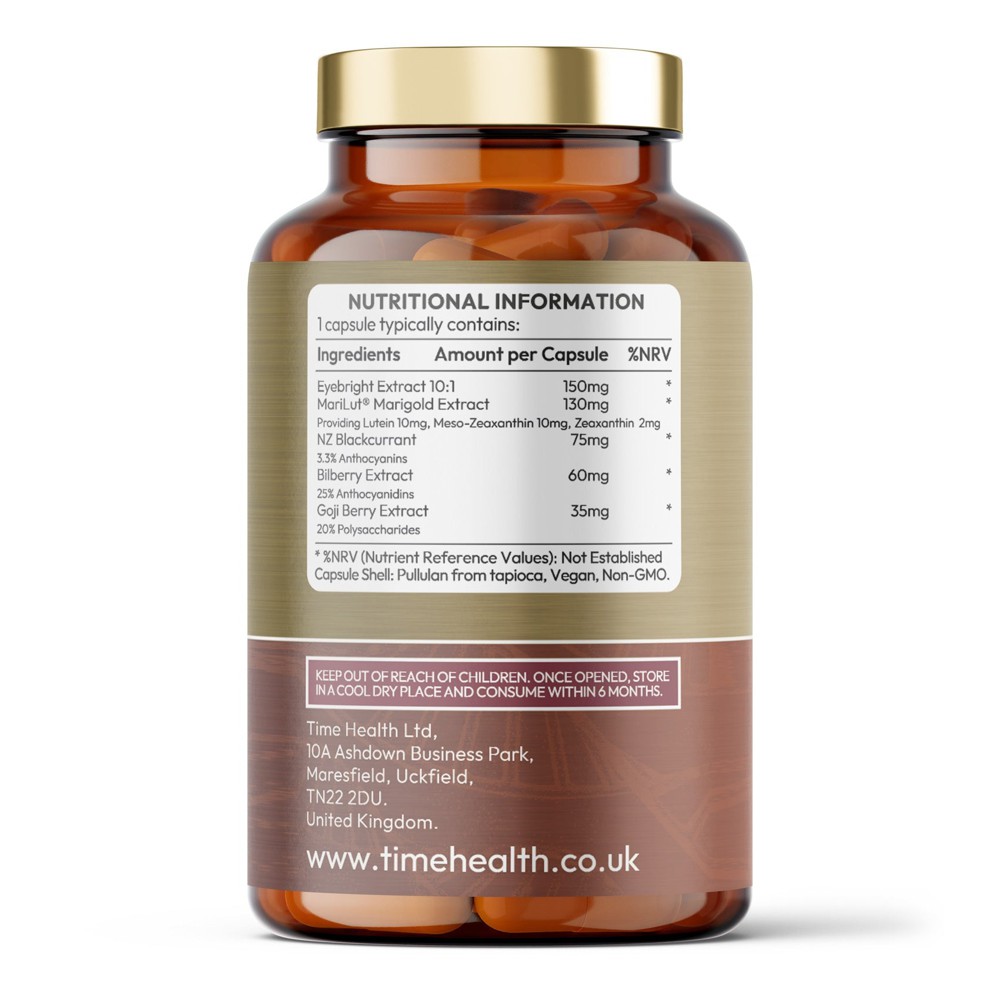
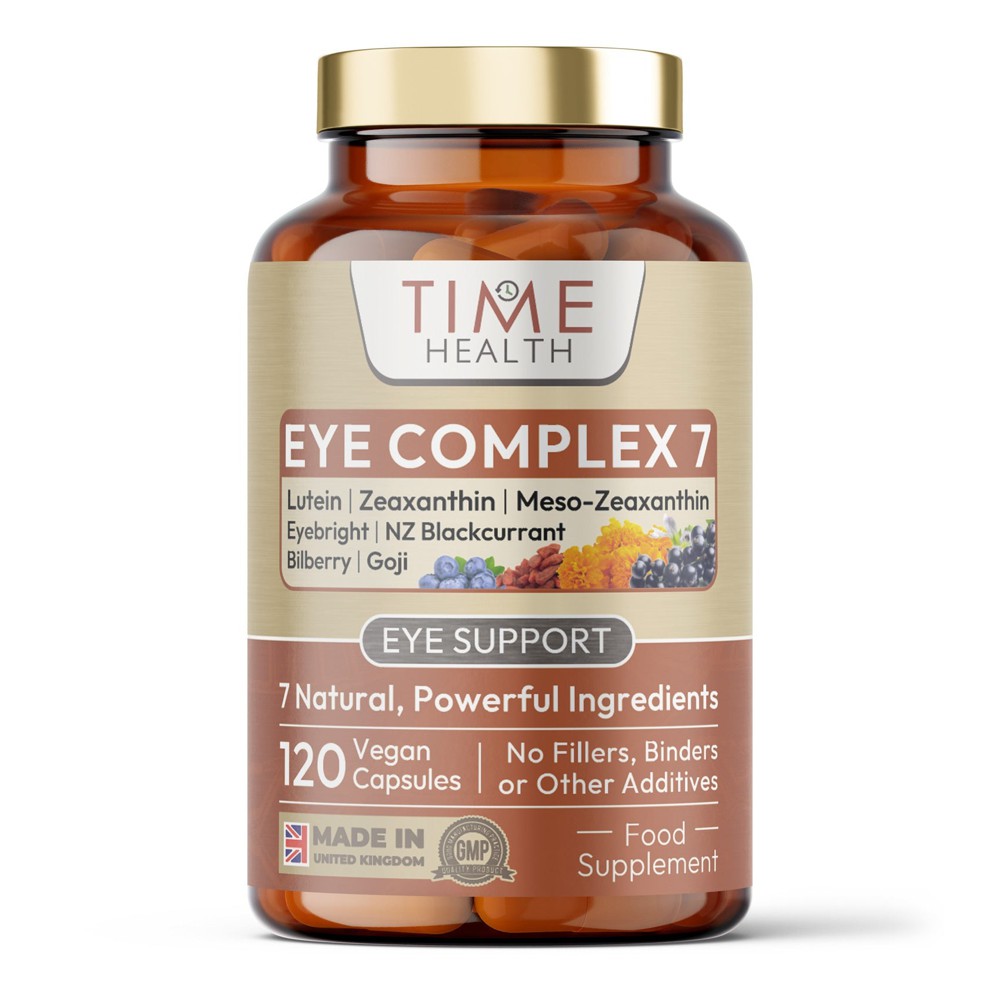
This formula’s specific combination — 10mg lutein, 2mg zeaxanthin, 10mg meso-zeaxanthin — is based on published research from the Macular Pigment Research Group at Waterford Institute of Technology, led by Professor John Nolan, whose peer-reviewed work has specifically explored this ratio for macular pigment response. This is a genuinely well-documented research basis for a specific formulation, more so than most single ingredients covered on this site.
It’s still worth being precise, though: EFSA has assessed and rejected health claims relating lutein and zeaxanthin to vision on multiple occasions, most recently in 2014, finding the evidence submitted insufficient to support the specific claims proposed. Genuine, peer-reviewed research interest in macular pigment and an EU-authorised health claim are two different things, and this ingredient combination currently has the former without the latter.
The Traditional Additions
Beyond the three core carotenoids, this formula includes four traditional botanicals, each with a genuinely different evidence picture. Eyebright has been used in eye health traditions since the 11th century, though modern clinical evidence for its specific effects remains limited. New Zealand blackcurrant and bilberry are both studied for antioxidant properties relevant to ocular tissue, with bilberry historically associated with visual function research, though results across studies are mixed. Goji berry has a long traditional association with eye wellness, alongside more limited modern clinical research.
Worth knowing: bilberry has mild blood-thinning properties, worth mentioning to your GP if you take anticoagulant medication or have surgery scheduled.
Immunity & Antioxidants
Eye Complex 7 Complete Vision Support with 7 Active Ingredients
Liposomal Astaxanthin — Where the Evidence Is Genuinely Stronger, and Where It Isn’t
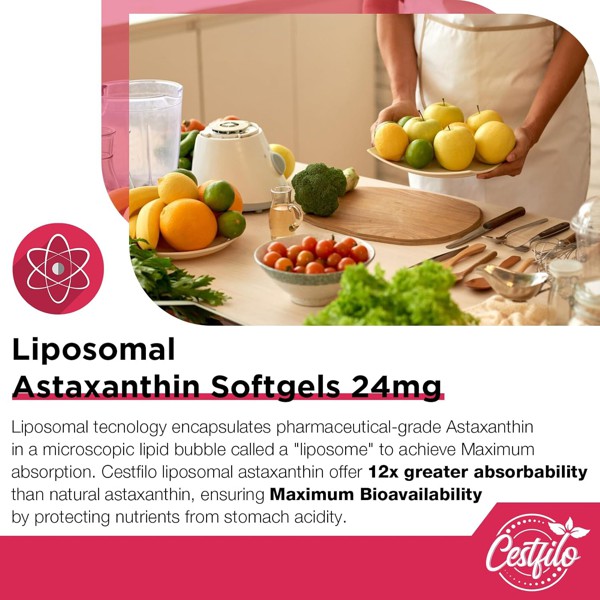
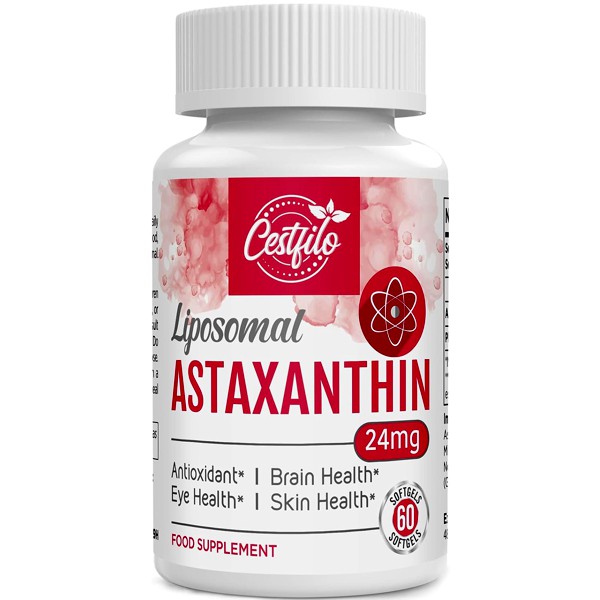
This product delivers 24mg of astaxanthin per softgel using liposomal delivery — encapsulating astaxanthin in phospholipid spheres to address its naturally poor water solubility and limited absorption, covered in more detail in our complete astaxanthin guide.
A Genuine Mechanism, With an Unverified Number Attached
Liposomal encapsulation is a genuine, mechanistically sound approach to improving astaxanthin’s bioavailability, with real research supporting the general concept. The specific “12 times greater absorption” figure attached to this product, though, couldn’t be independently verified — worth treating as an unconfirmed marketing figure rather than an established multiplier, similar to other precise-sounding absorption claims across the supplement industry that don’t hold up to scrutiny.
Where Astaxanthin’s Evidence Is Actually Strongest
Astaxanthin’s research base is genuinely stronger for some uses than others, and eye health and skin protection are among its better-supported areas — several human studies have found improvements in skin hydration and elasticity, and some research specifically on eye comfort during screen use. By contrast, we couldn’t find supporting research for the “hormonal balance” claim sometimes attached to astaxanthin products, worth reading with real scepticism rather than assuming it carries the same evidence as the better-supported claims.
A Claim Worth Correcting Directly
Astaxanthin’s antioxidant properties have been studied in relation to skin protection from UV-related oxidative stress — but this is a complement to sunscreen, never a substitute for it. Framing astaxanthin as supporting “tan enhancement” risks encouraging more sun exposure than is genuinely safe, which isn’t a reasonable trade-off regardless of any antioxidant benefit. Proper sun protection — sunscreen, appropriate clothing, shade — remains essential regardless of whether you take astaxanthin.
Immunity & Antioxidants
Choosing Between (or Combining) the Two
These two products work through genuinely different mechanisms — macular carotenoids concentrate specifically in the retina, while astaxanthin works more broadly as an antioxidant with some eye-comfort research attached. There’s no known interaction between them, and combining both isn’t unreasonable if you have a specific reason for each. The one practical thing worth checking is bilberry’s blood-thinning effect if you’re also taking astaxanthin or any other supplement with a similar property, or if you’re on anticoagulant medication.
Common Myths, Addressed
“This astaxanthin product absorbs 12 times better than standard forms.” The general concept behind liposomal delivery improving absorption is genuine, but this specific multiplier isn’t something we could independently verify — treat precise-sounding absorption figures like this with scepticism unless a manufacturer can point to independent testing.
“Astaxanthin lets you tan more safely.” This is the myth most worth correcting in this article. Astaxanthin’s antioxidant research relates to complementing sun protection, not replacing it — treating it as license for more sun exposure risks genuine harm that no antioxidant supplement offsets.
Final Thoughts
Eye health supplements deserve more attention than they typically get, and the research behind macular carotenoids specifically is more solid than most categories covered on this site — genuine, peer-reviewed, ratio-specific research, even without an authorised EU health claim to match it. Astaxanthin’s eye-comfort and skin research holds up reasonably well too, though a couple of attached claims — the absorption multiplier and the sun-exposure framing — don’t hold up alongside it. Read the well-supported parts of both products with confidence, and the unverified extras with real scepticism.
Disclaimer: This article is for informational purposes only and does not constitute medical advice. Always consult your GP before starting eye health supplements, particularly if you take anticoagulant medication, are pregnant, or are breastfeeding.