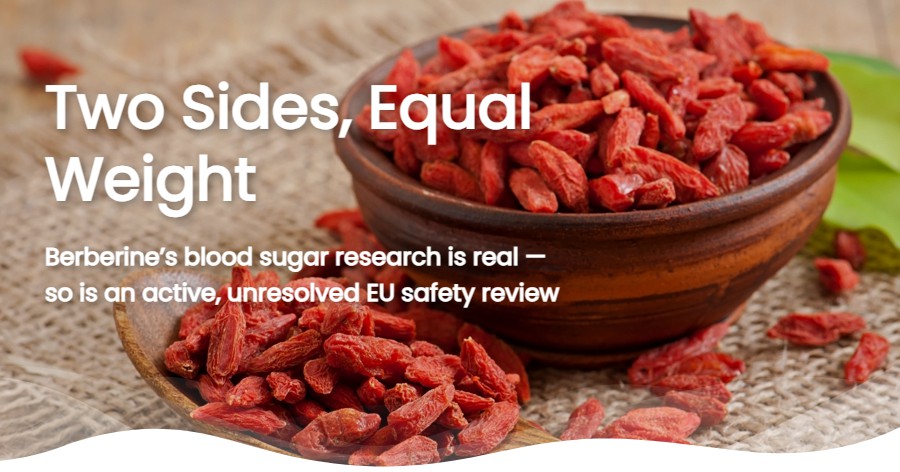
Berberine has picked up the nickname “nature’s Ozempic” online, largely on the back of research into its effects on blood sugar. That research is genuinely worth discussing. So is something most of the social media coverage leaves out entirely: European food safety regulators currently have an active, unresolved safety review into berberine, and as of writing, they have not been able to establish a safe daily intake level. We think both things deserve equal space here.
What Research Actually Shows
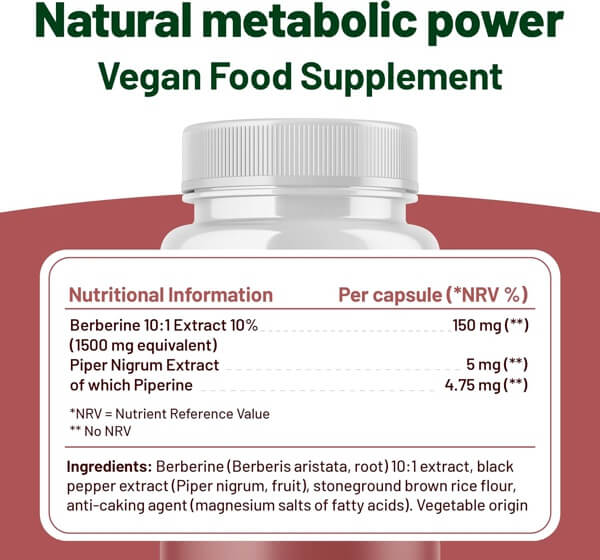
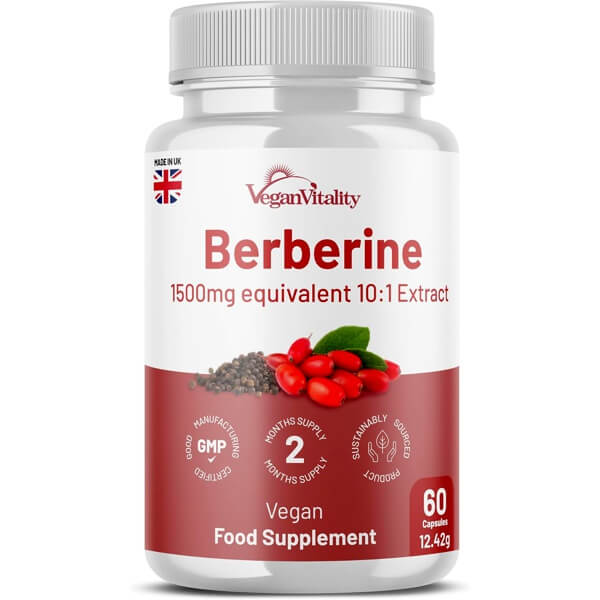
Berberine is a compound found in several plants, including Berberis aristata (the source used in the product covered here), and it’s genuinely one of the more researched natural compounds for blood glucose markers, with a number of small clinical trials reporting measurable effects.
Where the “Nature’s Ozempic” Comparison Overreaches
Some of berberine’s research interest comes from a shared mechanism with metformin — both activate an enzyme called AMPK, involved in cellular energy regulation, which is covered in more detail in our AMPK activators guide. But a shared mechanism isn’t the same as an equivalent effect: berberine’s trial base is smaller, generally shorter-term, and more variable in quality than the evidence behind prescribed medications like metformin or GLP-1 drugs such as Ozempic. Treating berberine as a natural swap for a specific prescribed medication overstates how comparable the two actually are. Evidence for berberine’s effects on cholesterol, weight, and digestion is more preliminary than the blood sugar research specifically, and shouldn’t be assumed to carry the same weight.
A Live Regulatory Question: What EFSA’s Draft Opinion Says
This is the section we’d genuinely encourage you to read in full, particularly if you’re currently considering a berberine supplement.
In January 2026, the European Food Safety Authority’s expert panel endorsed a draft scientific opinion on the safety of berberine-containing plant preparations, and — as of writing this article — a final opinion has not yet been published. The draft’s public consultation period closed in mid-2026, and the conclusions below reflect that draft specifically, not a finalised regulatory position. You can read the UK Committee on Toxicity’s discussion of this draft opinion in full.
The draft opinion’s key findings, stated precisely:
- There is evidence of berberine genotoxicity (the potential to damage genetic material) in laboratory (in vitro) studies, though confirmation in living organisms specifically at the sites where berberine is absorbed — the gut and liver — is still lacking.
- Berberine may inhibit CYP3A4 and possibly other liver enzymes involved in processing many common medications, indicating a genuine risk of drug interactions.
- The most serious individual findings in the wider review relate to specific plants other than the Berberis species used in most UK supplements — for example, evidence of carcinogenic activity in rodents was found specifically for Hydrastis canadensis (goldenseal), and a documented risk of unpredictable, dose-independent liver injury was linked specifically to Chelidonium majus (greater celandine). These findings don’t automatically transfer to Berberis-derived berberine products, but reflect the genuine uncertainty across this wider group of plants.
- Overall, the draft opinion concluded that available data do not currently allow a safe daily intake to be established for any of the plant preparations it assessed, including Berberis species.
We want to be precise about what this does and doesn’t mean: a draft opinion unable to establish a safe intake is a significant, genuine signal of uncertainty — it is not the same as a finding that berberine is definitively unsafe, and it does not currently restrict the sale of berberine supplements in the UK or EU. Some industry commentators have also argued that certain findings relate to compounds other than berberine present in whole-plant preparations, rather than berberine itself. We’ll aim to update this article once a final opinion is published.
Herbal Supplements
What Other Regulators Have Already Said
The EFSA review didn’t start from nothing. France’s food safety agency, ANSES, reached its own conclusions on berberine back in 2019, using data from a rodent liver study to set a cautious daily exposure threshold. Based on that assessment, ANSES specifically advised against berberine supplement use in pregnant or breastfeeding women, people with diabetes, and people with existing liver or heart conditions, and warned that anyone taking other medication should be cautious given the potential for interactions — a more specific and more cautious position than a general “speak to your GP” note.
It’s also worth knowing that berberine carries a Group 2B classification from the International Agency for Research on Cancer (IARC) — meaning it’s classified as “possibly carcinogenic to humans,” based on carcinogenicity studies in mice and rats and evidence that berberine and its metabolite can inhibit enzymes involved in DNA replication. Context matters here: Group 2B is IARC’s middle classification tier, used for a wide range of substances where evidence is limited or the size of the risk isn’t well quantified — it’s a genuine signal worth knowing about, not a definitive statement that berberine causes cancer in humans at typical supplement doses.
The Blood Sugar Medication Interaction
Separate from the points above, there’s a specific, practical interaction worth knowing if you have diabetes: berberine can genuinely lower blood sugar, and combining it with insulin or other diabetes medication increases the risk of blood sugar dropping too low (hypoglycaemia). If you take insulin or any other diabetes medication, do not start berberine without first discussing it with your GP or diabetes specialist. If you have elevated blood sugar and haven’t been formally diagnosed or treated, that’s a matter for your GP to assess directly — berberine is not a self-directed alternative to that assessment.
Safety Considerations
Because berberine is processed by liver enzymes that also metabolise many other medications, mention it to your GP or pharmacist before starting if you take any regular prescription medication, rather than assuming it’s automatically compatible. Mild digestive discomfort — bloating, diarrhoea, or constipation — is the most commonly reported side effect, particularly when starting. Given the points raised throughout this article, berberine is not recommended during pregnancy or breastfeeding.
Common Myths, Addressed
“Berberine is basically a natural version of Ozempic.” The mechanisms overlap in a limited way, but the scale, consistency, and depth of evidence behind Ozempic and similar prescribed medications is considerably greater than berberine’s research base. They aren’t interchangeable.
“If it’s still legal to sell, it must have been proven safe.” Not necessarily, and berberine is a genuinely live example of why: an active, unresolved safety review can exist for a product that remains legally available, precisely because the review process takes time and hasn’t concluded yet.
Final Thoughts
Berberine’s blood sugar research is real, and it’s reasonable to find that genuinely interesting. It’s just as reasonable — and, we’d argue, necessary — to know that European regulators currently have an active, unresolved safety question about it, with a draft opinion unable to establish any safe intake level as of writing. Neither of these facts cancels the other out. If you’re considering berberine, particularly if you have diabetes, take regular medication, or are pregnant or breastfeeding, this is a conversation worth having with your GP before you start, not after.
Disclaimer: This article is for informational purposes only and does not constitute medical advice. Always consult your GP or diabetes specialist before starting berberine, particularly if you have diabetes or take diabetes medication, take other regular prescription medication, have a liver or heart condition, are pregnant, or are breastfeeding.