Chaga has genuine research behind its antioxidant content, though it’s worth knowing before buying: sustainability and an important kidney-related safety point matter more for this mushroom than “wild-harvested” marketing usually suggests. For the full picture — including why cultivated chaga is often the more responsible choice — see our complete guide to Chaga. Below you’ll find our picks, chosen for quality sourcing and third-party testing.
Choosing a Chaga Supplement
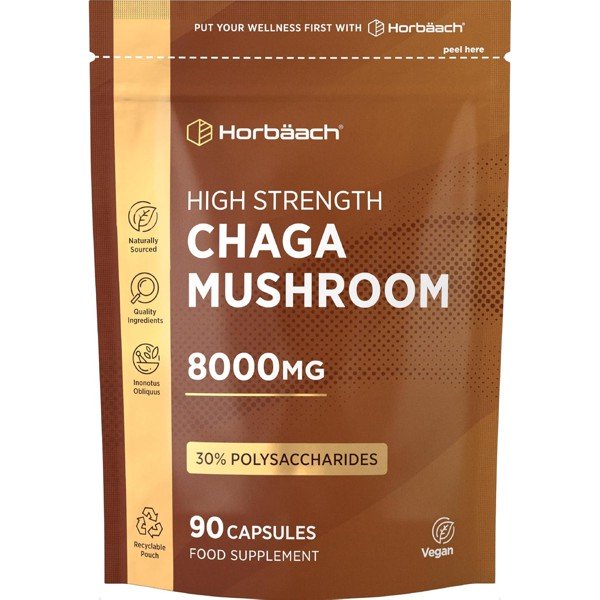
Look for Inonotus obliquus specifically, ideally with dual-extraction (water and alcohol) for a fuller range of active compounds than simple powders. On sourcing: wild chaga takes 15-20 years to mature, raising genuine overharvesting concerns — cultivated chaga or chaga clearly sourced from managed forests is generally the more sustainable, responsible choice, not a lesser one. Commonly referenced doses are 500-1,000mg daily for capsules. Chaga is relatively high in oxalates, and if you have a history of kidney stones or kidney disease, this is worth discussing with your GP before regular use — our full guide covers this and other safety considerations in more detail.