Chaga mushrooms grow as a dark, charcoal-like growth on birch trees across the Northern Hemisphere, and have a long history of traditional use in Northern European and Siberian herbalism. In the UK, they’ve become increasingly popular as people look into natural options for general wellbeing.
What Are Chaga Mushrooms?
Chaga (Inonotus obliquus) isn’t a typical mushroom with a cap and stem — it grows as a hardened, charcoal-like mass on birch trees, with a distinctive orange-brown core inside. It’s been used traditionally for centuries in Russia and other Northern European countries.
Modern research has explored several of chaga’s traditionally attributed properties, though — as with most medicinal mushrooms — much of this research is still at the laboratory and animal-study stage, with human clinical trials more limited. Memorial Sloan Kettering Cancer Center’s integrative medicine research summary, for instance, notes antioxidant and immune-modulating properties observed in preclinical research, while being clear that clinical trials are still needed to confirm these effects in people.
Antioxidant Properties
One of the more consistently studied aspects of chaga is its antioxidant content, largely attributed to melanin compounds concentrated in its dark outer layer. Laboratory research has found chaga extract shows notably high antioxidant activity compared with some other medicinal mushrooms — a genuinely interesting finding, though it’s worth being clear that antioxidant activity measured in a lab test is a different thing from a proven anti-ageing effect in people, which hasn’t been established through human clinical trials.
Immune-Related Research
Chaga contains beta-glucans, polysaccharides studied for a role in modulating immune activity. Much of the more established research here comes from an integrative oncology context — studying chaga alongside cancer treatment — rather than general immune support for otherwise healthy people looking to avoid winter colds, which is a less direct comparison than it might first appear, even though the underlying compounds are the same.
That said, beta-glucans from various mushroom sources are a genuine area of general immune research interest, and chaga is a reasonable source of them if you’re interested in exploring this alongside other, more established options like vitamin D and zinc.
Skin Health: What’s Realistic to Expect
Chaga’s antioxidant content has led to interest in its potential role in skin health, with some research exploring effects on inflammation and cellular protection relevant to skin ageing. This is a much earlier-stage area of research than the antioxidant work above, and claims here should be read as exploratory rather than established.
If UV protection is a concern, it’s worth being direct: no supplement, including chaga, is a substitute for sunscreen and sun-safe behaviour — any antioxidant-related skin benefit would be a complement to proper sun protection, never a replacement for it.
How Chaga Is Typically Prepared
Chaga Tea
The traditional approach: add 1-2 teaspoons of chaga chunks or powder to hot (not boiling — excessive heat may damage some beneficial compounds) water, and steep for 10-15 minutes before straining. Pre-packaged tea bags are widely available in the UK for convenience.
Tinctures
Alcohol-based tinctures extract both water- and fat-soluble compounds, and can be added to water, juice, or smoothies — typical dosing is 1-2 droppers full, 1-3 times daily, though this varies by product concentration.
Capsules
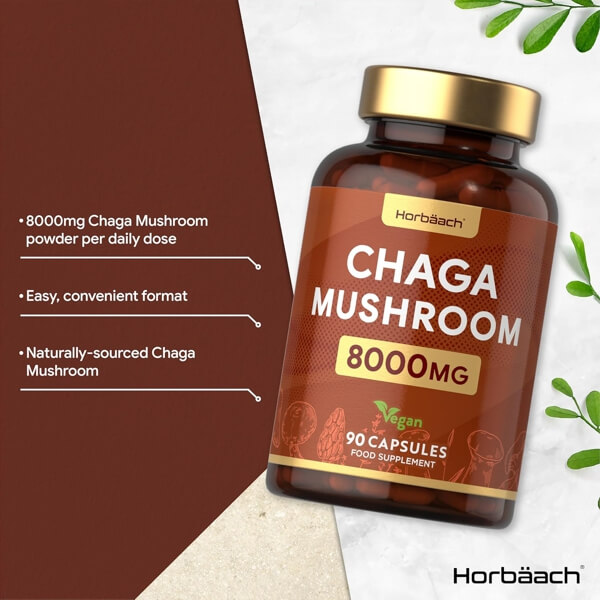
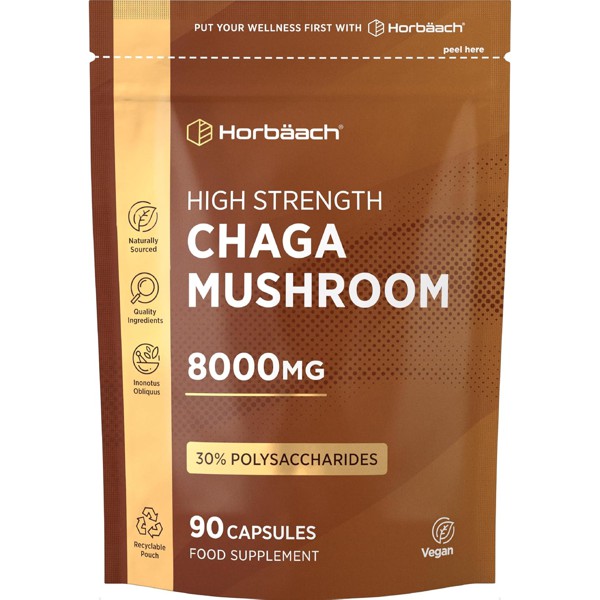
For those who prefer not to deal with the earthy flavour of chaga preparations, capsules are a straightforward alternative — most quality supplements suggest 500-1,000mg daily. Look for dual-extraction methods, which capture a fuller range of the mushroom’s compounds than water extraction alone.
Chaga Alongside Other Supplements
Chaga is sometimes combined with other supplements. Pairing it with vitamin D makes practical sense given how common vitamin D shortfalls are in the UK, particularly in winter, though this is more a matter of covering two different bases than a specific synergistic effect. Combining chaga with adaptogens like ashwagandha or rhodiola is popular for general stress resilience, though evidence for the combination specifically (rather than each ingredient individually) is limited. There’s also research interest in mushroom beta-glucans functioning as prebiotics, supporting gut bacteria — an interesting area, though again more preliminary than established.
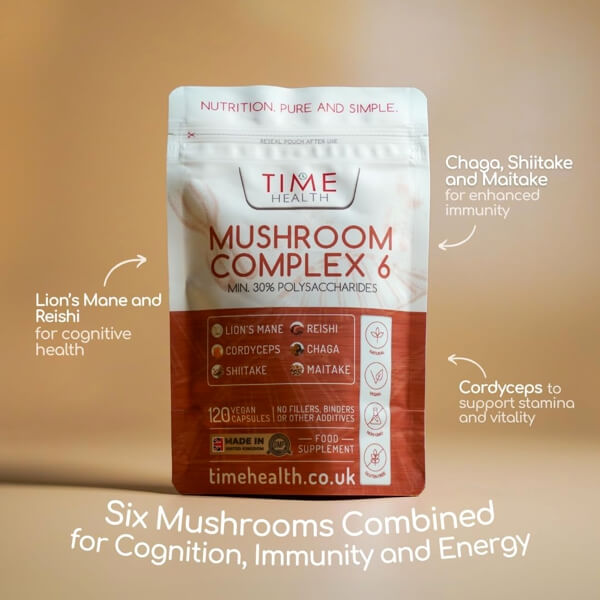
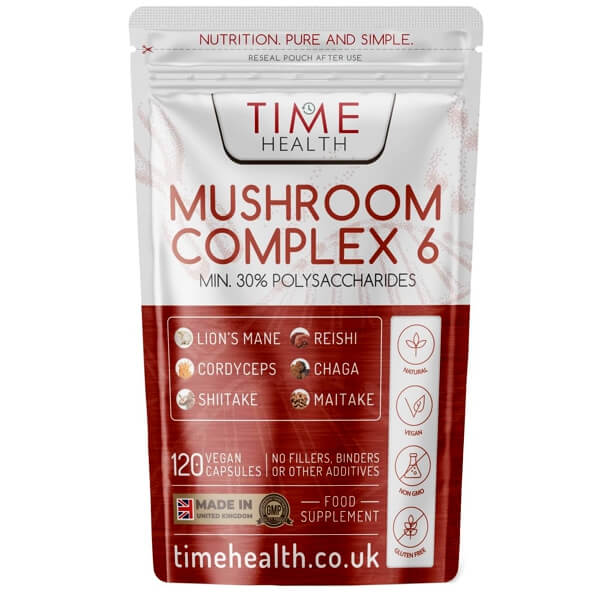
Mushroom Complex
Safety, Side Effects, and Important Considerations
Most people tolerate chaga reasonably well, though mild digestive discomfort can occur when first introducing it — starting with a smaller amount and increasing gradually can help. Some people report mild stimulant-like effects, so avoiding evening use is worth considering if you’re sensitive to this.
An important, often-overlooked consideration: chaga is relatively high in oxalates. There are documented cases of kidney problems (oxalate nephropathy) associated with excessive chaga tea consumption, particularly with very concentrated or prolonged use. If you have any history of kidney stones or kidney disease, speak to your GP before using chaga, and avoid excessive or prolonged high-dose use regardless of kidney history.
Some research has also raised questions about liver effects with very high doses or prolonged use; while moderate use is generally considered reasonable, anyone with an existing liver condition should check with their GP first.
Chaga may also affect blood glucose levels (relevant if you’re diabetic or on diabetes medication), may interact with blood-thinning medication, and can influence autoimmune conditions given its immune-modulating properties — anyone with an autoimmune condition, on immunosuppressive treatment, or taking prescription medication should speak to their GP before using chaga.
Choosing a Quality Chaga Product
Look for products made from Inonotus obliquus specifically (the species most studied and traditionally used), ideally with third-party testing to verify purity and check for contaminants like heavy metals. Dual-extraction products generally capture a fuller range of the mushroom’s compounds than simple powders. Check that the label clearly states the amount of chaga per serving, without unnecessary fillers.
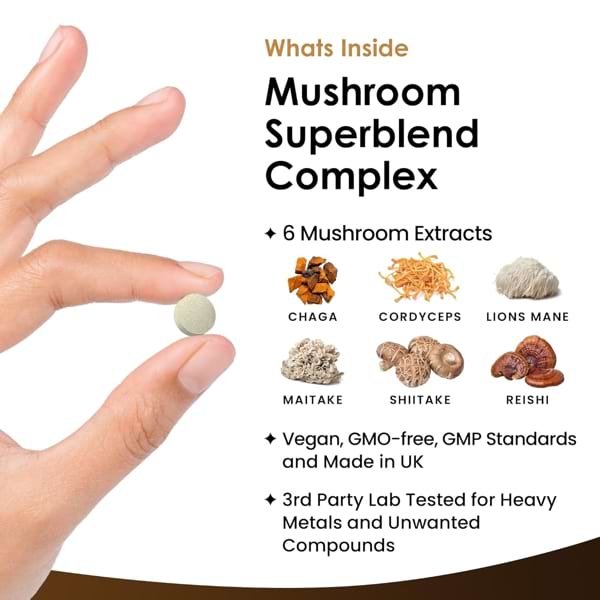
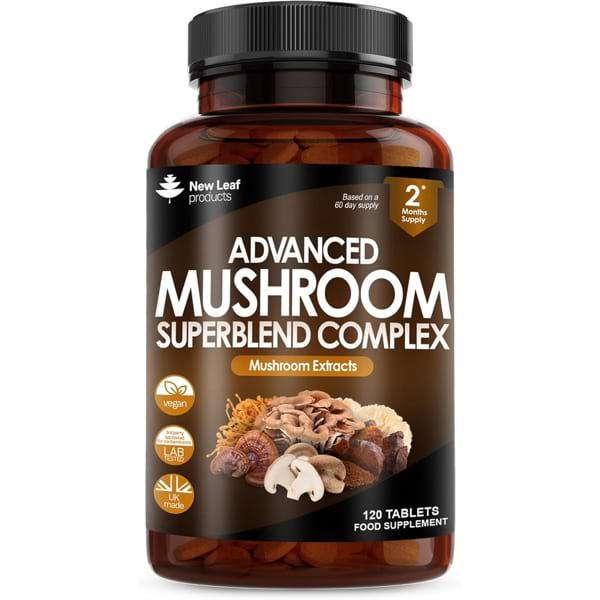
Mushroom Complex
Sustainability is also worth considering: wild chaga takes 15-20 years to mature, which raises genuine overharvesting concerns. Cultivated alternatives and chaga sourced from managed forests, clearly labelled as such, are worth prioritising over unclear wild-harvested claims.
Is Chaga Worth Trying?
Chaga has real traditional-use history and some genuinely interesting preliminary research behind it, particularly around antioxidant activity — but much of the research is still preclinical, and it’s not established as a treatment or prevention for any specific illness, including colds and flu.
For a healthy adult interested in exploring traditional herbal options, chaga is a reasonable, generally well-tolerated choice — provided you’re aware of the oxalate/kidney consideration above and check with your GP if you take medication or have an existing health condition. It works best as one part of a broader approach, not a central pillar of winter wellness on its own; more established options like vitamin D have a stronger evidence base for that specifically.
Disclaimer: This article is for informational purposes only and does not constitute medical advice. Always consult your GP before starting any supplement, particularly if you have kidney or liver concerns, an autoimmune condition, or take prescription medication.