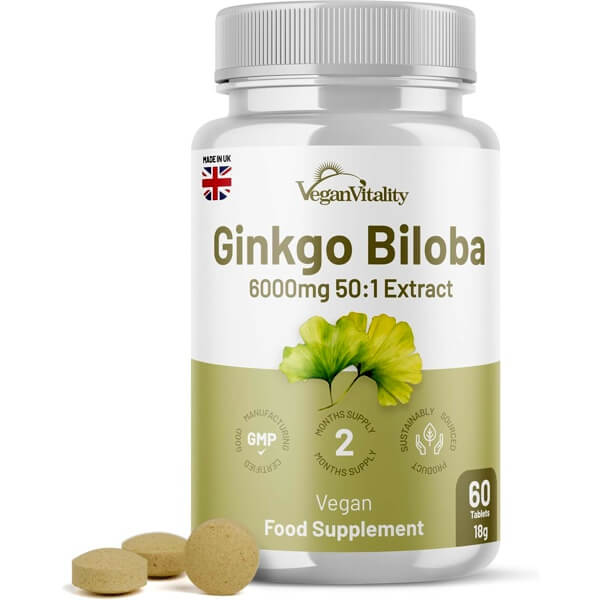
Ginkgo biloba is one of the oldest living tree species, studied for effects on cerebral blood flow, memory, and cognitive function — with genuinely inconsistent results across clinical trials. Below you’ll find our picks, along with the single most important safety point for this specific supplement: its real blood-thinning properties, easy to overlook amid the cognitive marketing.
Herbal Supplements
Ginkgo Biloba: What Research Actually Shows
Ginkgo has a long history in traditional medicine, and modern research has explored its standardised extracts — containing flavonoids and terpene lactones — in relation to cerebral blood flow, memory, and cognitive speed. As covered in more detail in our brain health guide, it’s important to be honest about the evidence here: clinical results have genuinely been inconsistent across trials, some research links ginkgo to improved thinking skills in healthy middle-aged adults, and a 2020 research review found that 240mg daily for 24 weeks may improve cognitive function specifically in people with mild dementia — but the overall picture remains more mixed than settled, and ginkgo isn’t established as a general “brain booster” for everyone.
The most important safety point about ginkgo, easy to miss amid the cognitive marketing: it has genuine blood-thinning properties and is one of the more well-documented herbal supplements for interacting with anticoagulant and antiplatelet medication, including warfarin and aspirin, increasing bleeding risk. If you take blood thinners, have a bleeding disorder, or have surgery scheduled (stop at least two weeks beforehand), this is a conversation for your GP before starting ginkgo, not an afterthought to consider later.
Ginkgo is generally well tolerated otherwise, with mild headache or digestive upset the most commonly reported effects. It’s worth being cautious about combining ginkgo with other blood-thinning supplements (such as fish oil, garlic, or vitamin E at higher doses) without discussing this with your GP, given the cumulative effect on bleeding risk. Pregnant or breastfeeding women should avoid ginkgo given limited safety data, and anyone with epilepsy should check with their GP first, since ginkgo has occasionally been associated with seizure risk in case reports, particularly at higher doses or in products containing ginkgo seed rather than standardised leaf extract.
Look for standardised extracts (commonly 24% flavonoids, 6% terpene lactones), which is the composition most research is actually based on, rather than unstandardised ginkgo leaf products.