Sea moss is a red algae particularly notable for its iodine content, alongside a range of other minerals in varying, often unpredictable amounts. Below you’ll find our picks, along with an honest correction of the widely repeated “92 of 102 minerals” claim, and — more importantly — the same thyroid-related safety considerations that apply to other seaweed-derived iodine sources.
Superfoods & Greens
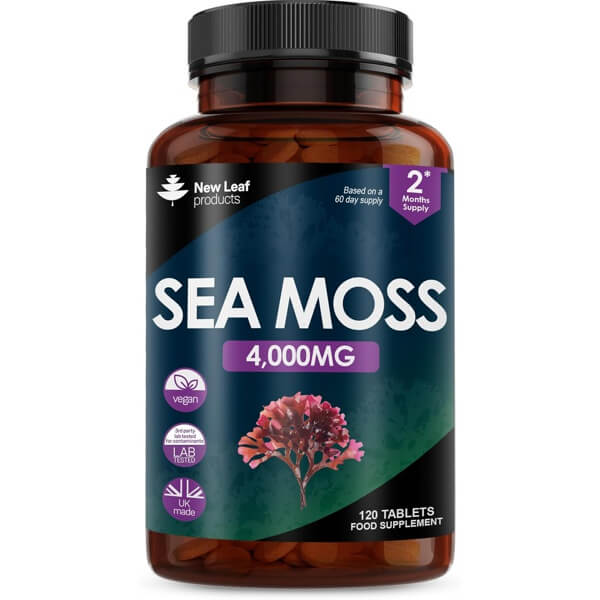
Sea Moss Supplement 4000mg High Potency Extract 120 Vegan Tablets
Sea Moss: What’s Actually True, and What Needs Correcting
Sea moss (most commonly Chondrus crispus, or Irish moss) is a red algae traditionally used in Caribbean and Irish food and folk remedies, genuinely notable for its iodine content alongside a broader range of trace minerals.
It’s worth correcting a claim you’ll see everywhere in sea moss marketing: that it contains “92 of the 102 minerals the human body needs.” This traces back to unverified claims by a herbalist figure, not a documented nutritional requirement — the human body doesn’t actually require 102 distinct minerals, and even sources sympathetic to sea moss acknowledge that many of the minerals present occur in trace amounts that may not be nutritionally meaningful at typical serving sizes, and that mineral content varies considerably depending on where and how the sea moss was grown and processed. It’s a genuinely mineral-diverse food, but “92 of 102” isn’t an accurate or scientifically grounded way to describe that.
The most important thing to know about sea moss is the same consideration that applies to kelp and other seaweed-derived iodine sources: excess iodine can disrupt thyroid function in either direction. Sea moss’s iodine content varies unpredictably by source, making it genuinely difficult to know your actual intake — this matters more, not less, than “iodine sensitivity” language sometimes used to describe the risk. People with an existing thyroid condition, or those taking thyroid medication such as levothyroxine, should check with their GP before regular sea moss use, since excess iodine can worsen hypothyroidism, trigger hyperthyroidism in people with underlying nodules or Graves’ disease, and can also interfere with how well levothyroxine is absorbed.
Beyond iodine specifically, broader claims about sea moss for hormonal balance, prostate health, sexual wellness, or immune “strengthening” go well beyond what current research actually supports — these are marketing extensions rather than established, evidence-backed effects. Sea moss gel, powder, and capsules are functionally similar in content; the difference is mainly convenience and dosing precision, with gel being easier to add to food and drinks, and capsules offering more consistent dosing.
As with any seaweed-derived supplement, look for products that are transparent about sourcing and, ideally, state their iodine content specifically — and speak to your GP before regular use if you have a thyroid condition or take thyroid medication.