Vitamin E is a fat-soluble antioxidant with an established role in protecting cells from oxidative damage, most people get enough through diet alone. Below you’ll find our picks, along with an important note about high-dose vitamin E specifically — a genuine safety consideration that’s often left out of general marketing for this nutrient.

Vitamins & Minerals
Vitamin E: What Research Actually Shows
Vitamin E is a fat-soluble antioxidant that helps protect cells from oxidative damage, with a role in normal immune function and skin health among its established properties. It’s found naturally in nuts, seeds, and vegetable oils, and true deficiency is genuinely rare in healthy adults, typically only occurring alongside certain digestive disorders or genetic conditions affecting fat absorption.
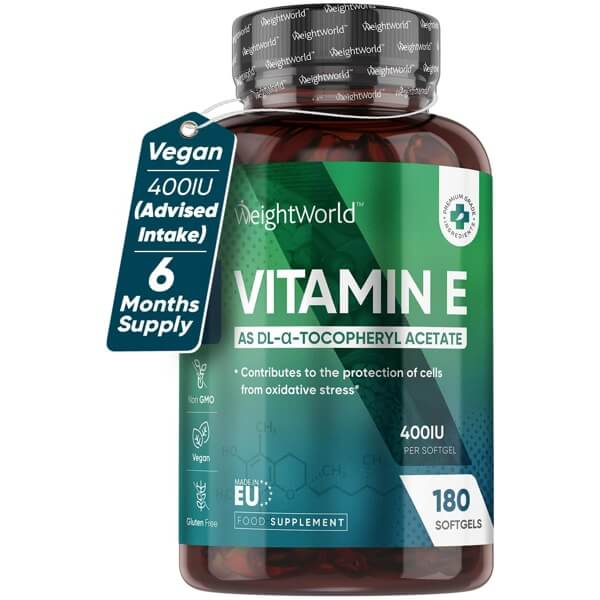
UK guidance suggests around 4mg daily for men and 3mg for women through diet, though many supplements provide considerably more — commonly up to 400 IU (around 268mg), a dose worth understanding before taking it regularly. This specific amount was tested in the large SELECT trial, involving over 35,000 men, which found that 400 IU of vitamin E daily was associated with a 17% increase in prostate cancer risk over roughly seven years, compared to placebo — a genuinely significant, well-documented finding, not a minor caveat. Large cardiovascular trials, including the HOPE study, have similarly found no heart-health benefit from vitamin E supplementation, despite this being one of its more commonly assumed benefits — for most people without a diagnosed deficiency, there’s little evidence that supplementing beyond a standard multivitamin-level dose provides additional benefit, and some evidence of genuine risk at higher, sustained doses.
High-dose vitamin E also has mild blood-thinning properties and may interact with anticoagulant medication such as warfarin, increasing bleeding risk — worth discussing with your GP if this applies to you, particularly before surgery.
When choosing a product, natural forms (often labelled d-alpha-tocopherol) are generally somewhat better utilised by the body than synthetic forms (dl-alpha-tocopherol), and checking the actual IU or mg dose against the levels discussed above is more useful than assuming “more is better.” Always consult your GP before starting a vitamin E supplement, particularly if you take blood-thinning medication or are considering a dose above general dietary levels.