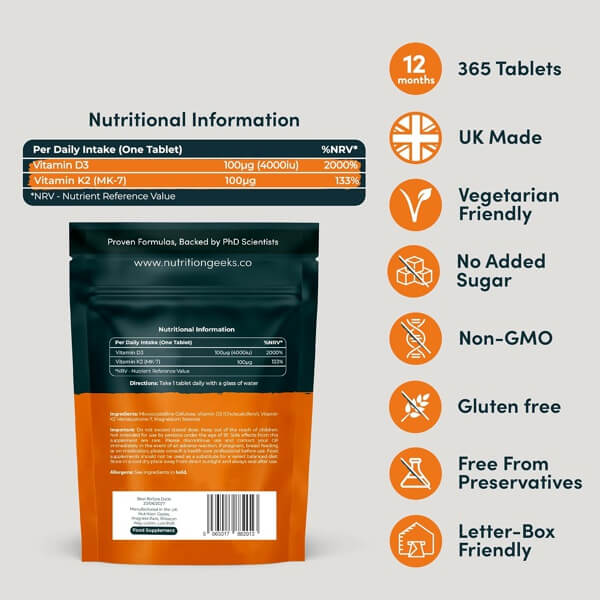
Vitamin K2 is studied for directing calcium toward bone rather than arteries, with a well-known dietary study (Rotterdam Study) finding a striking association between higher K2 intake and cardiovascular outcomes — though it’s worth knowing this reflects dietary patterns, not a proven effect of supplementation specifically. For the full evidence picture, including how K2 pairs with D3, see our complete guide to Vitamin D3 + K2. Below you’ll find our picks, chosen for the MK-7 form and appropriate dosing.

Vitamins & Minerals
Choosing a Vitamin K2 Supplement
MK-7 (menaquinone-7) is generally preferred over MK-4 for its longer half-life and better bioavailability. On the cardiovascular research specifically: the well-known Rotterdam Study found people with the highest dietary K2 intake had roughly 50% lower coronary heart disease mortality than those with the lowest — a genuinely striking finding, though it’s observational dietary data, not a randomised trial of supplementation, a distinction worth keeping in mind rather than reading it as proof that a supplement itself halves cardiac risk. Claims about K2 and dental health specifically rest on a considerably thinner evidence base than the bone and cardiovascular research, and are best read as preliminary. Commonly referenced doses are 100-200mcg daily, generally taken with a meal containing some fat, often alongside D3. If you take warfarin or other blood-thinning medication, check with your GP before starting K2 — our full D3+K2 guide covers this and other safety considerations in more detail.