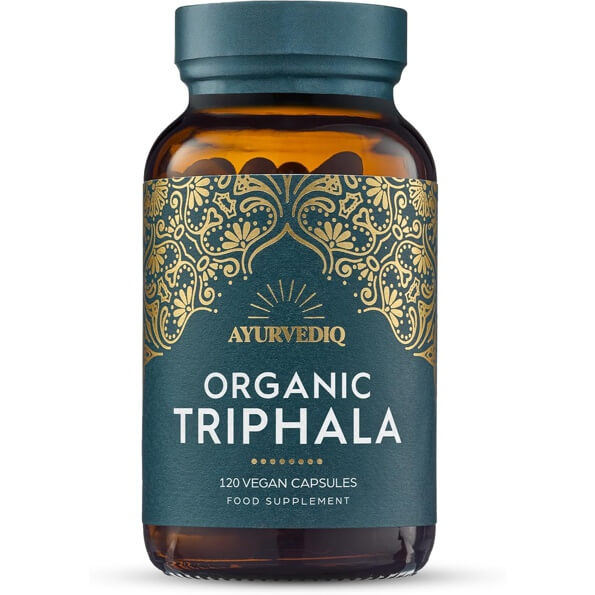
Triphala is a traditional Ayurvedic blend of three fruits — Amalaki, Bibhitaki, and Haritaki — most commonly used for digestive regularity, and one of the better-researched Ayurvedic formulations for this specific use. Below you’ll find our picks, with an honest look at what the evidence actually supports beyond the “detox” language often attached to this category.
Ayurvedic Remedies
Triphala: What Research Actually Shows
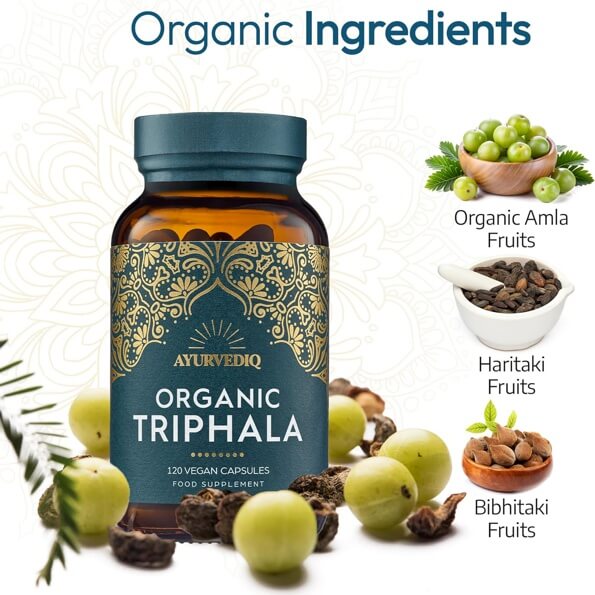
Triphala combines three dried fruits — Amalaki (Indian gooseberry), Bibhitaki, and Haritaki — in a formulation used in Ayurvedic medicine for centuries, primarily as a gentle bowel tonic. This is genuinely its best-supported use: research, including a randomised, double-blind trial on gut microbiota, has found associations with improved bowel frequency and stool consistency, alongside increases in beneficial bacteria such as Bifidobacterium and Lactobacillus.
It’s worth being precise about what this means, though: Triphala supports digestive regularity through its effect on gut bacteria and bowel function — this is a genuinely different, more specific thing than “detoxification” or “eliminating toxins,” language that doesn’t reflect what the actual research measures. The liver and kidneys handle elimination of waste products continuously; no supplement, Triphala included, does this for you. Beyond digestion, some research has explored antioxidant and anti-inflammatory properties, and a smaller body of research has looked at cholesterol and metabolic markers, with modest and mixed results across trials — worth reading as an area of ongoing interest rather than a settled weight-management or metabolic benefit. General antioxidant content is a more accurate way to describe Triphala’s relevance to overall wellbeing than a specific immune-boosting claim, which current research doesn’t establish.
Triphala is generally well tolerated, with a good overall safety profile in the research available, though mild digestive effects (loose stools, particularly at higher doses) are possible when starting out. As with any Ayurvedic formulation, look for products that are third-party tested for heavy metals specifically, transparent about the ratio of the three fruits used, and manufactured to GMP standards.