
What Triphala Research Actually Supports
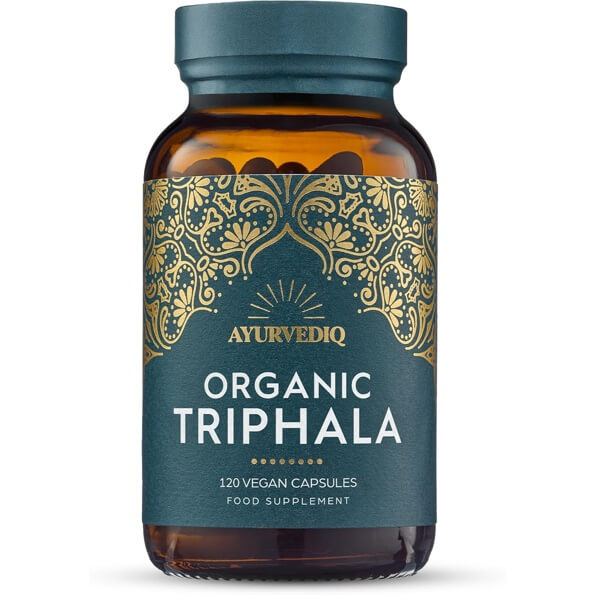
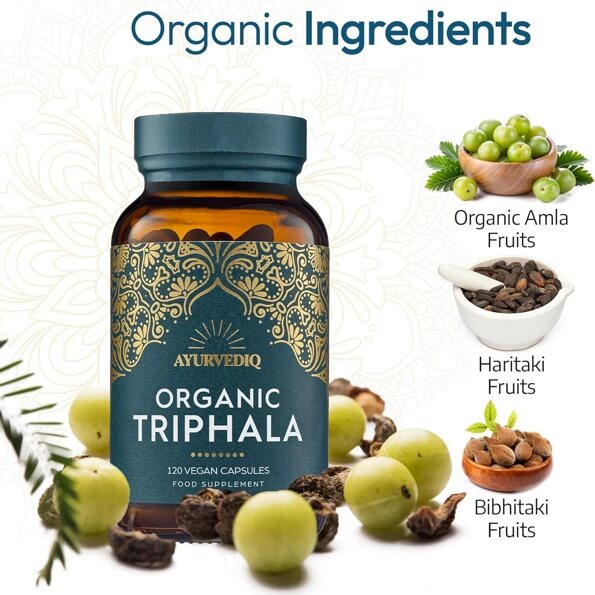
This capsule provides 500mg of organic triphala in equal parts — amla (Indian gooseberry), bibhitaki, and haritaki. Triphala is genuinely one of the better-researched Ayurvedic formulations for its primary traditional use: research, including a randomised, double-blind trial on gut microbiota, has found associations with improved bowel frequency and stool consistency, alongside increases in beneficial bacteria such as Bifidobacterium and Lactobacillus.
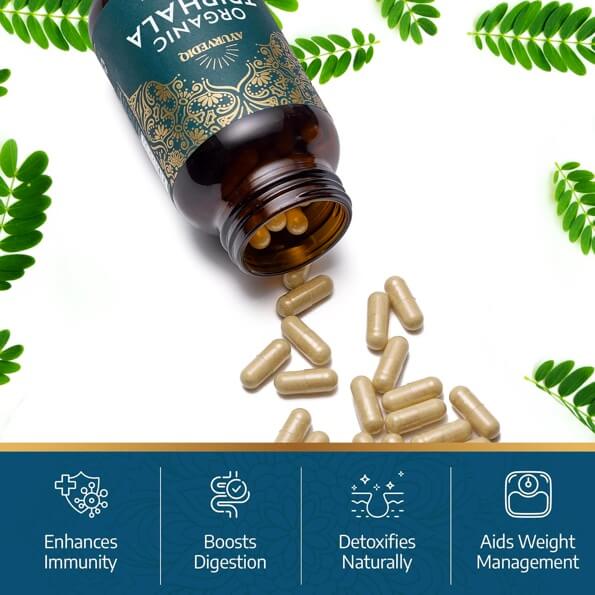
It’s worth correcting the claim that triphala can “protect against some medical conditions” — this significantly overstates what the evidence actually establishes and could be read as implying disease prevention or treatment, which triphala is not established to do. Triphala supports digestive regularity through its effect on gut bacteria and bowel function specifically — this is different from general “immunity” or disease protection, and it’s worth being precise about that distinction rather than letting the claim broaden beyond what’s actually supported.
Beyond digestion, some research has explored antioxidant and anti-inflammatory properties, and a smaller body of research has looked at cholesterol and metabolic markers, with modest and mixed results — worth reading as an area of ongoing interest rather than a settled additional benefit.
Triphala is generally well tolerated, with a good overall safety profile in the research available, though mild digestive effects (loose stools, particularly at higher doses) are possible when starting out.
Soil Association certified organic, no fillers, binders, or flowing agents, vegan, manufactured to GMP standards. Take with a meal or on an empty stomach. Speak to your GP before use if you’re pregnant, breastfeeding, taking prescription medication, or have an existing health condition.
The Research Behind This Product
Hormonal Balance
Shatavari, Triphala and Maca Root: Ayurvedic Herbs for Women’s Health
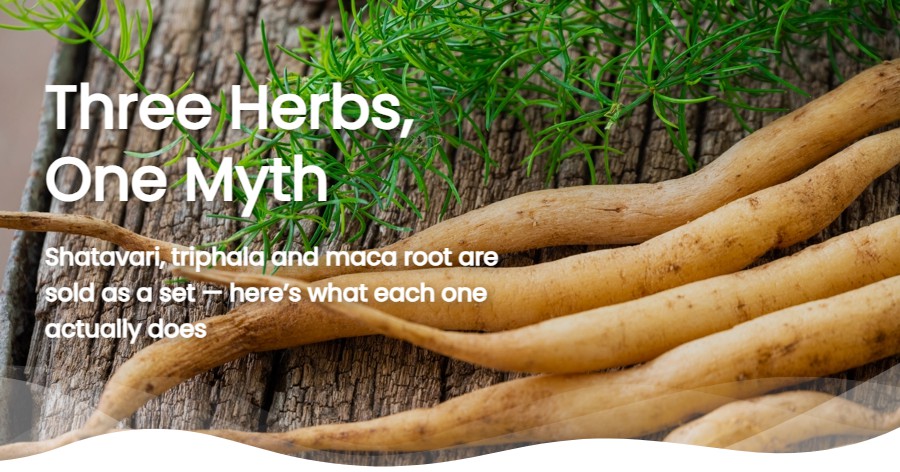
Shatavari, triphala and maca root are frequently bundled together as "women's wellness" herbs, but they don't actually do the same job. Here's what UK-relevant research supports for each one individually — and the specific claims worth reading with caution.
Get the Full Guide