Iodine is essential for producing thyroid hormones, which regulate metabolism throughout the body — but unlike most nutrients on this site, iodine is one where both too little and too much can genuinely disrupt thyroid function. Below you’ll find our picks, along with the safety context this mineral needs before you choose a product, particularly if you have an existing thyroid condition.
Vitamins & Minerals
Iodine: What You Need to Know Before Supplementing
Iodine is a trace mineral the thyroid uses to produce thyroxine (T4) and triiodothyronine (T3), hormones that regulate metabolic rate throughout the body. Genuine deficiency can lead to an enlarged thyroid (goitre) and, in more severe or prolonged cases — particularly during pregnancy and early childhood — meaningful effects on cognitive development. UK adults generally need around 140mcg daily, obtainable through seafood, dairy, and iodised salt (less common in UK products than in some other countries).
It’s important to be accurate about what correcting a deficiency actually does versus what it doesn’t: iodine supplementation genuinely helps where a real deficiency exists, but “enhanced energy” or “improved skin appearance” in someone who isn’t deficient isn’t something current evidence supports — these are outcomes of correcting a genuine shortfall, not a general effect of taking more iodine.
The most important thing to understand about iodine specifically: excess intake can disrupt thyroid function in either direction. Sudden high iodine intake can trigger the Wolff-Chaikoff effect, where the thyroid temporarily reduces hormone production — in people with underlying thyroid disease, this can become persistent hypothyroidism rather than resolving on its own. In people with pre-existing thyroid nodules or latent Graves’ disease, the same excess iodine can instead trigger hyperthyroidism. This isn’t a rare, theoretical risk — it’s documented in case reports involving kelp supplements specifically, including hospitalisation in at least one case involving very high intake.
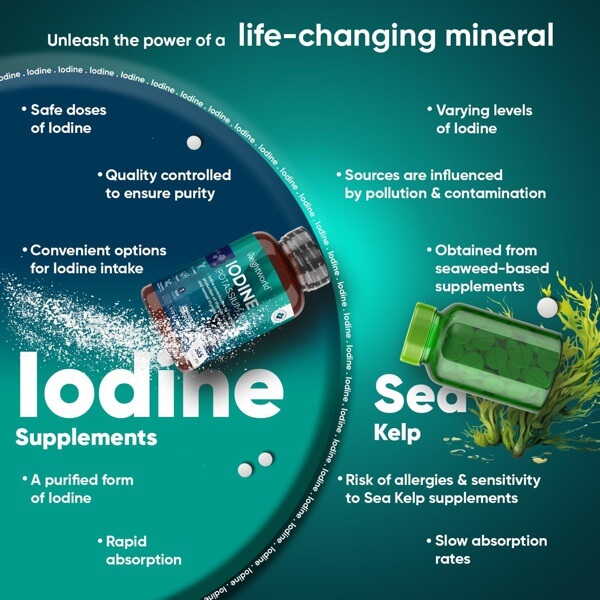
Kelp-based iodine supplements deserve particular caution: iodine content in kelp varies considerably and unpredictably by species, harvest location, and processing, making it genuinely difficult to know your actual intake from a kelp product. If you take levothyroxine or other thyroid medication, this matters even more — excess iodine can reduce the medication’s effectiveness via the mechanism above, and minerals in kelp specifically can also bind to levothyroxine in the gut, reducing how much you actually absorb. If you’re on thyroid medication, discuss any iodine supplement — kelp-based or otherwise — with your GP first, rather than adding it independently.
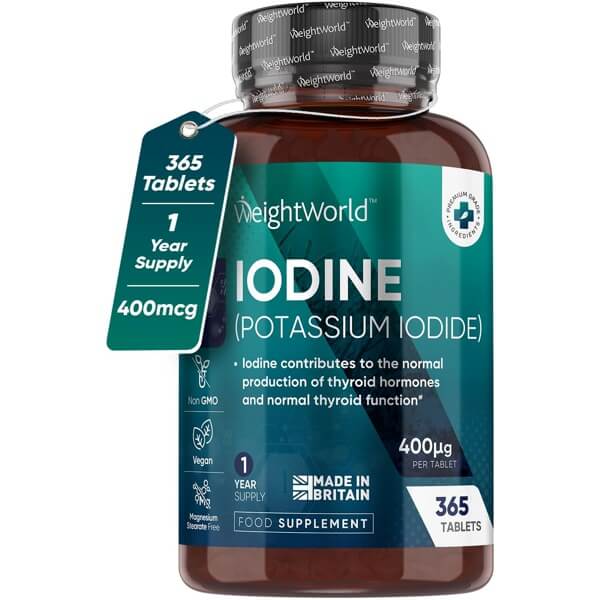
Potassium iodide is a more predictable, standardised form than kelp for anyone who does need supplementation. As with any supplement affecting thyroid function, if you have a diagnosed thyroid condition, are pregnant, or take thyroid medication, this is a conversation for your GP before starting — not a general-purpose addition to your routine.