Cranberry is one of the better-researched natural options for urinary tract health, with genuine evidence for reducing UTI recurrence specifically — though it’s worth being precise about what that means. Below you’ll find our picks, along with the same accurate framing we use in our urinary health guide, plus a couple of practical safety points.

Fruit & Berry Extracts
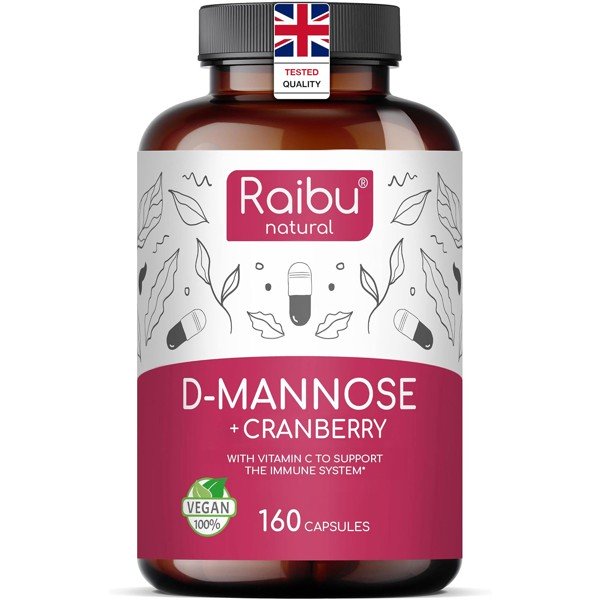
D-Mannose 2100mg Complex with Cranberry & Vitamin C 160 Capsules
Fruit & Berry Extracts
Cranberry: What Research Actually Shows
Cranberries contain proanthocyanidins (PACs), compounds studied for a possible role in reducing bacterial attachment to the urinary tract lining. As covered in more detail in our urinary and kidney health guide, several studies have looked at cranberry’s role in reducing UTI recurrence, particularly for women with frequent infections — genuine, if variable, evidence — but it’s important to be accurate that cranberry is not a treatment for an active infection, and persistent or severe UTI symptoms need proper medical assessment and, where appropriate, antibiotics, not a supplement instead.
Cranberries are also a genuine source of antioxidants and vitamin C, and general immune-related and digestive claims are best read modestly — vitamin C has a recognised role in normal immune function, but “strengthening” immunity or guaranteeing fewer infections overstates what the research actually establishes. Broader cardiovascular claims rest on a smaller evidence base than the urinary tract research specifically.
A couple of practical safety points worth knowing: cranberry can enhance the effect of warfarin and other blood-thinning medication, so it’s worth discussing with your GP before regular use if you take these. Cranberry is also relatively high in oxalates, which is worth knowing if you have a history of calcium oxalate kidney stones (the most common type) — concentrated cranberry supplements or juice may be worth discussing with your GP in that specific situation, rather than assumed to be automatically fine given cranberry’s urinary-health reputation.
If choosing juice specifically, unsweetened or lightly sweetened options avoid the high sugar content of standard cranberry juice cocktail, which can offset some of the benefit; capsule or tablet forms sidestep this entirely and are a reasonable, more concentrated alternative.