Walk down any UK pharmacy aisle and “multivitamin” covers an enormous range of very different products — general-purpose tablets, men’s formulas with added herbs, vegan-specific blends, and prenatal formulations with entirely different priorities. They’re not interchangeable, and neither is the evidence behind them. Here’s an honest look at three specific formulas — one for men, one vegan, one prenatal — including where each gets it right, and one correction worth knowing before you buy.
Do You Actually Need a Multivitamin?
Worth starting here, because it’s the most consistently repeated finding in this category: the NHS is clear that most people should be able to get all the nutrients they need from a varied, balanced diet, and that not everyone needs a supplement. That’s not a reason to dismiss multivitamins outright — certain groups have genuinely higher or harder-to-meet needs, which is exactly why the three formulas below are worth looking at individually rather than as a single “does everyone need one” question. A multivitamin is best understood as filling a specific, identified gap, not as blanket daily insurance.
Best Multivitamin for Men
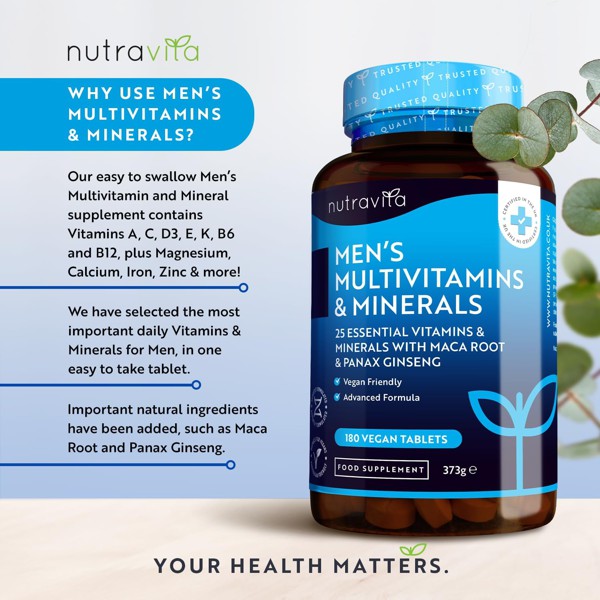
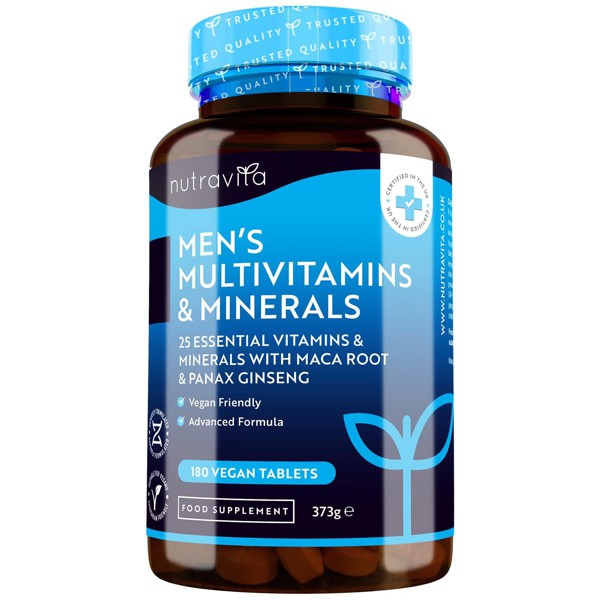
Nutravita’s Men’s Multivitamin combines 25 vitamins and minerals — including vitamin D3, a full B-complex, calcium, magnesium, zinc, and selenium — with maca root and Panax ginseng extracts. Most of the core nutrients here reflect genuinely established, normal physiological roles: B vitamins in energy metabolism, magnesium in normal muscle function including the heart, and vitamins A, C, E, selenium and zinc in protecting cells from oxidative stress. For more on which of these nutrients matter most for men specifically, our supplements for men over 40 guide covers this in more depth.
An Important Correction on “Hormone Support”
Where this formula’s marketing goes further than the evidence is the “hormone support” and testosterone framing attached to the maca and zinc content. Rigorous human trials testing maca specifically — including one using 1.5g and 3g daily doses over 12 weeks — have found it doesn’t change testosterone, LH, FSH, or prolactin levels; we cover this in detail in our Ayurvedic herbs guide. Maca’s genuinely better-supported research area is libido and sexual function, through a separate, non-hormonal pathway. Zinc’s role in testosterone is real, but strongest specifically for correcting an existing deficiency, not for boosting levels in men who are already adequately zinc-replete — if low testosterone is a specific concern, that’s worth testing and discussing with a GP rather than expecting a multivitamin to address it. Panax ginseng, also included here, is researched for stress resilience and general energy rather than as a hormone treatment; our Korean ginseng guide covers it in more detail.
Worth Checking
As with any multivitamin containing vitamin A, it’s worth confirming the exact amount if you also take a standalone vitamin A supplement, cod liver oil, or eat liver regularly — the NHS advises no more than 1.5mg (1,500mcg) of vitamin A daily from supplements combined.
Vitamins & Minerals
Best Vegan Multivitamin
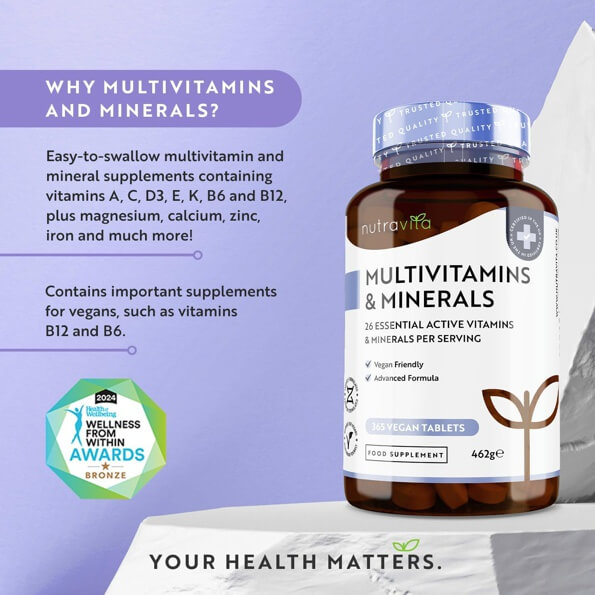
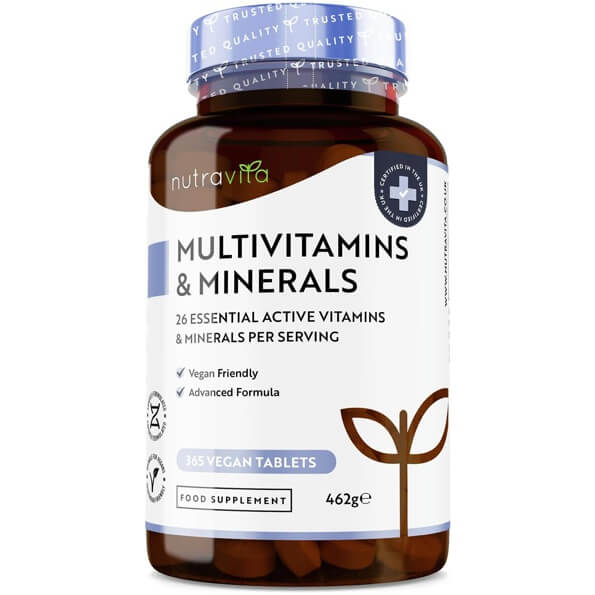
Nutravita’s Vegan Multivitamin & Minerals provides 26 vitamins and minerals, almost all at 100% of the Nutrient Reference Value (NRV) — a genuinely moderate, standard-dose formulation rather than one of the high-strength “mega-dose” products common in this category. That moderate dosing is actually a point in its favour: for a general-purpose multivitamin, matching the NRV is a sensible, evidence-aligned target rather than a reason to look elsewhere for something stronger.
Checking the Details That Matter
Vitamin A is provided at 800μg as retinyl acetate — comfortably within the NHS’s 1.5mg (1,500mcg) daily supplement limit, with meaningful headroom even alongside occasional liver consumption or another vitamin A-containing product. The label’s own guidance not to take it if pregnant or likely to become pregnant, except on medical advice, is accurate and appropriate for a product containing preformed vitamin A. Iron (14mg as ferrous fumarate) and magnesium (100mg, 27% NRV) sit at sensible, moderate levels for general use — though if fatigue is your main reason for supplementing, it’s worth confirming an actual iron deficiency with your GP rather than assuming this product’s iron content addresses it specifically. Chromium, selenium, and iodine are all included at standard, non-excessive levels.
Why Vegans Specifically Benefit
Vitamin B12 is the clearest case here: it isn’t found naturally in plant foods, and the NHS specifically advises vegans to consider a B12-containing supplement to reduce the risk of deficiency anaemia — a genuinely well-established, specific reason a vegan multivitamin earns its place, distinct from the more general “does everyone need one” question above.
Multivitamins
Best Prenatal Multivitamin
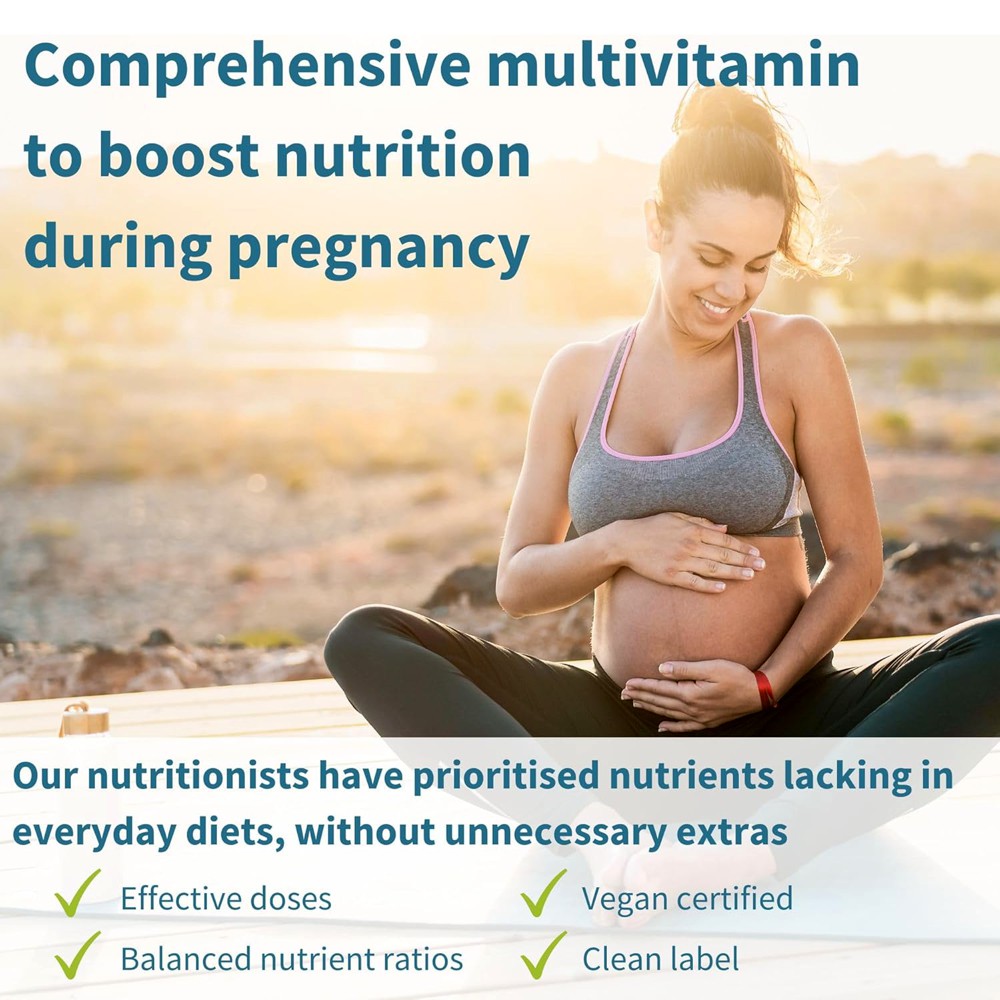
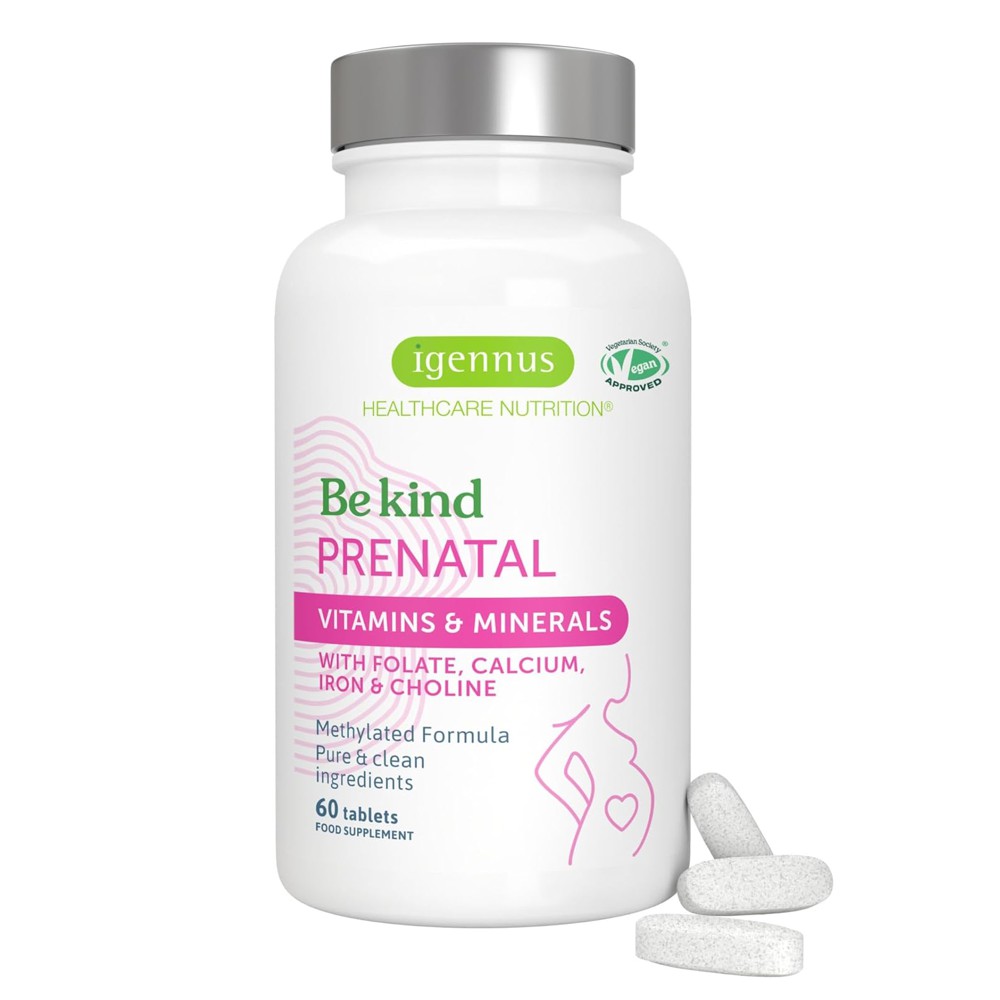
Igennus’ Advanced Prenatal Multivitamin provides 18 nutrients in bioavailable forms, including methylfolate, iron bisglycinate, and pregnancy-appropriate beta-carotene (rather than retinol) for vitamin A.
An Important Correction on Methylfolate and Neural Tube Defect Prevention
This is the most important point in this entire article, so it’s worth being precise: methylfolate is not established as reducing neural tube defect risk to the same degree as standard folic acid. The evidence for neural tube defect prevention specifically traces back to the landmark 1991 MRC Vitamin Study, and it’s built on folic acid — not methylfolate. A 2024 evidence review found a genuine lack of clinical studies evaluating methylfolate for this specific purpose. NICE does not recommend routine MTHFR testing before or during pregnancy, and the UK Teratology Information Service does not recommend methylfolate over folic acid as a first-line choice for the general population. Our folate vs folic acid guide covers this distinction in full.
In practice, this means standard NHS-guideline folic acid (400mcg) remains the evidence-backed default for neural tube defect prevention for most women — not methylfolate, regardless of marketing suggesting it “ensures adequate folate regardless of genetics.” Methylfolate may be a reasonable choice specifically if you have a confirmed MTHFR variant, a previous pregnancy affected by a neural tube defect, or difficulty tolerating folic acid — this is worth discussing directly with your GP or midwife rather than assuming it’s a universal upgrade over standard guidance.
Where This Formula Gets It Right
With that correction in mind, the rest of this formula reflects genuinely sensible prenatal choices. Vitamin A is provided as beta-carotene rather than retinol — the pregnancy-appropriate approach, since preformed retinol is specifically what the NHS advises against during pregnancy. Iron bisglycinate addresses increased pregnancy iron needs with a gentler digestive profile than standard ferrous sulphate. Choline and iodine support placental and neurological development, both nutrients where pregnancy needs genuinely increase, and the vitamin D3 content matches NHS guidance for pregnancy.
Vitamins & Minerals
How to Choose Between Them
The right choice here isn’t really about which formula is “strongest” — it’s about which specific gap you’re actually trying to fill. If you’re male and want general nutritional coverage, judge the men’s formula on its core vitamin and mineral content, not the hormone-support framing around the herbal extras. If you’re vegan, the clearest, best-established reason to supplement is B12, alongside general NRV-level coverage. If you’re pregnant or trying to conceive, the folic acid versus methylfolate question matters more than any other detail on the label, and it’s worth resolving with your GP or midwife before choosing either way.
Common Myths, Addressed
“More nutrients in the formula means a better multivitamin.” Not necessarily — a long ingredient list with several nutrients at unnecessarily high doses isn’t automatically superior to a well-balanced, NRV-level formula, and can occasionally push a specific nutrient (vitamin A being the clearest example) toward levels worth monitoring.
“Newer, more bioavailable forms like methylfolate are always the superior choice.” Not for every purpose. Methylfolate genuinely has advantages for some people, but for neural tube defect prevention specifically, standard folic acid has the stronger, longer-established evidence base — bioavailability and clinical evidence for a specific outcome are two different questions.
Final Thoughts
None of these three formulas is a universal “best multivitamin” — each is built around a different, genuine need. The men’s formula’s core nutrients are sound, though its hormone-support framing overstates what maca and standard-dose zinc actually do. The vegan formula’s real strength is straightforward: solid B12 coverage at sensible, balanced doses. The prenatal formula gets several pregnancy-specific details right, but the methylfolate-versus-folic-acid question is significant enough that it’s worth a direct conversation with your GP or midwife before deciding, rather than assuming the newer-sounding form is automatically the better one.
Disclaimer: This article is for informational purposes only and does not constitute medical advice. Always consult your GP or midwife before starting a new multivitamin, particularly during pregnancy, if you take prescription medication, or if you have an existing health condition.