Quercetin shows up in a huge range of “immune support” and antioxidant supplements, often paired with vitamin C, bromelain, or resveratrol. It’s a genuinely interesting plant compound with real research behind it — but it’s also one of the few supplements on this site with well-documented, clinically significant interactions with common prescription medication, which makes it worth reading the label a little more carefully than most.
What Is Quercetin?
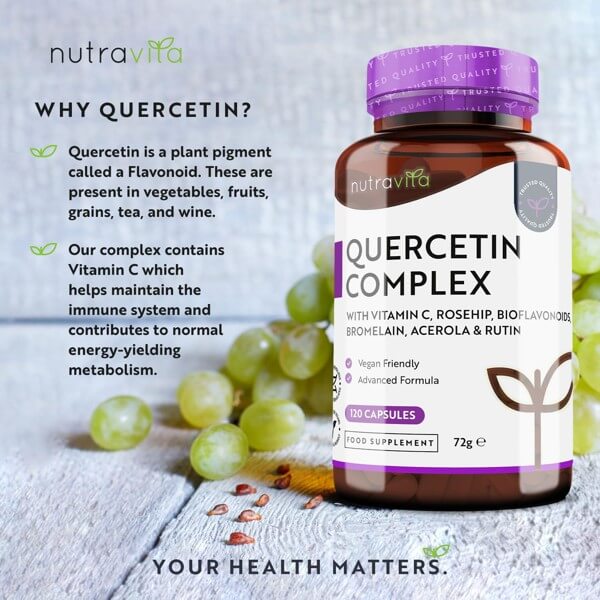
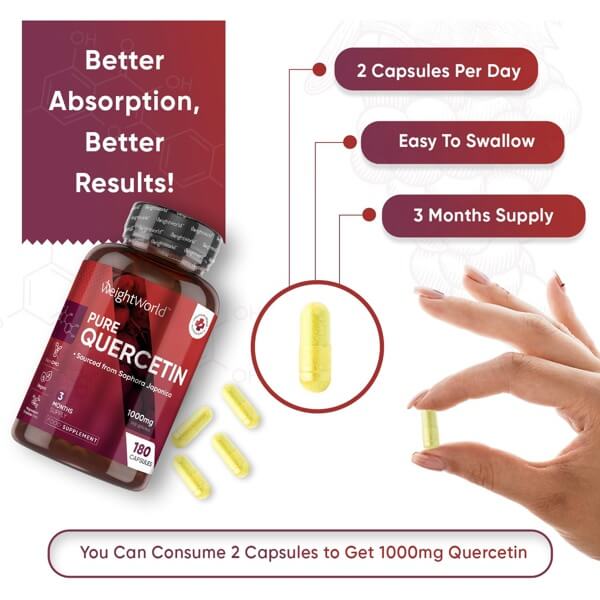
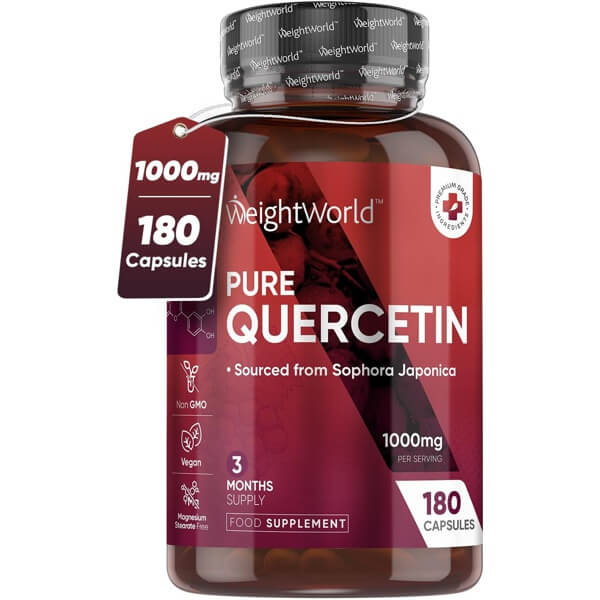
Quercetin is a flavonoid — a type of plant pigment — found in onions, apples, berries, and tea, among other foods. Most supplements use quercetin sourced from Sophora japonica (the Japanese pagoda tree), which is a practical, concentrated source rather than something you’d extract from your fruit bowl at home.
What Research Actually Supports
No health claim for quercetin has been authorised for use in the UK or EU. In 2011, the European Food Safety Authority (EFSA) assessed four separate applications covering quercetin’s role in protecting DNA, proteins and lipids from oxidative damage, the cardiovascular system, mental performance, and liver and kidney function — and rejected all four, finding the claims too general and insufficiently substantiated by the evidence submitted. That doesn’t mean quercetin has no research behind it; it means none of its popular marketed benefits have cleared the specific bar EU regulators require.
Laboratory research has studied quercetin’s antioxidant and anti-inflammatory properties fairly extensively, and it’s a genuinely active area of pharmacological interest. Translating that into confirmed human benefit for any specific condition is a different, much higher bar, and one quercetin hasn’t cleared yet for any single claim.
The Most Important Safety Point: Medication Interactions
This is the section worth reading in full, particularly if you take any regular prescription medication.
Quercetin genuinely inhibits several liver enzymes — CYP3A4, CYP2D6, CYP2C19, and CYP1A2 — involved in metabolising a wide range of common medications. This isn’t a theoretical concern based on chemistry alone: there’s a documented clinical case of a patient on stable warfarin therapy experiencing a significantly elevated INR (a measure of blood clotting time) after starting quercetin, which normalised again after stopping it. A peer-reviewed pharmacological review covers quercetin’s drug interaction potential in detail, describing it as a genuine “double-edged sword” alongside its beneficial properties.
Medications that share these same metabolic pathways include certain antidepressants (such as paroxetine and venlafaxine), some heart and blood pressure medications (including flecainide and metoprolol), tamoxifen, and quinolone antibiotics, among others. Cyclosporine specifically should not be combined with quercetin without direct medical supervision, given a well-documented interaction risk. If you take any regular prescription medication, it’s genuinely worth checking with your GP or pharmacist before starting quercetin, rather than assuming a “natural” antioxidant is automatically compatible with what you’re already taking.
Getting the Dose Right
Clinical trials establishing quercetin’s safety profile have generally used up to 500mg twice daily (1000mg total) as the upper studied range, without serious adverse events reported at that level. Worth knowing: some products on the UK market set their standard recommended daily dose right at this upper limit rather than a more conservative middle-ground amount, so it’s worth checking where your chosen product’s suggested dose actually sits within the studied range, rather than assuming more moderate dosing is the default.
Mild digestive upset — nausea or headache — is possible when starting, and tends to ease when quercetin is taken with food.
What Else Is in the Bottle
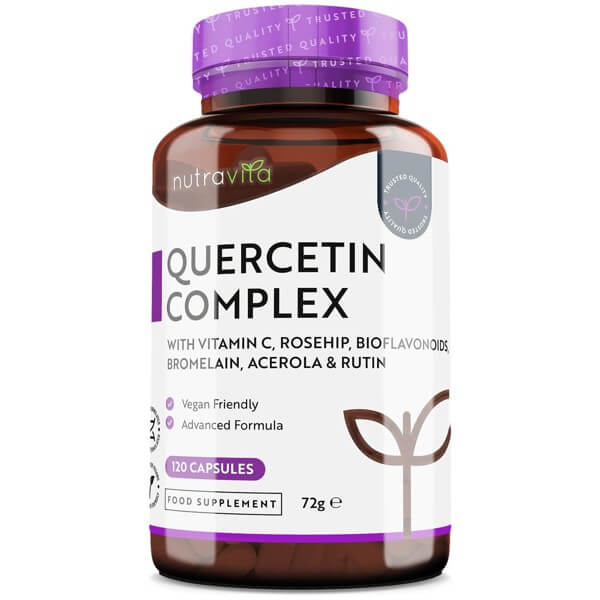
Quercetin is rarely sold alone, and the other ingredients in a combination formula can carry their own separate considerations worth knowing about.
Bromelain
Often paired with quercetin for absorption and immune support, bromelain has its own genuine blood-thinning properties and can enhance the effect of anticoagulant or antiplatelet medication, including warfarin, aspirin, and clopidogrel — worth discussing with your GP if you take these, and worth stopping at least two weeks before any planned surgery. Bromelain also carries a risk of allergic cross-reactivity in people with pineapple or latex allergies.
Immunity & Antioxidants
Resveratrol
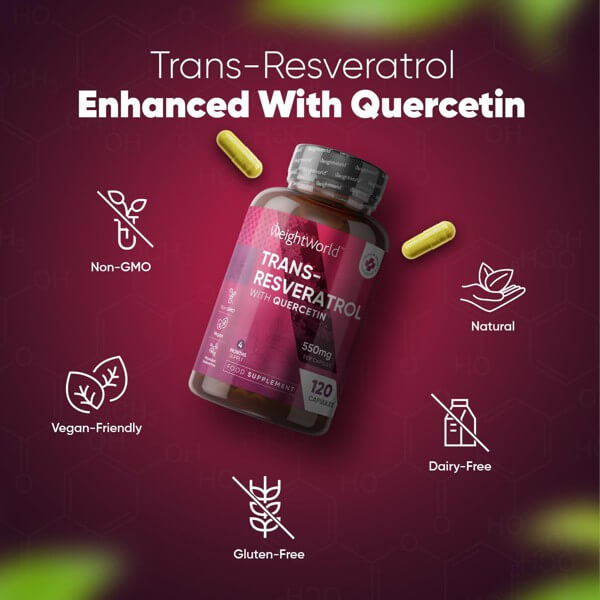
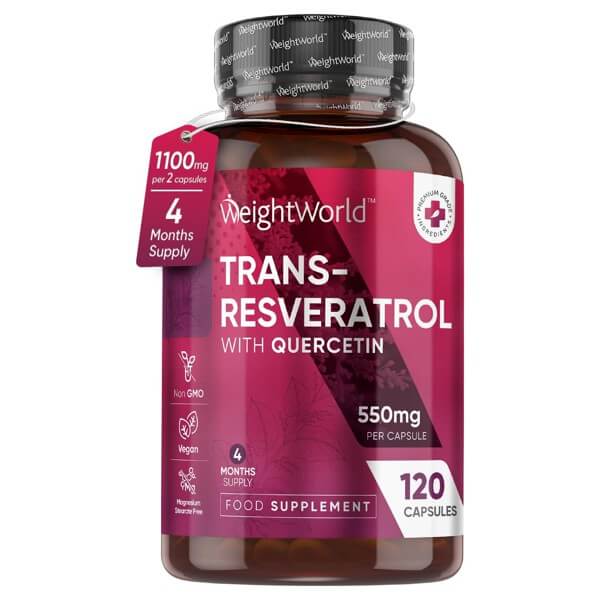
Quercetin and resveratrol are frequently combined, and there’s genuine research interest in a complementary relationship between the two antioxidants. If you’re specifically interested in resveratrol’s own research base — including its separate safety considerations around blood-thinning medication — our resveratrol guide covers it in full.
Immunity & Antioxidants
Safety Considerations
Beyond the medication interactions covered above, a few other things are worth knowing. If you have kidney problems, quercetin is worth discussing with your GP first. Safety data during pregnancy and breastfeeding is limited, so it’s best avoided in these situations without medical guidance.
Immunity & Antioxidants
Common Myths, Addressed
“It’s natural, so it won’t interact with my medication.” This is precisely the assumption worth dropping with quercetin specifically. Its effect on liver enzymes is a genuine, well-documented pharmacological property, not a marketing exaggeration — natural origin has no bearing on whether a compound affects drug metabolism.
“Quercetin is more potent than vitamin C, vitamin E, or beta-carotene.” This kind of direct comparative claim, sometimes seen on quercetin products, isn’t something that can be independently verified. Different antioxidants generally work through different mechanisms rather than existing on one single “more potent” scale, so treating them as directly rankable against each other overstates what the research actually supports.
If Quercetin Isn’t Right for You
If the medication interaction profile above is a concern, a few alternatives are worth knowing about. Resveratrol, covered in our resveratrol guide, has its own antioxidant research base and its own separate safety profile. Astaxanthin, covered in our astaxanthin guide, is another well-researched antioxidant without quercetin’s specific CYP450 interaction profile. And simply eating more quercetin-rich foods — onions, apples, berries, and tea — provides some intake without approaching supplement-level doses or their associated interaction risk.
Final Thoughts
Quercetin has genuine research interest behind it, but no authorised health claim in the UK or EU, and — more importantly than either of those facts — a real, well-documented potential to interact with a surprisingly wide range of common medications through its effect on liver enzymes. None of this means quercetin is unsafe for most people. It does mean it deserves a specific question before starting: what else are you taking, and does your GP or pharmacist know about it?
Disclaimer: This article is for informational purposes only and does not constitute medical advice. Always consult your GP or pharmacist before starting quercetin, particularly if you take any regular prescription medication, have kidney problems, are pregnant, or are breastfeeding.