
Marine collagen has grown well beyond a skincare trend, with genuine research interest spanning skin, joints, and even digestive health. This guide looks at what the evidence actually supports across these areas — and, honestly, some claims you’ll see about marine collagen hold up better than others.
What Is Marine Collagen?
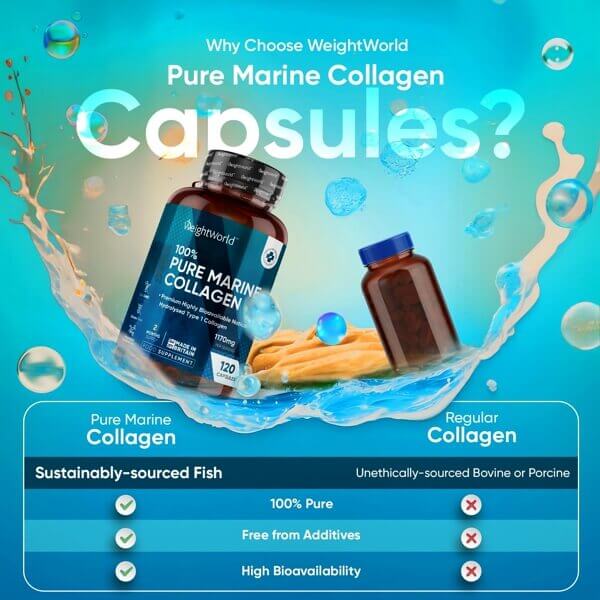
Marine collagen is a protein extracted from the skin, scales, and bones of fish. As the most abundant protein in the body, collagen provides structural support to skin, bones, tendons, and ligaments. Unlike bovine or porcine collagen, marine collagen consists primarily of Type I collagen — the type making up the large majority of skin, hair, and nails, which is why it’s of particular interest for aesthetic and skin-structure applications specifically.
Marine collagen peptides are generally smaller than bovine collagen peptides after processing, and several independent research groups (rather than any single named institution) have reported this translates to somewhat more efficient absorption — commonly cited as around 1.5 times more efficient, though exact figures vary between studies and it’s worth treating any single precise multiplier with some caution given how much this varies by source and methodology.
A well-known 2023 systematic review covering over 1,700 participants across multiple trials found that collagen peptide supplementation was associated with meaningful improvements in skin hydration and elasticity compared to placebo — a reassuring, broad-based finding at the level of the whole research area, even if individual studies within it show varying effect sizes.
Beauty & Skin Support
Marine Collagen and Skin Health
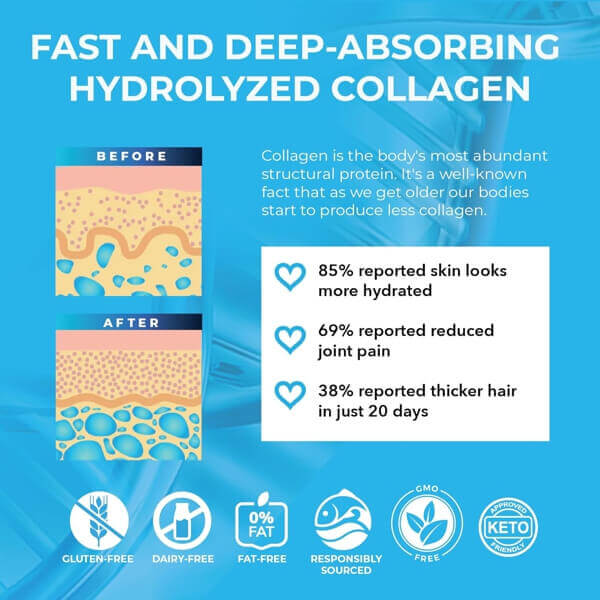
From around age 25, natural collagen production is understood to decline gradually, roughly 1-1.5% annually, contributing to the visible signs of skin ageing over time.
Individual clinical studies have reported a range of specific findings on skin hydration and wrinkle depth after 8-12 weeks of use — it’s worth being honest that these specific percentages vary considerably between studies and formulations, and no single number should be treated as a guarantee. What’s more consistent across the research is the general direction: marine collagen supplementation is associated with improved hydration, and modest improvements in elasticity and wrinkle appearance, in most (though not all) of the trials conducted so far. The proposed mechanism involves stimulating fibroblasts, the dermal cells responsible for producing collagen and elastin — a genuine, well-understood biological pathway, even where the exact magnitude of the resulting cosmetic effect varies.
Marine collagen is also studied for a role in supporting skin’s natural repair processes and, to a lesser extent, providing some antioxidant-related protection against environmental stressors — though sunscreen remains the primary, non-negotiable defence against UV damage specifically, with any collagen-related effect being a minor complement at most.
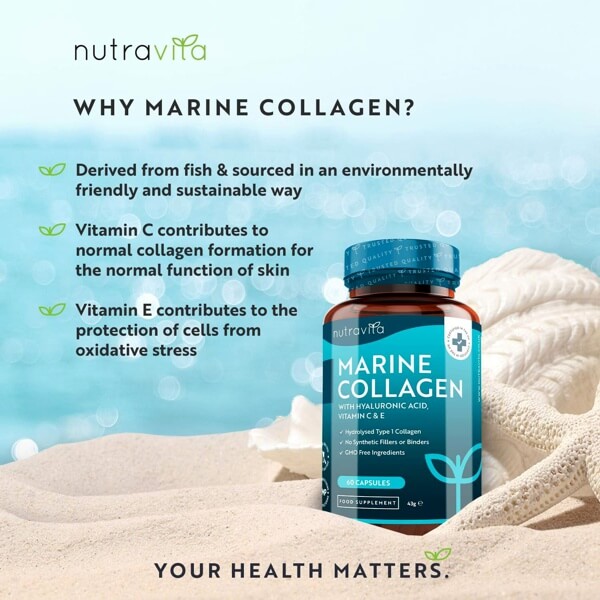
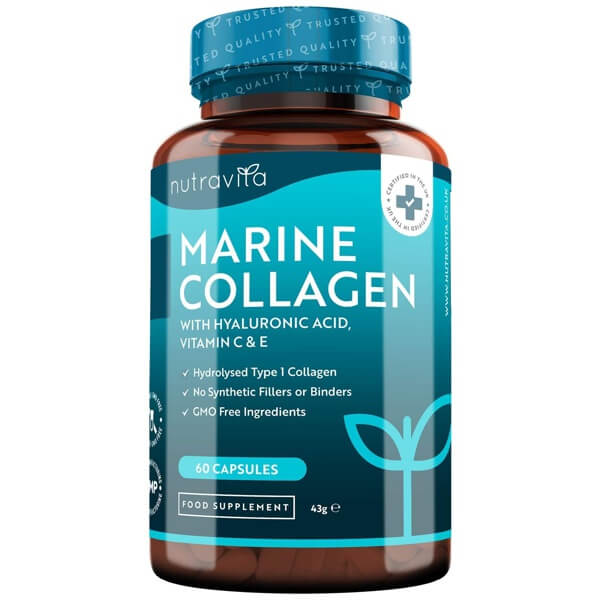
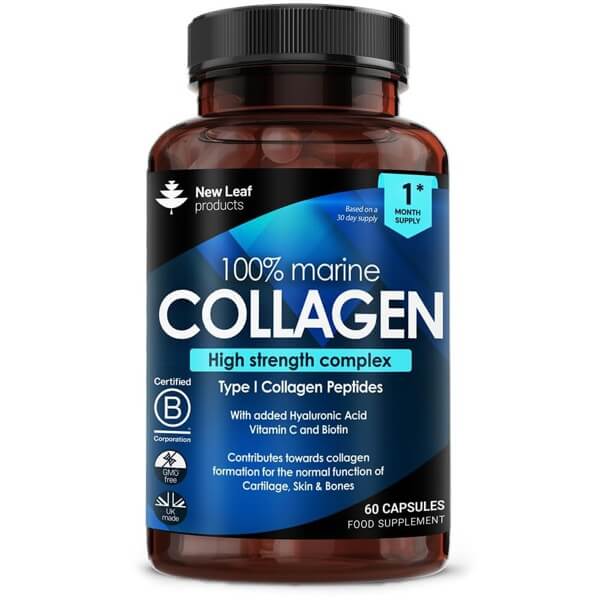
What to look for: hydrolysed marine collagen for better absorption, ideally with added vitamin C, since the body needs vitamin C for its own collagen synthesis processes.
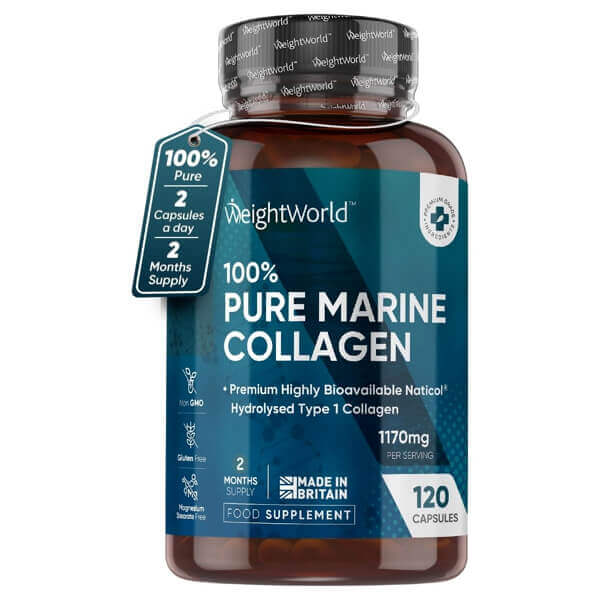
Recommended product: a premium marine collagen sourced from wild-caught fish is a reasonable choice for bioavailability — some people notice a difference in skin hydration within 4-6 weeks of consistent use, though individual timelines vary.
Marine Collagen for Joints and Bones
Aesthetic interest often draws people to marine collagen first, but the structural benefits relevant to joints and bones are genuinely worth knowing about too, particularly as natural collagen decline affects mobility and comfort alongside appearance.
Some research, including trials in athletic populations, has explored collagen peptide supplementation in relation to joint discomfort during activity and recovery time between training sessions, with generally positive findings — though as with the skin research above, it’s worth treating any single specific percentage improvement as one study’s finding rather than a universal guarantee. Some research has also explored collagen alongside glucosamine specifically in relation to joint cartilage, with encouraging but still-developing findings.
What to look for: at least 5,000mg of actual collagen per serving for joint-focused use, Type I collagen specifically, and realistic expectations — most research suggesting joint benefits used doses around 2,500mg or more daily for a minimum of 6-8 weeks before assessing results.
Beauty & Skin Support
Marine Collagen and Gut Health — A Genuinely Early Area
Marine collagen’s glycine content has led to research interest in digestive health specifically, including a possible role in supporting the intestinal lining. It’s important to be honest about where this research actually stands: most of what exists involves animal models or small human trials, in contrast to the skin and joint research above, which includes multiple randomised controlled trials in humans. This is a genuinely promising area worth watching, not an established benefit on the same footing as skin hydration or joint comfort — worth knowing if gut health specifically is your main reason for considering marine collagen.
Marine Collagen vs Bovine Collagen
| Feature | Marine Collagen | Bovine Collagen |
|---|---|---|
| Main Type | Type I (majority) | Type I & III mix |
| Absorption | Generally faster | Good |
| Often Chosen For | Skin, hair, nails | Broader connective tissue, including Type III |
| Sustainability | Uses fish byproducts | Requires dedicated farming |
| Price | Generally higher | More affordable |
Neither is universally “better” — marine collagen’s Type I concentration makes it a reasonable default for skin-focused goals, while bovine collagen’s mix of Type I and III appeals to some people for broader connective tissue support. The right choice depends on your specific goal, budget, and any dietary restrictions (marine collagen isn’t suitable for pescatarians who avoid fish, vegetarians, or vegans).
Choosing a Quality Marine Collagen Supplement
Quality varies considerably across the UK market. Worth checking for: wild-caught fish sourcing (generally fewer contaminants than farmed), enzymatic hydrolysis processing (gentler on peptide structure than chemical alternatives), third-party testing, clear sourcing information about species and origin, and sustainable harvesting practices.
Beauty & Skin Support
Building It Into Your Routine
Like most supplements on this site, marine collagen builds gradually rather than working overnight — most people find skin hydration is the first thing to become noticeable, generally within a matter of weeks, with wrinkle-related and joint-related changes, where they occur, taking longer and generally assessed over 8-12 weeks of consistent use. Results tend to fade if supplementation stops, since collagen isn’t stored for future use the way some nutrients are.
A few practical tips: pair with a vitamin C source, since it’s a genuine cofactor for the body’s own collagen synthesis; avoid mixing collagen powder into very hot drinks, since high heat can break down peptide structure — cooling coffee slightly before adding it, or using cooler liquids generally, preserves more of the product; and consistency matters more than any single serving, so daily use across the full 8-12 week assessment window is more informative than sporadic, high-dose use.
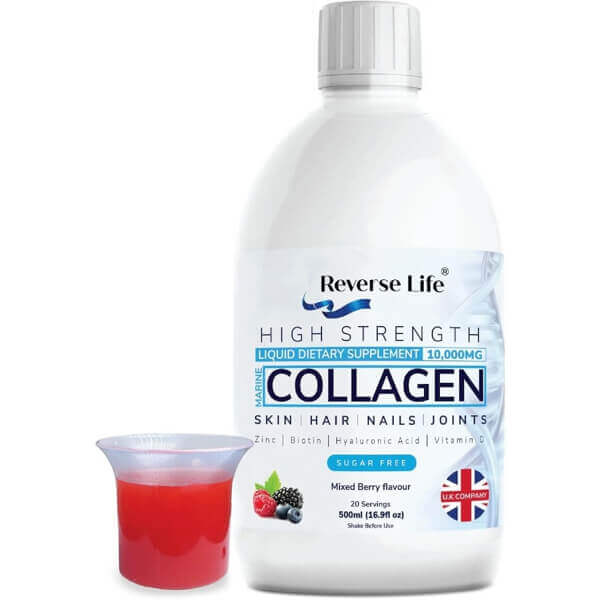
Recommended product: ready-to-drink liquid sachets are a genuinely convenient option for anyone who struggles with consistency, since there’s no mixing or measuring involved — look for a reasonable collagen dose (many quality options provide around 8,000mg per sachet) with added vitamin C included.
Common Mistakes Worth Avoiding
A few practical missteps are worth flagging: adding collagen to very hot coffee (as covered above), skipping the vitamin C pairing, using it inconsistently rather than daily, expecting a fast result when collagen genuinely builds gradually, and choosing on price alone rather than checking sourcing and processing quality — all fairly avoidable once you know to look out for them.
Supporting Collagen Through Diet and Lifestyle
Supplementation works better alongside habits that either protect existing collagen or support the body’s own production: antioxidant-rich foods (berries, leafy greens, colourful vegetables) help protect existing collagen from oxidative damage; adequate protein intake provides the raw materials for synthesis; limiting excess sugar matters, since high sugar intake is linked to a process (glycation) that can damage collagen; sun protection remains essential, since UV exposure is a major driver of collagen breakdown; and good sleep supports the body’s general tissue repair processes, collagen included.

Beauty & Skin Support
Marine Collagen vs Plant-Based Alternatives
For anyone following a plant-based diet, it’s worth knowing that genuine collagen exists only in animal products — “plant collagen” or “vegan collagen builder” products don’t contain actual collagen, but rather nutrients (vitamin C, amino acids like proline and glycine, silica) that support the body’s own collagen production indirectly. These can be a reasonable approach for vegans and vegetarians, but they work through a different, less direct mechanism than marine or bovine collagen peptides, and results may take longer to become noticeable as a result.
Safety and Who Should Be Cautious
Marine collagen is generally well tolerated. Anyone with a fish allergy should avoid it entirely — this is the one clear, non-negotiable restriction. Some people notice mild digestive symptoms when starting, which typically settle as the body adjusts; starting with a smaller dose and increasing gradually can help. If you’re pregnant or breastfeeding, check with your GP before starting any new supplement, marine collagen included.
A Note on Sustainability
Marine collagen typically uses fish skin, scales, and bones — byproducts of the fishing industry that would otherwise go to waste — which gives it a generally favourable environmental profile compared to collagen sources requiring dedicated farming. The global market for marine collagen has grown substantially in recent years, reflecting increasing consumer interest in sustainable, high-bioavailability protein sources specifically. If sustainability matters to you, look for Marine Stewardship Council certification or similarly transparent sourcing claims when choosing a product.
Final Thoughts
Marine collagen has a genuinely reasonable evidence base for skin and joint-related benefits, built on multiple human trials rather than just animal research or theory — though, as covered throughout this guide, the exact size of any individual benefit varies by study, and gut-health claims specifically remain a much earlier-stage, less-established area than skin or joints.
Choose a wild-caught, hydrolysed, third-party tested product, pair it with vitamin C, and commit to consistent daily use for at least 8-12 weeks before judging whether it’s working for you — collagen supplementation is a long-term habit, not a quick fix, and the research supports patience over urgency.
Disclaimer: This article is for informational purposes only and does not constitute medical advice. Marine collagen is not suitable for anyone with a fish allergy. Always consult your GP before starting a new supplement if you are pregnant or breastfeeding.