
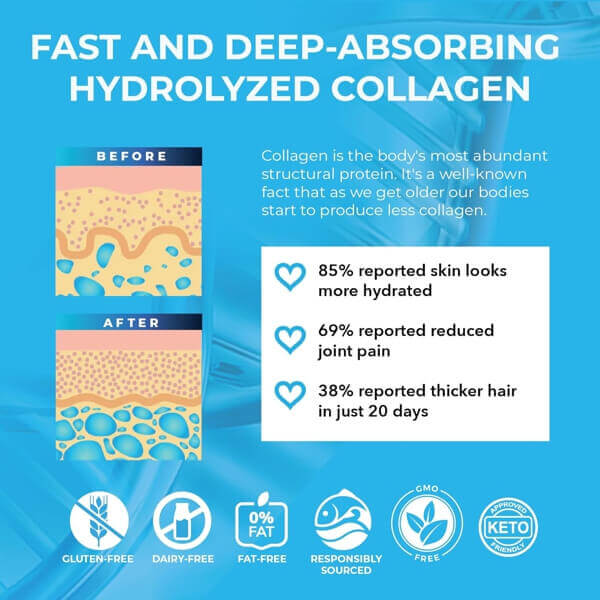
The body gradually produces less collagen with age — the protein responsible for skin firmness, joint cushioning, and connective tissue strength. The decline is understood to start slowly, around 1-1.5% per year, gradual enough that it isn’t noticeable at first. By the late thirties, effects often become visible: skin that used to bounce back after a bad night’s sleep takes longer to recover, fine lines appear, and joints that never bothered you start making themselves known on cold mornings.
By the forties, this decline is understood to accelerate, and for women during and after menopause, it speeds up further still, linked to declining oestrogen.
Collagen makes up roughly 30% of the body’s total protein and provides structure throughout — skin, joints, hair, and nails. Marine collagen is one of the more researched responses to this natural decline, though — as this guide covers honestly — the strength of that research varies more by specific outcome than marketing usually suggests.
What Makes Marine Collagen Different
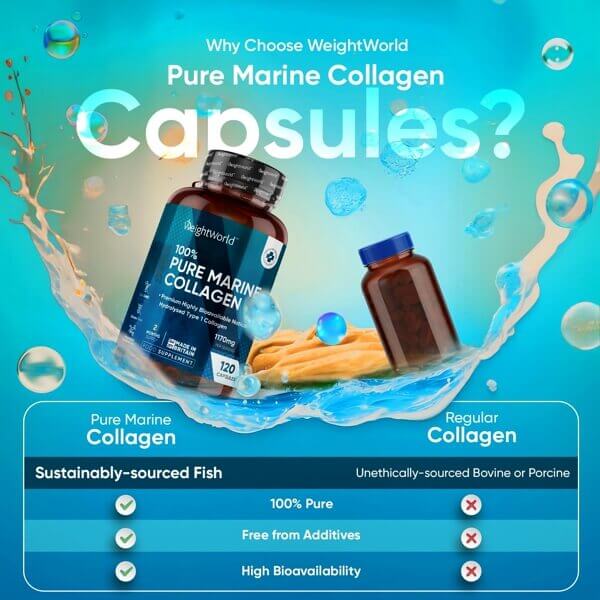
Marine collagen comes from fish skin and scales — parts that would otherwise go to waste in the fishing industry — broken down through enzymatic hydrolysis into smaller units called peptides, which the body absorbs more readily than whole collagen protein.
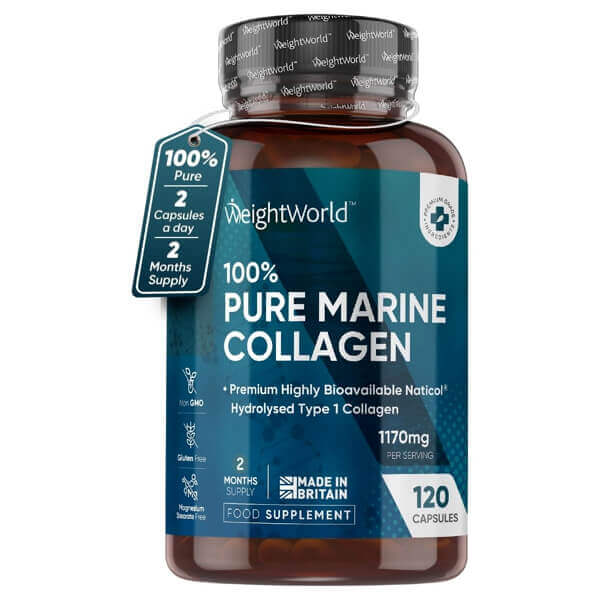
Marine collagen peptides are generally smaller in molecular weight than bovine collagen peptides, which is thought to help them cross the intestinal wall more efficiently. Marine collagen also primarily contains Type I collagen, the most abundant type in the human body and the primary structural protein in skin, bones, tendons, and connective tissue — relevant whether your interest is skin elasticity or joint comfort specifically.
Beauty & Skin Support
What the Research Actually Shows
Marine collagen’s research base is genuinely more developed than many supplements, though it’s worth being precise about what specific studies found rather than rounding everything up to “it works.”
A well-known randomised, placebo-controlled trial published in the Journal of Cosmetic Dermatology followed women aged 45-60 taking marine collagen daily for 12 weeks. The study found a statistically significant 35% reduction in wrinkle score from baseline — a genuine, meaningful finding. It’s worth being accurate about elasticity specifically, though: objective elasticity measurement (using a Cutometer device) in this same study did not show a statistically significant difference between the collagen and placebo groups at 12 weeks, even though self-reported elasticity scores were somewhat higher in the collagen group. In other words, the strongest, most reliable finding from this particular study was wrinkle reduction, not elasticity specifically — a distinction worth knowing given how often “35% better elasticity” gets repeated in marketing.
Zooming out, a 2023 meta-analysis covering 26 randomised controlled trials and over 1,700 participants found that hydrolysed collagen supplementation, including fish-sourced collagen, was associated with improved skin hydration and elasticity compared to placebo overall — a more robust, reassuring picture at the level of the whole research base. One honest caveat worth including: that same meta-analysis noted studies funded by supplement manufacturers tended to report stronger results than independently funded studies, which is worth keeping in mind generally when reading collagen research (including, to be fair, some of the research cited by brands throughout this site).
On joints, some research has explored collagen peptides being taken up specifically by cartilage tissue after supplementation, with some studies suggesting this may support production of joint-related molecules including hyaluronic acid, which contributes to joint lubrication. This is a genuinely interesting area, though much of the most specific mechanistic research comes from animal studies, with human trials generally showing more modest, general improvements in joint comfort rather than the more dramatic cartilage-level findings sometimes described.
Hair and nails are also discussed in relation to marine collagen, given the amino acids it provides (particularly proline and glycine) are relevant building blocks for these tissues too — a reasonable extension of the same underlying mechanism, though with a smaller specific research base than the skin studies above.
Beauty & Skin Support
A UK-Specific Consideration
British weather places some genuine extra demands on skin: cold, damp air outdoors, dry centrally-heated air indoors, and UV exposure that penetrates cloud cover even on overcast days, breaking down dermal collagen regardless of whether the sun is visibly out. The repeated transition between these environments places ongoing demands on skin’s structural integrity.
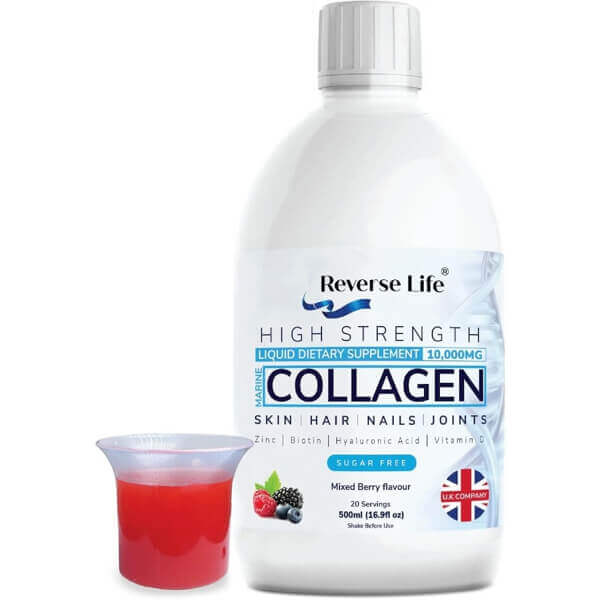
There’s a related factor worth knowing: limited UK sunshine means a significant proportion of the population has lower vitamin D status for much of the year, particularly October to March. Vitamin D is understood to play a role in collagen-related processes, though it’s worth being measured about this — vitamin D is one contributing factor among several relevant to collagen maintenance, not a strict, absolute requirement without which collagen production simply stops regardless of everything else. This is why some marine collagen formulations aimed at the UK market include vitamin D alongside hyaluronic acid and vitamin C — worth checking for on the label if this combination interests you.
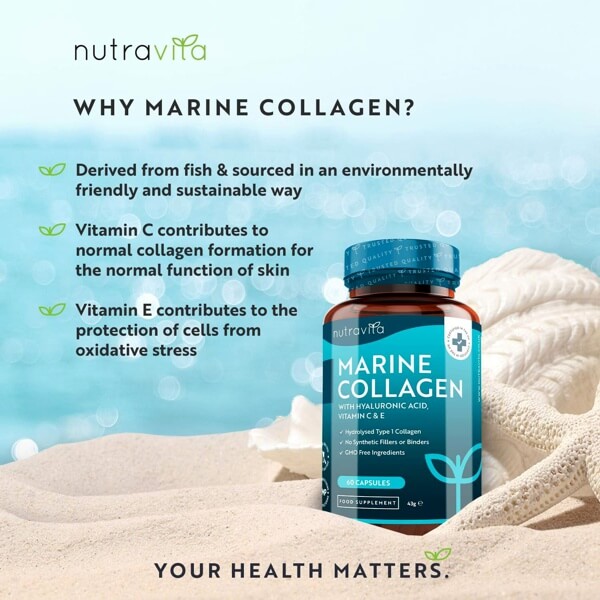
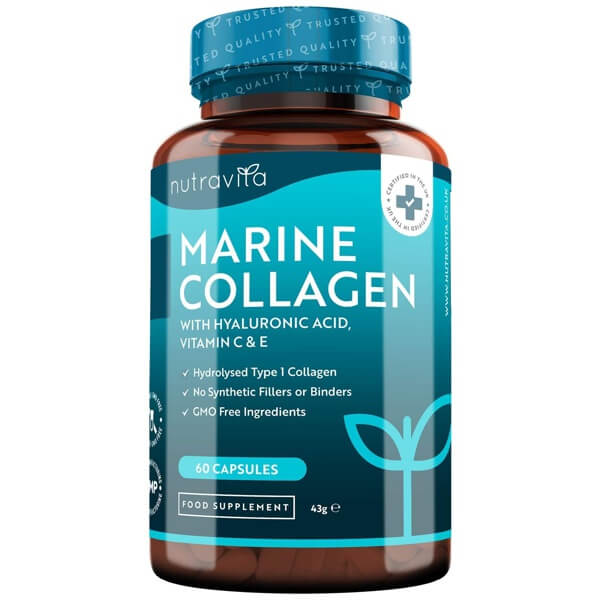
Beauty & Skin Support
What to Look for When Buying
Quality varies considerably across the UK marine collagen market.
Source and sustainability: wild-caught fish sources are generally associated with fewer contaminants than farmed alternatives, and sustainability certification (such as MSC) is worth checking for if responsible sourcing matters to you.
Processing method: enzymatic hydrolysis is generally considered to better preserve peptide structure than chemical processing — most reputable brands state their processing method clearly.
Third-party testing: marine collagen can potentially carry heavy metals from fish tissue, so independent testing for contaminants is a meaningful quality signal, not just a nice-to-have — a brand that doesn’t mention this is worth treating with some caution.
Vitamin C content: the body needs vitamin C to support its own collagen-related processes, so a product including a reasonable amount (some brands include 80mg or more per serving) is generally a more complete formulation than collagen alone.
Concentration: most of the research showing skin and joint benefits used doses of around 5,000mg or more of actual collagen per serving — check the label for actual collagen content specifically, not just total product weight, since fillers and other ingredients can make the total serving size misleading.

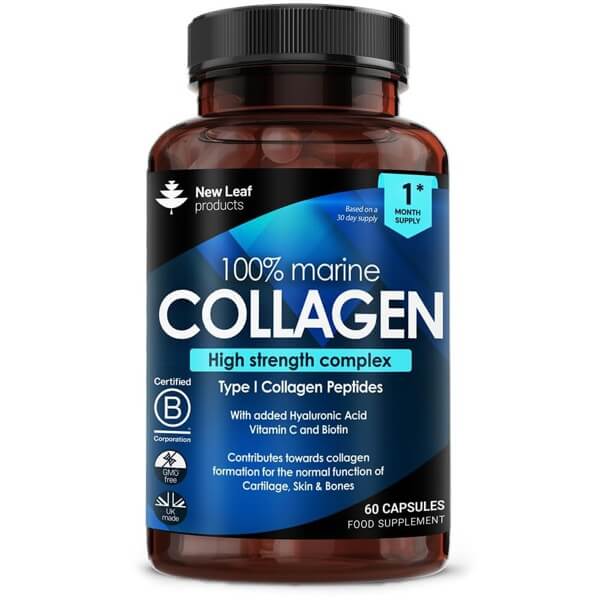
Beauty & Skin Support
How Long Before Results?
Marine collagen works gradually, and it’s worth setting expectations around realistic research timeframes rather than dramatic before-and-after promises.
In the first two to four weeks, some people notice improved skin hydration, as collagen peptides are thought to support the skin’s moisture-retaining barrier function. Between roughly weeks six and eight, some studies begin to show measurable changes in skin-related markers, though — as covered above — the specific outcome that improves most reliably (wrinkle appearance, in the study discussed) isn’t necessarily the same as what’s most heavily marketed (elasticity). From around eight to twelve weeks, joint comfort changes, where they occur, tend to become more noticeable, alongside any changes in hair and nail strength.
Three months of consistent daily use is a reasonable minimum for a fair personal assessment — collagen works with the body’s own repair processes, which don’t happen on a marketing timeline.
Who Should Avoid Marine Collagen
Anyone with a fish or shellfish allergy should avoid marine collagen entirely — the risk of a genuine allergic reaction isn’t worth any potential skin or joint benefit.
If you’re pregnant or breastfeeding, check with your GP before starting any new supplement, including marine collagen. If you take prescription medication, particularly blood thinners or immunosuppressants, speak with your GP or pharmacist first — specific interactions aren’t widely documented, but that reflects limited research rather than confirmed safety, so it’s still worth checking rather than assuming.
Marine collagen isn’t a substitute for medical treatment — if you have a diagnosed joint condition or skin disorder, discuss supplementation with a healthcare professional rather than trying it as a first-line approach on your own.
Is Marine Collagen Worth Taking?
For healthy adults noticing the ordinary effects of collagen decline — changes in skin elasticity or texture, early joint discomfort, slower recovery after activity — the evidence base is genuinely more solid than for many wellness supplements, provided you go in with accurate expectations about which specific outcomes have the strongest support (skin hydration and wrinkle-related measures somewhat more than pure elasticity specifically, based on the research discussed above).
It won’t work identically for everyone, and results depend on consistency, product quality, and individual biology — but for the right person, taken consistently over a realistic timeframe, marine collagen is a reasonably well-evidenced choice among UK supplements, without needing to oversell it beyond what the research actually shows.
Disclaimer: This article is for informational purposes only and does not constitute medical advice. Marine collagen is not suitable for anyone with a fish or shellfish allergy. Always consult your GP before starting any supplement if you are pregnant or breastfeeding, take prescription medication (particularly blood thinners or immunosuppressants), or have a diagnosed joint or skin condition.