Energy levels can drop with age. Mid-afternoon slumps become more familiar. Climbing stairs can feel harder than it used to. These changes often become more noticeable after 40, and one contributing factor is that the body’s natural production of Coenzyme Q10 (CoQ10) gradually declines from around age 20 onwards.
This molecule plays a central role in how cells produce energy, particularly in the heart. The decline in natural CoQ10 is one of several factors researchers associate with age-related fatigue — supplementation is studied as a way to offset part of that decline, though it isn’t a way to reverse the ageing process itself.
What Is Coenzyme Q10?
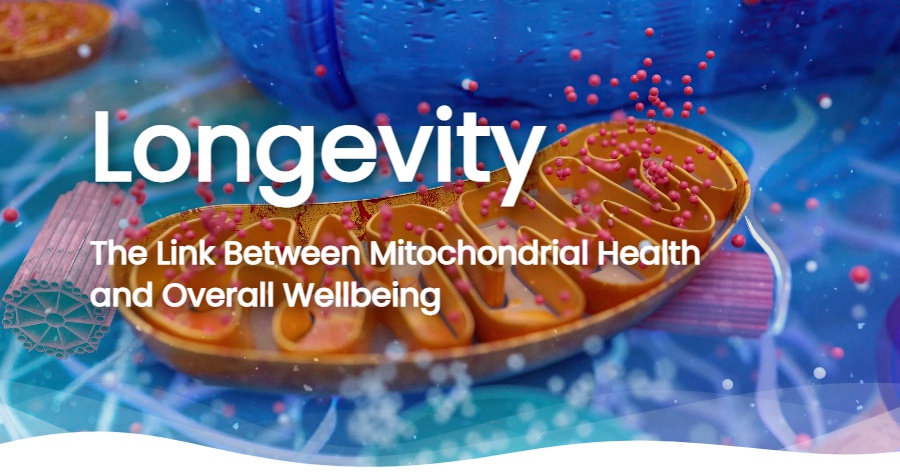
CoQ10 is a fat-soluble compound found in nearly every cell in the body, produced naturally for two main roles. In energy production, CoQ10 works within the mitochondria, the cell’s energy-producing structures, and plays a role in generating ATP (adenosine triphosphate) — the molecule cells use as their primary energy currency; low CoQ10 levels are associated with less efficient energy production. It also functions as an antioxidant, helping protect cells from free radical damage and oxidative stress — one of the more well-studied antioxidants in this respect.
The heart, liver, kidneys, and muscles contain the highest natural concentrations, which makes sense given how much energy these tissues require — muscle tissue with high energy demands, such as the heart, tends to contain more mitochondria, and therefore more CoQ10.
Types of CoQ10: Ubiquinone vs Ubiquinol
Supplements come in two forms. Ubiquinone is the oxidised form, and most supplements use this version, as it costs less to produce and is more stable. Ubiquinol is the reduced, active form the body uses directly — the body converts ubiquinone into ubiquinol before it can perform its antioxidant functions, and this conversion is understood to become less efficient with age, particularly after 40.
“Ubiquinol is often billed as being the ‘most absorbable’ active form of CoQ10, but that’s not really an important characteristic,” explains registered dietitian Devon Peart from Cleveland Clinic. “There are a few factors that contribute to how your body absorbs CoQ10, and it’s a complex process.” Current studies generally show no significant difference between ubiquinol and ubiquinone in terms of absorption. One manufacturer’s own research on its branded Kaneka Ubiquinol® ingredient reported roughly double the absorption of conventional CoQ10 in its testing, with 200mg taken daily for 30 days resulting in an approximate eightfold increase in blood levels — as this is proprietary research from the ingredient’s manufacturer rather than independent replication, it’s worth treating as one data point rather than a settled comparison between forms.
What Research Says About CoQ10’s Health Benefits
Heart Health
CoQ10’s most studied application relates to cardiovascular function, given how much energy the heart requires and how much CoQ10 it naturally contains.
Some research, including a meta-analysis of data from 33 randomised controlled trials, has explored CoQ10 supplementation alongside conventional therapy in people with moderate to severe heart failure, with some trials reporting improvements in heart function and reduced hospitalisation. However, it’s important to be direct about this: heart failure is a serious diagnosed condition, and reviews of the evidence differ — some researchers describe the overall evidence as inconclusive, and CoQ10 is not a treatment for heart failure. Any use in this context should be entirely guided by a cardiologist as a possible complement to prescribed treatment, never as a replacement for it.
For people without a diagnosed heart condition, the more general research relates to CoQ10’s role in cellular energy production and antioxidant protection, which is the basis for its broader interest in cardiovascular health.
CoQ10 and Statin Medications
Statin medications are understood to reduce natural CoQ10 levels in the body, which is why some healthcare practitioners suggest CoQ10 supplementation alongside statin therapy. Some people take CoQ10 hoping to offset statin-related muscle discomfort, though it remains genuinely uncertain whether CoQ10 reduces statin side effects — research on this specific question has produced mixed results, and this is a conversation to have with your GP rather than an assumption to act on.
Energy & Fatigue
CoQ10’s role in cellular energy production is one of its best-established functions — cells rely on CoQ10 to help generate ATP, the molecule that powers cellular activity, and insufficient CoQ10 can affect how efficiently tissues and organs function. This is a different mechanism from caffeine: CoQ10 is studied for a role in the body’s underlying energy production system, rather than providing temporary stimulation. One study found that 12 weeks of CoQ10 supplementation (150mg/day) was associated with improved sleep quality and better performance on arithmetic tasks in the study population — a specific, modest finding rather than a general energy-boosting guarantee.
Skin & Ageing
Skin is exposed to ongoing oxidative stress from UV rays and environmental pollution, which is understood to contribute to reduced moisture retention and thinning of the skin’s layers over time. CoQ10 is studied for its antioxidant and anti-inflammatory properties in relation to skin health specifically, with some research suggesting an association with reduced appearance of fine lines and wrinkles, support for skin firmness and elasticity, and a degree of protection against UV-related damage — a supplement to sunscreen, never a replacement for it.
Brain & Cognitive Function
Oxidative stress in the brain tends to increase with age, and declining mitochondrial function is one of several factors researchers study in relation to age-related cognitive changes and neurodegenerative conditions such as Alzheimer’s and Parkinson’s.
It’s important to be clear here: CoQ10 is not a treatment or prevention for Alzheimer’s, Parkinson’s, or any diagnosed neurodegenerative condition. Some early research — including a small study combining CoQ10 with shilajit that reported increased markers of brain energy production — has explored CoQ10’s antioxidant role in relation to brain cell protection generally, but this is preliminary research, not evidence of benefit for any specific condition.
Athletic Performance
CoQ10 and ubiquinol are studied for a possible role in energy production during exercise. One double-blind trial found that CoQH2 (300mg/day for 6 weeks) was associated with improved aerobic performance in trained athletes — a specific finding from one trial, not a guaranteed effect.
Fertility Support
Female fertility is understood to decline with age, partly due to a decrease in the number and quality of available eggs, and CoQ10 has been studied for a possible role in protecting egg cells from oxidative damage as natural CoQ10 production slows with age. Male fertility is also susceptible to oxidative damage, which research links to reduced sperm count and quality — several studies suggest CoQ10 supplementation may be associated with improved sperm activity and concentration, including one 26-week double-blind placebo trial reporting support for sperm quality, though this remains an active area of research rather than an established fertility treatment, and fertility concerns are worth discussing with a GP or fertility specialist directly.
Who Might Consider CoQ10?
A few groups are more commonly discussed in relation to CoQ10 supplementation: people over 40, as natural production and the ubiquinone-to-ubiquinol conversion both decline with age; statin users, given statins’ effect on natural CoQ10 levels (worth discussing with a GP rather than starting on your own); those with cardiovascular concerns, under a cardiologist’s guidance as one possible complement to prescribed treatment; people experiencing fatigue, though fatigue has many possible causes worth investigating with a GP first; athletes, in relation to the performance research above; and those with fertility concerns, alongside — not instead of — fertility-specific medical guidance.
CoQ10 Dosage and How to Take It
Studies relating to heart health have typically used doses of 100-400mg per day, while considerably higher doses (600-3,000mg) have been used in research into certain neurodegenerative conditions — these higher, therapeutic-range doses require medical supervision and are not general recommendations. General use is more commonly in the 100-200mg daily range, statin users often discuss 100-200mg with their GP specifically, and athletic performance research has generally used around 300mg daily. 200mg twice daily with food is a commonly referenced amount in research for maintaining certain blood levels of CoQ10, though there’s no single, universally agreed “ideal” dose.
“A pretty typical dose for CoQ10 is 100 milligrams per day, but right now, there’s no established ideal dose. Your recommended dosage will also depend on what you are using this for.” — Devon Peart, RD, Cleveland Clinic
Taking CoQ10 with food (it’s fat-soluble) and splitting larger doses across the day are both commonly suggested for better utilisation.
Safety Profile
CoQ10 is generally considered well tolerated in the research available so far, though it’s worth being honest about the limits of that evidence: “The safety of CoQ10 supplementation hasn’t been well established yet. We are operating under the assumption that the substance is safe to take, unless and until we discover otherwise.” — Devon Peart, RD
Some research trials have used high doses (such as 2,400mg/day for 60 weeks) without reported serious issues, but these were closely monitored clinical settings — not a basis for self-directed high-dose use.
Immunity & Antioxidants
Side Effects and Interactions
At typical, general-use doses, CoQ10 side effects are uncommon and usually minor when they do occur — mild digestive discomfort, insomnia if taken late in the day, mild headaches, and, uncommonly, rashes. Side effects are more likely at higher doses.
CoQ10 may also interact with certain medications: it has mild blood-thinning properties and may enhance the effect of warfarin; it may modestly lower blood pressure, which combined with antihypertensive medication could push levels lower than intended; and it may influence insulin sensitivity, which could affect blood sugar levels in people on diabetes medication. Consult your GP before starting CoQ10 if you take prescription medication or have an existing health condition.
Best CoQ10 Supplements in the UK (2026 Picks)
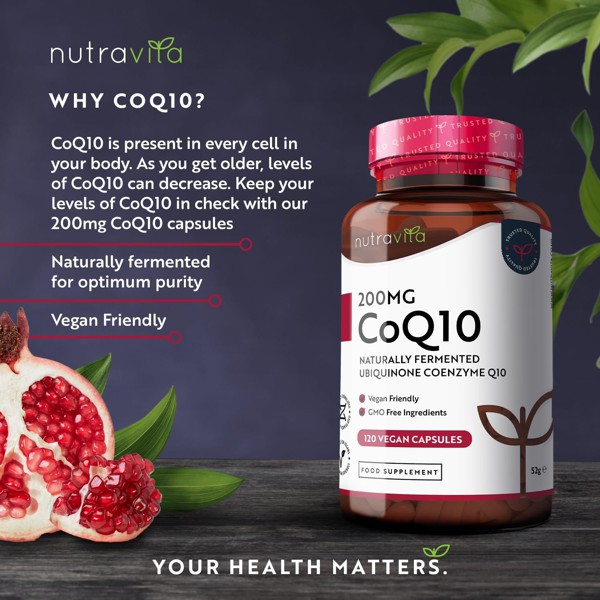
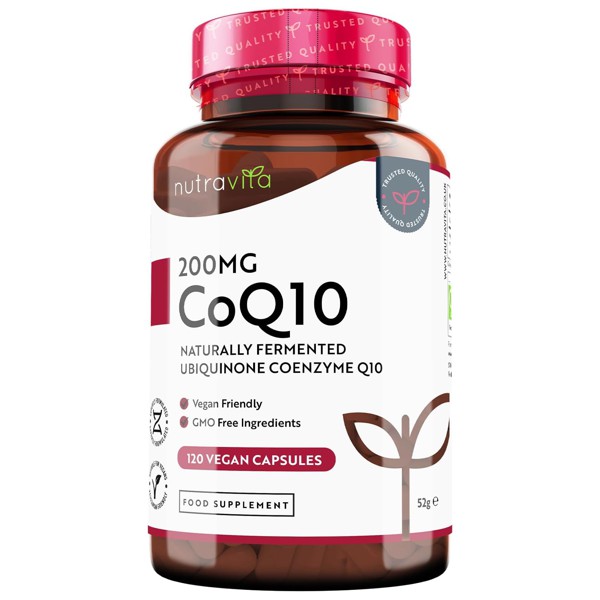
Nutravita CoQ10 200mg – 120 Capsules
This option provides 200mg ubiquinone per serving, a 4-month supply, manufactured in the UK to GMP standards. It’s vegan-friendly, allergen-free, and produced by fermentation.
Immunity & Antioxidants
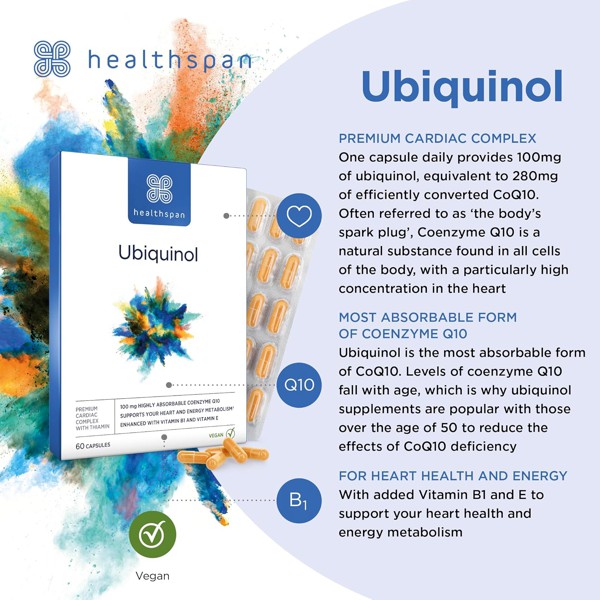
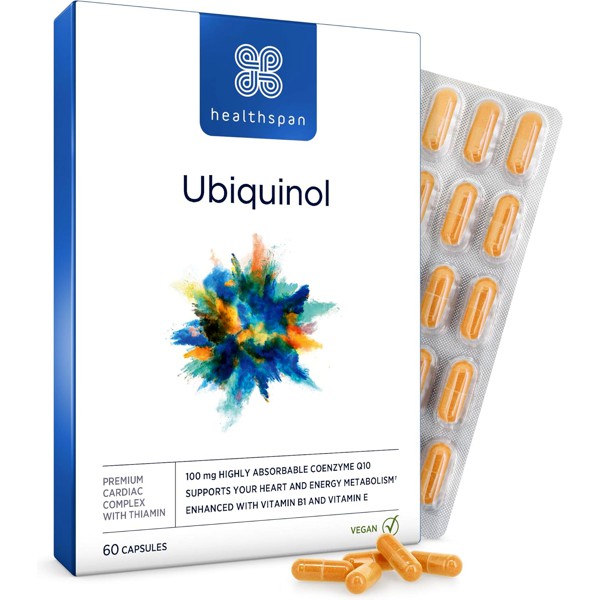
Healthspan Ubiquinol 100mg – Optimal Absorption
This one contains the active ubiquinol form, formulated with vitamin B1, with 100mg ubiquinol broadly equivalent to 280mg of standard CoQ10. Made in the UK, it’s suspended in sunflower seed oil to aid absorption of this fat-soluble compound.
Immunity & Antioxidants
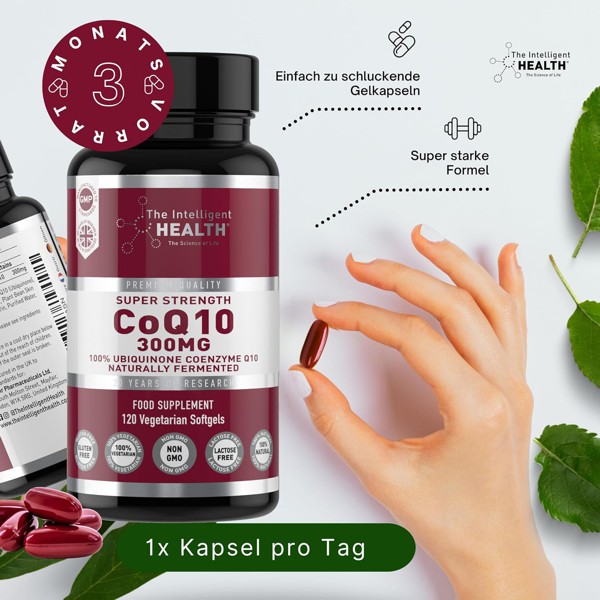
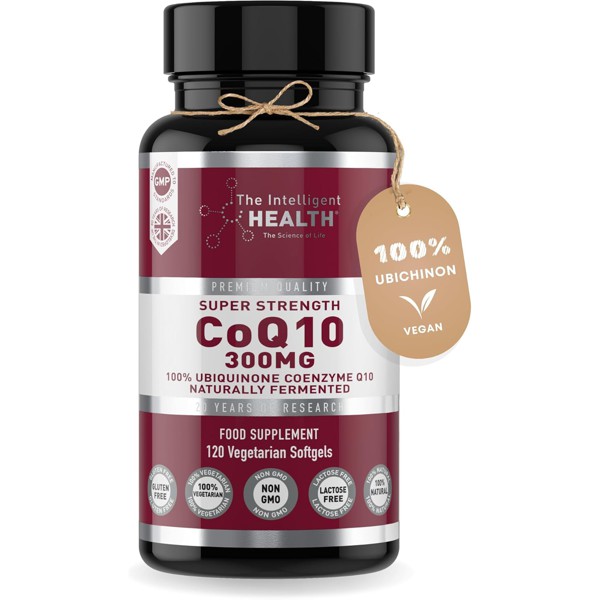
The Intelligent Health Ubiquinone 300mg – High Absorption
This option offers a 300mg dose in a softgel format, naturally fermented and vegan-friendly, made in the UK to GMP standards, with 120 capsules per bottle.
Immunity & Antioxidants
Choosing a CoQ10 Supplement
If you’re over 40, ubiquinol is worth considering given age-related declines in conversion efficiency — though current research shows no clear absorption advantage between the two forms overall. Oil-based softgels tend to suit this fat-soluble compound well, and some formulations include black pepper extract (piperine), studied for a possible role in absorption. Beyond the form itself, third-party testing, GMP certification, and UK manufacturing are worth verifying, and comparing cost per daily dose (rather than price per bottle) gives a more accurate sense of value. Check for vegetarian/vegan capsules and allergen information if relevant to you — fermentation-derived CoQ10 is a naturally sourced production method worth knowing about, though it’s one factor to consider alongside testing and certification, not a quality marker on its own.
Important Limitations to Understand
CoQ10 may be modestly associated with lower cholesterol, reduced migraine frequency, and improved energy levels in some studies, though the evidence for these specific uses remains preliminary or mixed rather than settled. Like many supplements, CoQ10 has been studied for a wide range of other uses beyond those covered here, but the research supporting most of them is limited, and there isn’t conclusive evidence for benefits beyond what’s outlined in this guide.
“Most people don’t need CoQ10 supplements, but CoQ10 may be able to help if you live with migraines or heart disease.” — Cleveland Clinic
Reasonably well-established: a role in cellular energy production, antioxidant activity, and research interest in cardiovascular health, particularly alongside prescribed heart failure treatment (not as a replacement for it).
Preliminary or mixed evidence: reducing statin-related muscle discomfort (uncertain), cholesterol reduction (modest, where seen at all), migraine reduction (preliminary), athletic performance (mixed results across studies), and cognitive and fertility support (early-stage research).
Final Thoughts
CoQ10 has a reasonably solid evidence base for its role in cellular energy production and antioxidant protection, and genuine research interest around cardiovascular health, particularly for people already managing heart failure alongside their cardiologist’s care.
Beyond that core evidence, many of the other benefits explored in this guide — skin, cognitive function, athletic performance, fertility — are supported by early or mixed research rather than settled conclusions. That doesn’t make them not worth knowing about, but it does mean they’re reasonable areas of interest rather than guarantees.
Adults over 40 are the group most commonly discussed in relation to CoQ10 supplementation, largely due to natural age-related decline — but as with anything in this guide, the right next step if you have a specific health concern is a conversation with your GP, not a purchase.
Consult your healthcare provider before starting CoQ10, particularly if you take medication or have an existing health condition. Supplements are, at most, one part of a broader approach that includes nutrition, physical activity, sleep, and stress management.
Disclaimer: This article is for informational purposes only and does not constitute medical advice. Always consult your GP before starting any new supplement.