Do you struggle with low energy throughout the day? Does brain fog affect your work? Or do you seem to catch every cold going around the office?
Medicinal mushrooms have moved from traditional Eastern medicine into modern UK wellness routines, and reishi, cordyceps, and lion’s mane are among the most discussed. This guide looks at what research actually supports for each, rather than relying on general hype around “medicinal mushrooms” as a category.
What Research Actually Shows
Mushroom-derived beta-glucans and triterpenes are genuinely studied for roles in immune function and cellular health, including research published in journals like Frontiers in Nutrition. It’s worth being clear that much of this research is still at an earlier stage — laboratory and animal studies, plus a growing but still limited number of human trials — rather than a fully settled picture for every claimed benefit.
Sustainability is a genuine plus: mushrooms require comparatively few resources to cultivate, which appeals to environmentally conscious UK consumers, separate from any question of their health effects.
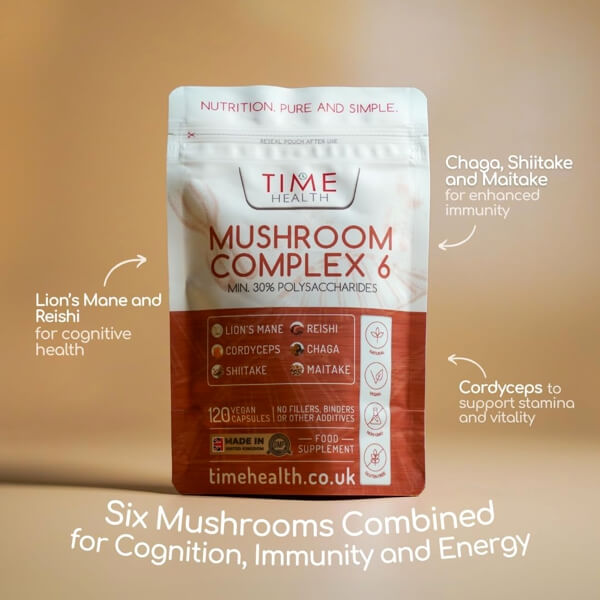
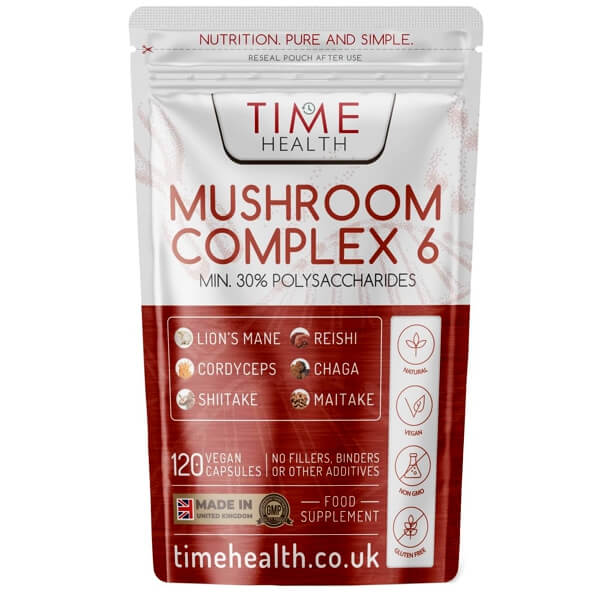
Mushroom Complex
Reishi: Studied for Stress and Sleep
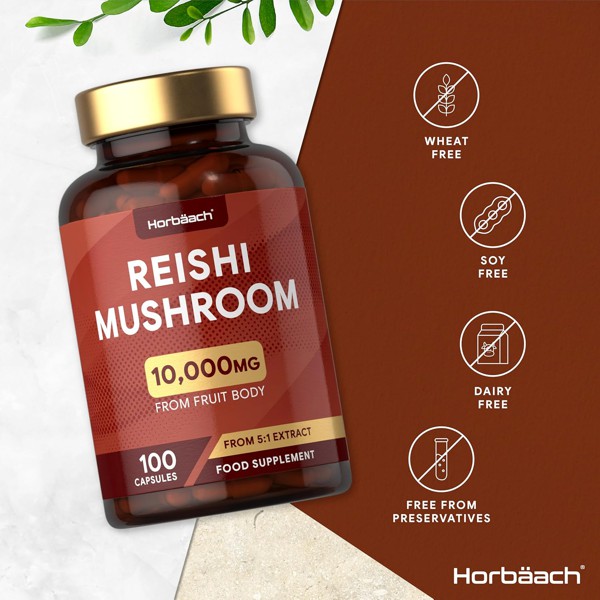
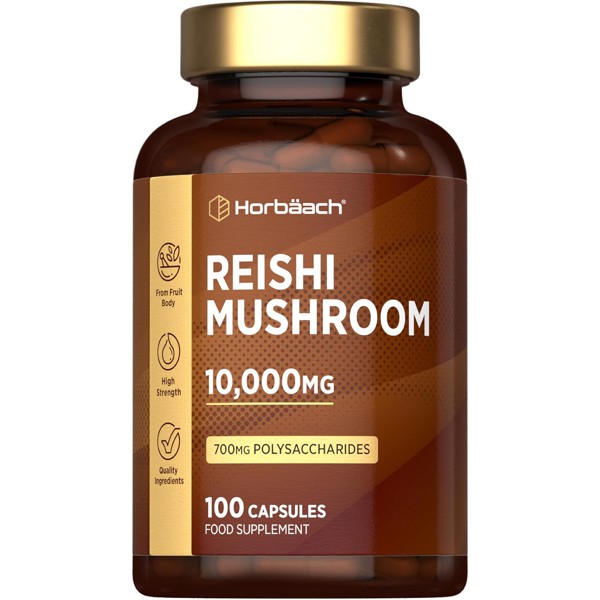
Reishi mushroom (Ganoderma lucidum) contains beta-glucans and triterpenes studied for a role in immune modulation. Beyond immune-related research, reishi is also discussed in relation to sleep quality, stress response during demanding periods, and general calm.
It’s worth being cautious about linking reishi to “fewer colds” specifically — its immune-modulating properties are a genuine area of research interest, but this is different from a proven preventive effect against infections, and reishi isn’t a substitute for standard measures like vaccination where relevant.
How it’s typically used: Often taken in the evening, sometimes added to chamomile tea or warm milk as part of a wind-down routine, or taken as capsules for convenience.
Cordyceps: Studied in Relation to Energy and Endurance
Cordyceps is studied for a possible role in supporting ATP production and oxygen utilisation during exercise. Several genuine human trials have explored cordyceps and measures like VO2 max and exercise performance, with some — though not all — reporting improvements; results vary between studies, and this remains a promising rather than fully settled area of sports nutrition research.
This research relates to a different mechanism from caffeine’s stimulant effect — cordyceps is studied in relation to the body’s own energy production systems, which is why some people describe the effect as feeling different from a caffeine boost, though individual experience varies and this isn’t a guarantee of a jitter-free or crash-free effect for everyone.
Groups sometimes discussed in relation to this research include endurance athletes, people with physically demanding routines, and those simply interested in general energy support — though anyone recovering from illness should check with their GP before starting a new supplement rather than self-directing recovery through cordyceps.
How it’s typically used: Often taken in the morning or shortly before exercise; powder can be mixed into smoothies, or taken as capsules with breakfast.
Lion’s Mane: Studied in Relation to Cognitive Function
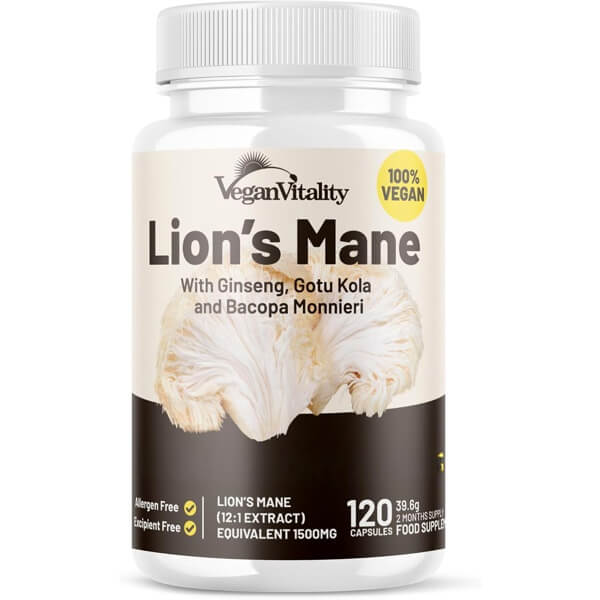
Lion’s mane is studied for a possible role in stimulating nerve growth factor (NGF), a protein involved in the maintenance of nerve cells. It’s important to be precise about what this means: most of the research on NGF stimulation comes from laboratory and animal studies, and this is not the same as a proven effect on human memory, brain cell regeneration, or any diagnosed cognitive or neurological condition.
Within that context, lion’s mane is discussed in relation to concentration during demanding tasks, general mental clarity, and working memory in some smaller human studies — genuinely interesting, active areas of research, but worth reading as areas of interest rather than an established guarantee of improved memory, focus, or creativity for every individual.
How it’s typically used: Can be taken at any time of day; morning is common. Powder is sometimes added to coffee or porridge, and capsules suit consistent daily dosing.

Safety and Interactions
Medicinal mushrooms are generally well tolerated, but a few specific considerations are worth knowing. Reishi has mild blood-thinning properties in some research and may interact with anticoagulant or antiplatelet medication — worth discussing with your GP if you take blood thinners, or before any scheduled surgery. Both reishi and cordyceps have immune-modulating properties, which means anyone with an autoimmune condition or taking immunosuppressant medication should check with their GP before use, and cordyceps may also affect blood sugar in some research, which is worth knowing if you have diabetes or take blood sugar medication.
Traditional use over centuries reflects a reasonable general safety profile, but isn’t the same as modern clinical safety data — if you take regular medication or have an existing health condition, a GP conversation before starting is the more reliable approach than relying on tradition alone.
How to Choose Quality Supplements
The UK market offers many mushroom products of varying quality. It’s worth checking for organic certification, GMP compliance, third-party testing results, and Soil Association approval where relevant, and for the extraction method used — dual extraction (water and alcohol) is generally understood to capture a broader range of beneficial compounds than single extraction, and is worth checking the label for. Quality brands also specify the exact species used (such as Ganoderma lucidum for reishi) and which part of the mushroom, so vague labelling is worth treating with some caution, and it’s worth checking for minimal fillers, skipping products with unnecessary added sugars or artificial flavours.
Format is largely personal preference: capsules suit daily routines and simplicity, powders offer flexibility for recipes, tinctures are a liquid alternative, and dried mushrooms suit those who want to prepare their own teas. Starting with capsules is a reasonable, simple choice — powders are worth exploring once you have a sense of how your body responds.
Building a Routine
Many people start with a single mushroom type based on their primary interest, and observe their own response over 2-3 weeks before considering others.
A few practical, commonly used patterns: lion’s mane or cordyceps in the morning (added to coffee, tea, or a smoothie, or taken as capsules with breakfast); cordyceps specifically around 30 minutes before exercise if performance is the focus; and reishi in the evening (as a tea, hot drink, or capsules with dinner) if sleep or wind-down is the goal.
Some people also explore mushroom powders in broths, soups, or baking once they’re familiar with how a particular mushroom suits them — this is a matter of personal preference rather than a requirement for any benefit.
Final Thoughts
Reishi, cordyceps, and lion’s mane each have a genuine, if still-developing, research base — stress and sleep for reishi, exercise-related energy metabolism for cordyceps, and cognitive-function research (mostly early-stage) for lion’s mane. None of them are a substitute for addressing the underlying causes of poor sleep, low energy, or brain fog, which are often more directly influenced by sleep habits, stress levels, diet, and overall health than by any single supplement.
If you’re considering one, choose based on your primary interest, start with one variety, use a quality-tested product, and give it a few weeks of consistent use before deciding whether it’s making a genuine difference to you personally — while keeping the safety considerations above in mind, particularly if you take regular medication.
Disclaimer: This article is for informational purposes only and does not constitute medical advice. Always consult your GP before starting a mushroom supplement, particularly if you take blood-thinning medication, have an autoimmune condition, or have diabetes.