
Do fine lines seem to appear more easily each year? Do your joints feel stiffer in the morning than they used to? Has your hair seemed thinner than a few years ago?
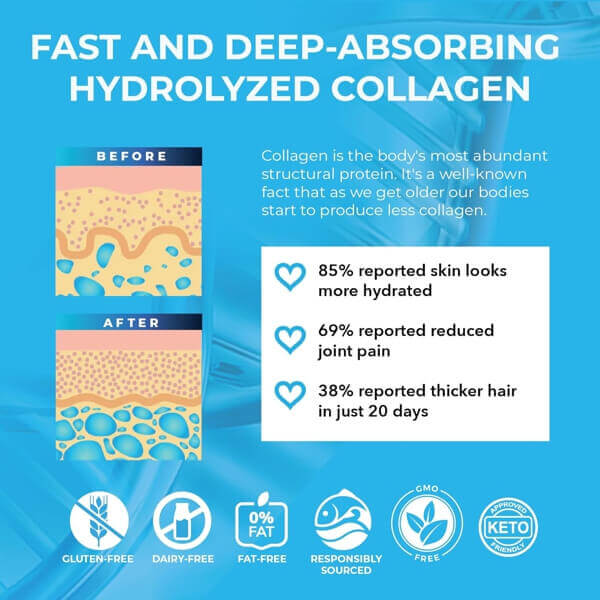
After 40, the body’s collagen production gradually declines — by around 1% per year, according to commonly cited estimates. Collagen is a structural protein that plays a role in skin firmness, joint cartilage, and hair strength, so this decline is often part of what’s behind these changes.
Some research has explored whether collagen supplementation may support skin, joint, hair and nail changes associated with this natural decline. It isn’t a way to reverse ageing, and results vary between studies and individuals — but the research is genuinely worth understanding if you’re considering it.
Understanding Collagen and Ageing
Collagen makes up around a third of the body’s total protein, and provides structure to skin, hair, joints and bones. Production is understood to decline gradually from around age 25, and by 40, many women notice fine lines and wrinkles becoming more visible, skin feeling less firm or bouncy, hair thinning or losing some shine, nails breaking or splitting more easily, and morning joint stiffness.
Menopause is understood to accelerate this decline, as lower oestrogen levels are associated with reduced collagen production — which is part of why many women first consider collagen supplements around this life stage.


Beauty & Skin Support
What Research Says About Collagen
Skin
Several clinical studies have looked at collagen peptides in relation to skin elasticity, hydration and density, with encouraging — though not universal — findings. A 2019 study in the Journal of Drugs in Dermatology followed women taking collagen for 12 weeks and reported a 27.2% reduction in eye wrinkle depth compared to a placebo group. This is one study with a specific formulation and dose; individual results vary, and it shouldn’t be read as a guaranteed outcome. Some women report skin feeling more hydrated within the first few weeks of daily use, though this is a self-reported, individual experience rather than a documented average.
Joint Comfort
Joint discomfort is common after 40, and collagen is sometimes discussed in relation to cartilage, which cushions the joints. A study in the International Journal of Medical Sciences found a 26% reduction in joint pain scores among participants with diagnosed osteoarthritis. It’s worth being clear about this: that study was specifically in people with osteoarthritis, a diagnosed condition — it doesn’t automatically apply to general age-related joint stiffness without that diagnosis, and joint pain is something to discuss with a GP rather than self-treat.
Hair
Thinning hair is a common concern for women over 40. Collagen provides amino acids that contribute to keratin, the protein that forms hair structure, and is sometimes discussed in relation to the hair follicle and scalp. Hair grows slowly, and changes here are typically the slowest to notice — some women report less shedding or more shine after consistent use over several weeks, though robust clinical data specifically on hair outcomes is more limited than for skin.
Nails
Brittle or splitting nails are a common frustration. A study in the Journal of Cosmetic Dermatology reported 12% faster nail growth and 42% fewer broken nails among participants taking collagen, compared to a control group. As with the studies above, this reflects one trial’s findings, not a guarantee for every individual.
Beauty & Skin Support
What Studies Have Tracked Over Time
Individual experiences vary considerably, but here’s a general sense of the timeframes reported across the research discussed above. Visible changes are typically minimal in the early weeks — some studies measured early internal markers, such as hydration, rather than visible changes at this stage. Around a month in, some studies have reported early signs of change for some participants, such as modestly improved skin hydration or slightly less nail breakage, though this varies a great deal between individuals and isn’t something to expect on a fixed schedule.
Around two months is where most of the research is actually anchored — the studies referenced above (skin, joints, nails) generally used study periods of 8-12 weeks to measure their reported results. Where studies ran longer than this, some reported continued, more measurable changes at three months and beyond, which is also generally the minimum period researchers suggest before meaningfully assessing whether collagen is having an effect for you individually.

Beauty & Skin Support
Choosing a Collagen Supplement
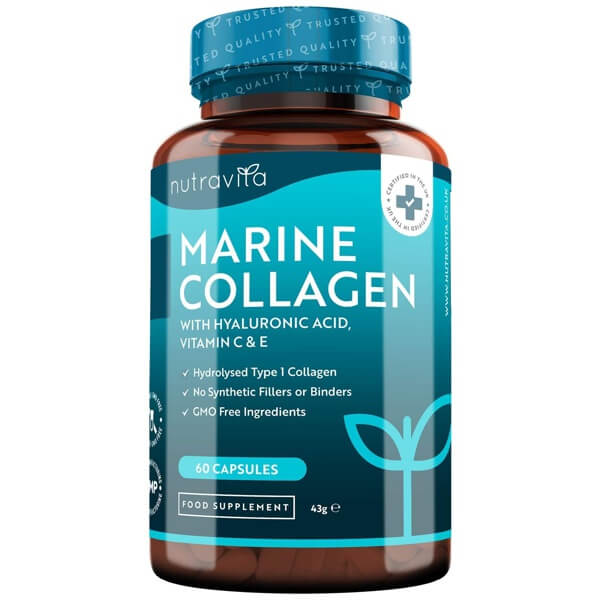
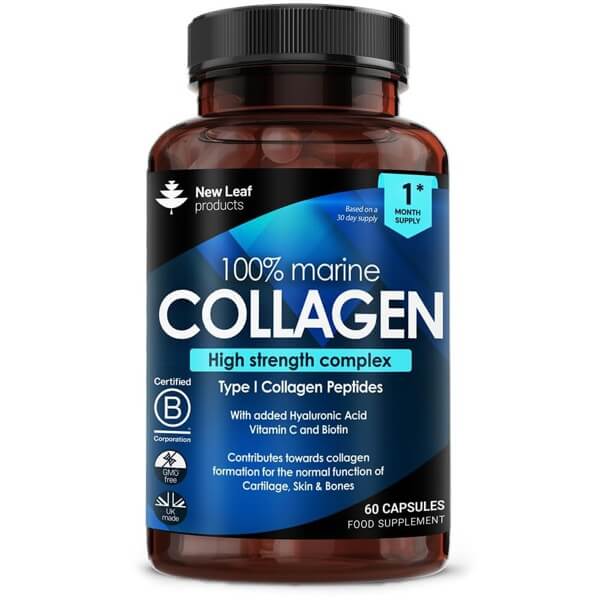
Not all collagen supplements are formulated the same way. Type I is the most abundant collagen type in the body, primarily associated with skin, hair and nails; Type II is more specifically studied in relation to joint health and cartilage; and Type III works alongside Type I for skin elasticity, also found in blood vessels and organs. Multi-collagen formulas combining all three are an option for those interested in broader coverage rather than a single focus area.
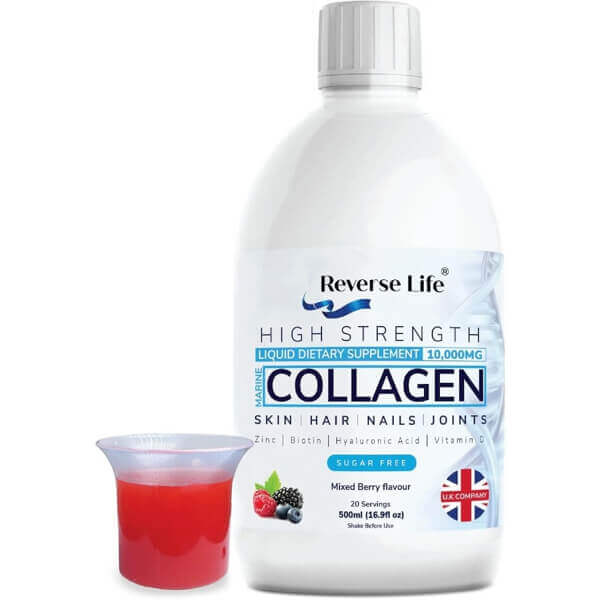
Form is largely a matter of preference: hydrolysed collagen peptides are broken down into smaller particles and generally considered to have the highest bioavailability; powder is versatile, mixing into hot or cold drinks, and often offers the highest dose per serving for the price; capsules are convenient and easy to dose precisely, though typically lower in collagen per serving than powders; and liquid collagen is pre-dissolved, sometimes combined with other ingredients, generally at a higher cost per dose.
Whichever form you choose, look for products with clearly specified collagen types (I, II, III), third-party testing for purity, grass-fed or sustainably sourced marine collagen, no unnecessary fillers or additives, and clear dosage information — research generally uses doses in the 2.5g-15g daily range.
Getting the Most From a Collagen Supplement
Research in this area has generally used doses between 2.5g and 15g daily, with 10g a commonly studied amount. Some people take it in the morning on an empty stomach; others prefer before bed — consistency over several weeks appears to matter more than the exact time of day, based on how these studies are typically designed.
A few nutrients are worth pairing it with: vitamin C plays a role in the body’s own collagen synthesis, which is why some people pair their supplement with a vitamin C source such as orange juice or berries; hyaluronic acid is sometimes used alongside collagen, with research exploring a possible complementary role for skin; and zinc and copper are involved in the body’s natural collagen production processes.
A few lifestyle factors matter just as much: protecting skin from excessive sun exposure, since UV exposure is understood to break down collagen; staying hydrated, given collagen’s structural role; moderating sugar intake, as high sugar intake is linked to a process (glycation) that can damage collagen; and getting adequate sleep, when much of the body’s natural repair takes place.

Beauty & Skin Support
Safety and Side Effects
Collagen is generally well tolerated. Some people experience mild bloating or fullness when starting a collagen supplement, which typically resolves within a few days. If you have fish, shellfish, or egg allergies, check the source, since many marine collagen products are derived from fish. And on quality: lower-quality products can contain heavy metals or unnecessary additives, so choosing third-party tested products, sourced from grass-fed animals or sustainable marine sources, helps reduce this risk.
Making Your Decision
Collagen isn’t a miracle cure, and it isn’t a way to reverse the ageing process — but the research above suggests it’s a reasonably well-studied option for some of the changes many women notice after 40, particularly for skin.
Individual results vary based on biology, lifestyle, and consistency of use. Most of the research discussed above used study periods of 8-12 weeks, which is a realistic timeframe to allow before assessing whether it’s making a difference for you.
Focus on product quality, an appropriate dose, and consistency, rather than expecting a fixed timeline of results — and combine it with the lifestyle factors above, which have their own independent evidence base for skin, joint and hair health.
Disclaimer: This article is for informational purposes only and does not constitute medical advice. If you have joint pain, a diagnosed condition such as osteoarthritis, or any other ongoing health concern, speak to your GP before starting any supplement.