What This Product Provides, and a Note on Form
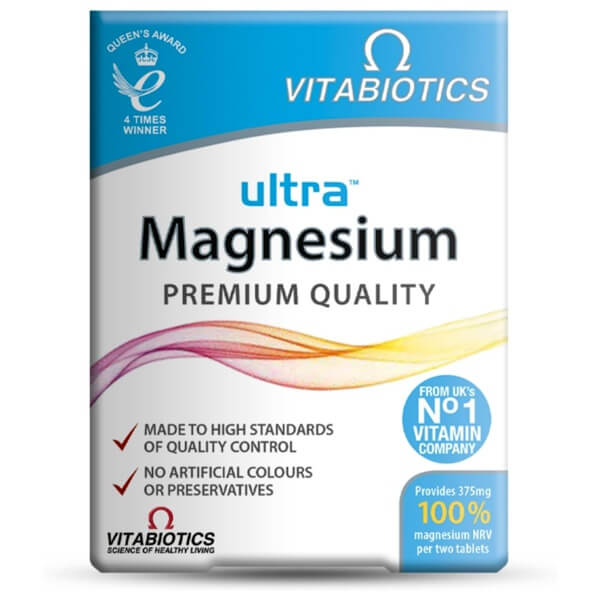
This tablet provides 375mg of magnesium as magnesium hydroxide per 2-tablet serving (100% NRV), comfortably within the UK’s 400mg daily upper safe level for supplemental magnesium. As covered in more detail in our complete magnesium guide, it’s worth knowing that magnesium hydroxide is generally less well absorbed than forms like citrate or glycinate, and is more commonly associated with a laxative effect (it’s the active ingredient in some over-the-counter antacid and constipation remedies) — if digestive comfort or maximum absorption is your priority, citrate or glycinate forms are generally considered better tolerated for that specific purpose, though magnesium hydroxide remains a genuine, functional source of magnesium.
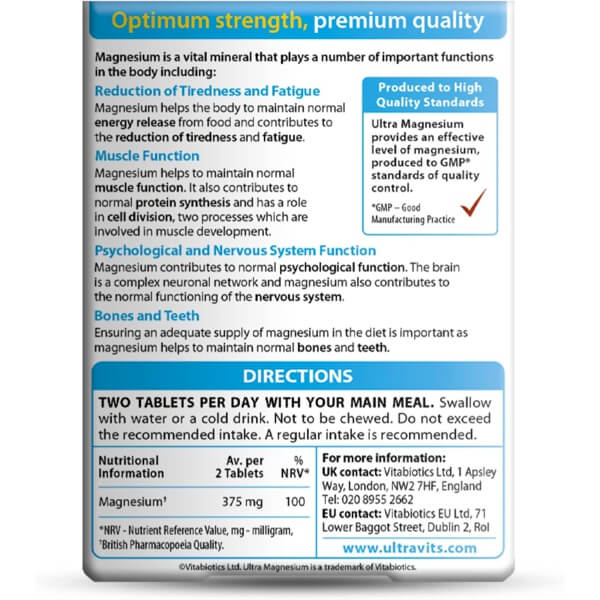
Magnesium has established, EU-authorised roles in normal bone and teeth maintenance, nervous system function, cell division, protein synthesis, electrolyte balance, energy release, muscle function, and psychological function — all genuine, accurately reflected in this product’s claims.
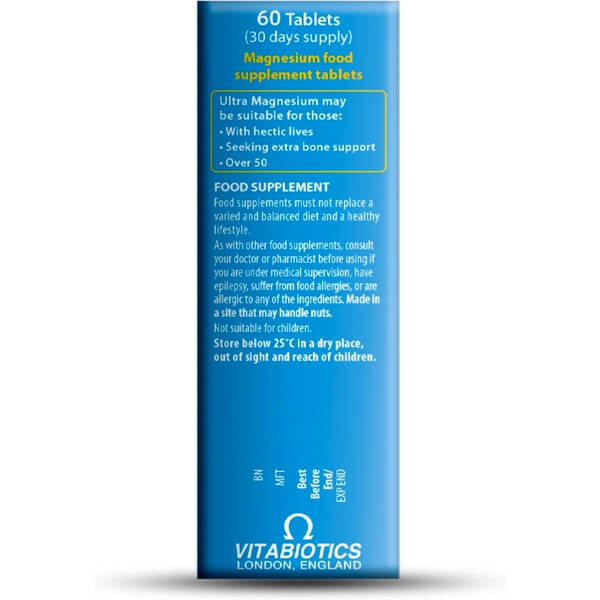
Two safety points worth adding: if you have kidney disease, check with your GP before starting, since impaired kidneys are less able to clear excess magnesium. If you take bisphosphonate medication (commonly prescribed for osteoporosis) or certain antibiotics, magnesium can significantly reduce their absorption — space doses several hours apart.
This product’s existing epilepsy caution is worth taking seriously and discussing with your GP if it applies to you.
Manufactured in the UK. Made in a site that may handle nuts. Take two tablets daily with your main meal, swallowed whole with water or a cold drink (not chewed). Not suitable for children. Speak to your GP or pharmacist before use if you’re under medical supervision, have epilepsy, kidney disease, take bisphosphonate medication, or have food allergies.
The Research Behind This Product

Supplement Spotlights
Magnesium – The Essential Mineral Powering Your Health and Wellbeing
What magnesium actually does, how citrate and glycinate differ, and how to choose between two popular UK options — including safety notes on bisphosphonates.
Get the Full Guide