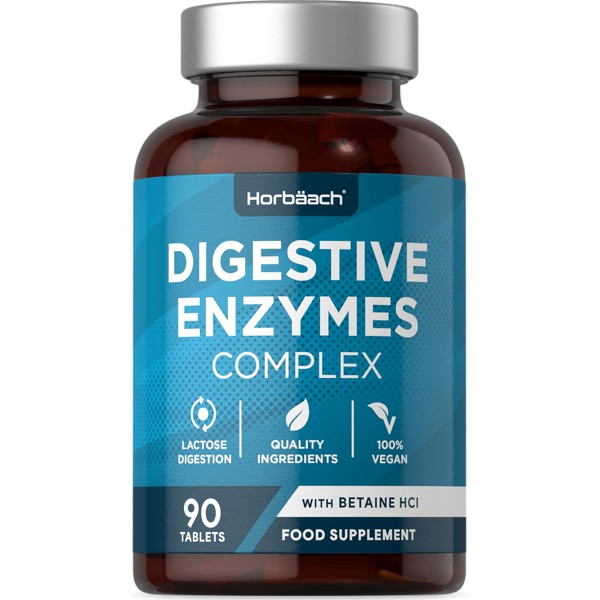
An Important Note on Betaine HCl Specifically
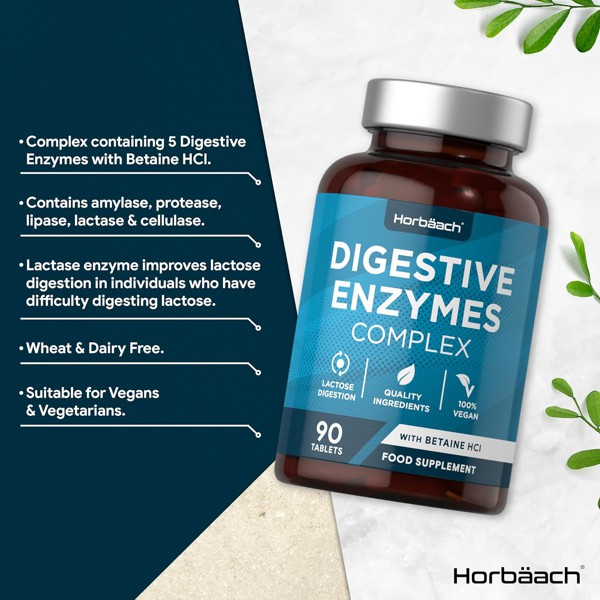
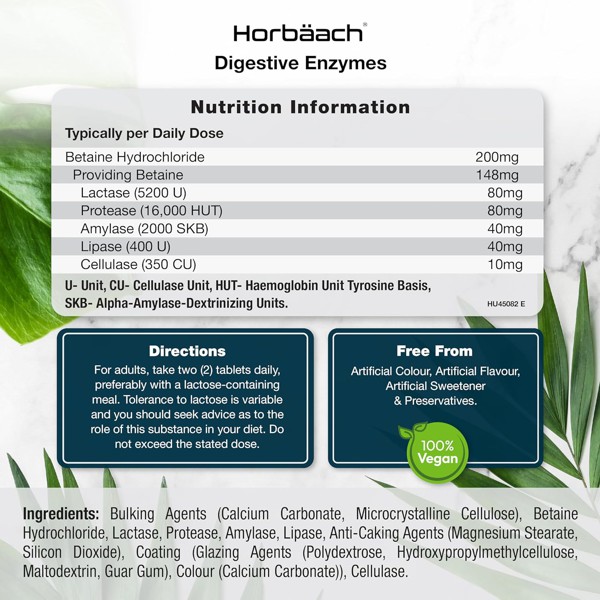
This formula combines two genuinely different types of ingredient. The enzyme blend — amylase (carbohydrates), protease (proteins), lipase (fats), lactase (dairy), and cellulase (plant fibre) — is generally gentle and well tolerated, helping break down specific food components if your body’s natural enzyme production falls short.
Betaine hydrochloride (HCl) is a different matter, and it’s important to be direct about this rather than describing the whole formula as uniformly “gentle.” Betaine HCl is a source of hydrochloric acid, used to temporarily increase stomach acidity in people with genuinely low stomach acid. It has real, specific contraindications: it should not be used by anyone with an active peptic ulcer, gastritis, or oesophagitis, since adding acid to an already irritated stomach or oesophageal lining can cause genuine injury. It should not be combined with NSAIDs (ibuprofen, aspirin, naproxen) or corticosteroids, since these already compromise the stomach’s protective lining, and adding supplemental acid significantly increases the risk of ulceration and gastrointestinal bleeding. It also works directly against acid-reducing medication (PPIs or H2 blockers) if you take these for reflux or similar conditions.
If you have any of these conditions or take any of these medications, this product isn’t appropriate for you as formulated — a plain enzyme blend without Betaine HCl would be the more suitable choice. Tablets should always be swallowed whole with food, never crushed or chewed, and never taken on an empty stomach.
General claims about improved energy, mental clarity, or vitality from digestive enzyme use go beyond what’s specifically established for enzyme supplementation, and are best read as a possible secondary effect of better digestion rather than a direct, guaranteed benefit. Digestive enzymes generally play a more specific role in food-related bloating than in managing diagnosed IBS broadly, which involves a wider range of factors worth discussing with your GP if symptoms are persistent.
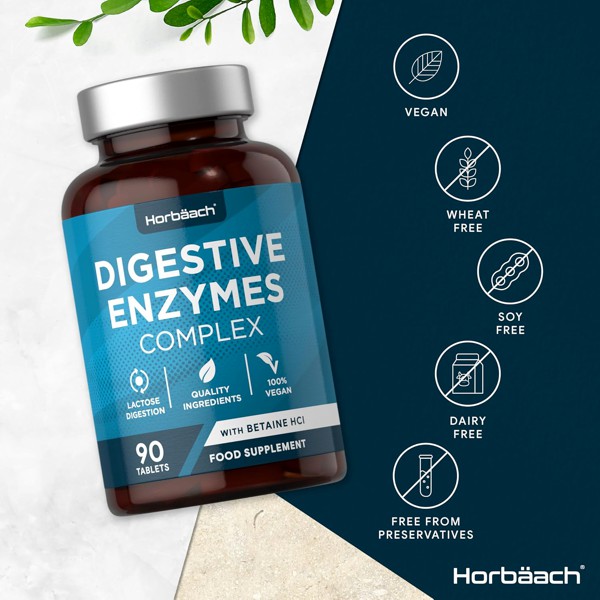
Vegan, gluten-free, dairy-free, non-GMO, and free from artificial preservatives. Take two tablets daily with a meal. Speak to your GP before starting if you have an active ulcer, gastritis, reflux, take NSAIDs, corticosteroids, or acid-reducing medication, are pregnant or breastfeeding, or have any other existing health condition.
The Research Behind This Product
Gut Health & Digestive Wellness
Digestive Extras: Psyllium, ACV, Charcoal and More Explained
Psyllium, digestive enzymes, peppermint oil, apple cider vinegar and activated charcoal all get filed under "digestive support," but each carries its own specific safety profile. One of them — activated charcoal — comes with a timing rule genuinely worth understanding properly, not skimming.
Get the Full Guide