CoQ10: Benefits and Uses
Your energy levels drop. Mid-afternoon crashes become routine. Climbing stairs feels harder than before.
These changes often start after 40. The reason? Your body produces less Coenzyme Q10 (CoQ10). From around 20 years of age, natural ability to produce CoQ10 begins to decline.
This molecule powers your cells, especially in your heart. The decline explains why fatigue increases with age. Supplementation helps restore what time takes away.
What Is Coenzyme Q10?
CoQ10 is a fat-soluble essential nutrient found in nearly every cell. Your body naturally produces this vitamin-like compound for two essential functions:
Energy production: CoQ10 works in your mitochondria, converting food into energy. CoQ10 and its active form ubiquinol help produce over 95% of the energy in cells, promoting ATP production in the inner membrane of mitochondria. Low levels mean inefficient energy production.
Antioxidant protection: CoQ10 shields cells from free radical damage. This protection slows ageing and disease progression. Ubiquinol is widely known as one of the most known antioxidants, defending cells from the potentially harmful over-accumulation of free radicals and oxidative stress.
Your heart, liver, kidneys, and muscles contain the highest concentrations. The high energy requirements of muscles – such as the heart muscle – mean that greater concentrations of mitochondria are found in muscles and, therefore, CoQ10.
Types of CoQ10: Ubiquinone vs Ubiquinol
Supplements offer two forms:
Ubiquinone is the oxidised form. Most supplements contain this version because production costs less and stability is higher.
Ubiquinol is the reduced, active form your body uses directly. The body must convert ubiquinone into ubiquinol before it performs essential antioxidant functions. After age 40, the body doesn’t convert ubiquinone (CoQ10) into ubiquinol as efficiently.
Important Note on Absorption
“Ubiquinol is often billed as being the ‘most absorbable’ active form of CoQ10, but that’s not really an important characteristic,” explains registered dietitian Devon Peart from Cleveland Clinic. “There are a few factors that contribute to how your body absorbs CoQ10, and it’s a complex process.”
Current studies note no significant difference between ubiquinol and ubiquinone regarding absorption.
However, research shows Kaneka Ubiquinol® is two times better absorbed than conventional CoQ10 supplements, with 200mg taken for 30 days resulting in approximately eight times increase in blood levels.
Table could not be displayed.Health Benefits of CoQ10
Heart Health
CoQ10’s most established benefit supports cardiovascular function. Your heart demands the most energy, storing the highest CoQ10 concentration.
Heart failure has been defined as a global pandemic leading to millions of deaths. Recent research clearly approved the beneficial effect of Coenzyme Q10 supplementation in treatment and prevention of cardiovascular disease in patients with heart failure.
Our findings go along with the biochemical description of CoQ10 and CoQH2, recording cardiovascular benefits for CoQ10 and antioxidative and anti-inflammatory properties for CoQH2.
A meta-analysis of data from 33 randomised controlled trials established that supplementation significantly improves moderate to severe heart failure. Combined with conventional therapy, CoQ10 improved 2-year survival rates, enhanced heart function, and reduced hospitalisation rates.
Important Note on Evidence
However, no conclusive evidence supports or refutes the use of CoQ10 for people with heart failure. More research is still needed.
Research shows CoQ10 supplementation helps support healthy blood pressure, improve symptoms in people with heart failure, and reduce statin-related muscle pain.
CoQ10 and Statin Medications
Statin medications deplete natural CoQ10 by up to 40%. Cholesterol-lowering treatments are known to deplete CoQ10 in the body, so health care practitioners often recommend taking CoQ10 supplements.
People often take CoQ10 to offset a decline in natural levels that occurs with the use of statin medication (although it remains uncertain if CoQ10 reduces side effects of statins).
Many patients report significant improvement when adding CoQ10 to their regimen.
Energy & Fatigue
CoQ10 addresses fatigue at the cellular level. Without the support of CoQ10, the cell is compromised and cannot function correctly, which affects the health of tissues and organs.
CoQ10 helps generate energy in cells by making the antioxidant adenosine triphosphate (ATP), which is involved in cell energy transfer. The compound helps produce over 95% of cellular energy.
This approach differs from caffeine. CoQ10 upgrades your energy production system rather than temporarily stimulating alertness.
A 12-week treatment with CoQ10 (150 mg/day) was beneficial for improving sleep quality and autonomic nervous dysfunction as well as better performance on arithmetic tasks.
Skin & Ageing
Your skin faces constant oxidative stress from UV rays and pollution. Harmful elements like cellular damage or a hormonal imbalance can lead to reduced skin moisture and protection from environmental aggressors, as well as the thinning of the layers of the skin.
CoQ10 protects cells from oxidative stress and damage, with anti-inflammatory properties.
Studies suggest CoQ10 may:
- Reduce fine lines and wrinkles
- Support skin firmness and elasticity
- Protect skin from UV damage (supplement to sunscreen, never a replacement)
Brain & Cognitive Function
Ageing increases oxidative stress in the brain. Mitochondrial function tends to decrease with age, which can lead to the death of brain cells and contribute to conditions like Alzheimer’s and Parkinson’s.
A combination of CoQ10 and shilajit showed a 56% increase in energy production in the brain.
The antioxidant properties help protect brain cells from damage, supporting cognitive performance as you age.
Athletic Performance
CoQ10 and ubiquinol support energy production in the mitochondria of cells. In a 26-week double-blind placebo trial, ubiquinol helped support healthy sperm quality.
Another trial found CoQH2 (300 mg/day for 6 weeks) improved aerobic performance of trained athletes.
Fertility Support
Female fertility decreases with age due to a decline in the number and quality of available eggs. CoQ10 is directly involved in this process. As you age, CoQ10 production slows, making the body less effective at protecting the eggs from oxidative damage.
Male fertility is also susceptible to oxidative damage, which may result in reduced sperm count, poor sperm quality, and infertility. Several studies suggest supplementing with CoQ10 may improve sperm activity and concentration by increasing antioxidant protection.
Who Should Consider Taking CoQ10?
Certain groups benefit most:
People over 40: Natural CoQ10 production begins to decline from around 20 years of age, and the body’s ability to convert ubiquinone into ubiquinol decreases with age.
Statin users: Statins deplete CoQ10 availability in cells, explaining increased fatigue when taking the medication.
Those with cardiovascular concerns: People with heart conditions or high blood pressure benefit from cardioprotective effects.
People experiencing fatigue: CoQ10 boosts energy at the cellular level.
Athletes: Performance and recovery benefits.
Fertility concerns: Both male and female fertility support.
CoQ10 Dosage and How to Take
Studies related to heart health typically use doses of 100 to 400 mg per day, while doses ranging from 600 to 3,000 mg have been used to treat some neurodegenerative disorders.
200 mg twice daily with food is considered the average dosage needed to maintain therapeutic blood levels of CoQ10 for most people.
Dosage Guidelines:
- Standard preventive dose: 100-200mg daily
- Specific health concerns: 200-400mg daily (sometimes higher under medical supervision)
- Statin users: 100-200mg daily
- Athletes: 300mg daily for performance enhancement
- Therapeutic doses: Up to 600-3,000mg for specific conditions (medical supervision required)
“A pretty typical dose for CoQ10 is 100 milligrams per day, but right now, there’s no established ideal dose. Your recommended dosage will also depend on what you are using this for.” – Devon Peart, RD, Cleveland Clinic
For Optimal Absorption:
Take with meals containing healthy fats: CoQ10 is fat-soluble, so taking with food containing fats helps your body maximize absorption.
Consider ubiquinol form if over 40: The body’s conversion efficiency declines with age.
Split larger doses throughout the day: For better utilisation.
Safety Profile
Plasma levels of total CoQ10 averaging 4.4–8.0 mcg/mL were reported safe over five years. CoQ10 at 2,400 mg/day for 60 weeks is safe, as is CoQH2 at 1,500 mg/day for 48 weeks.
Immunity & Antioxidants
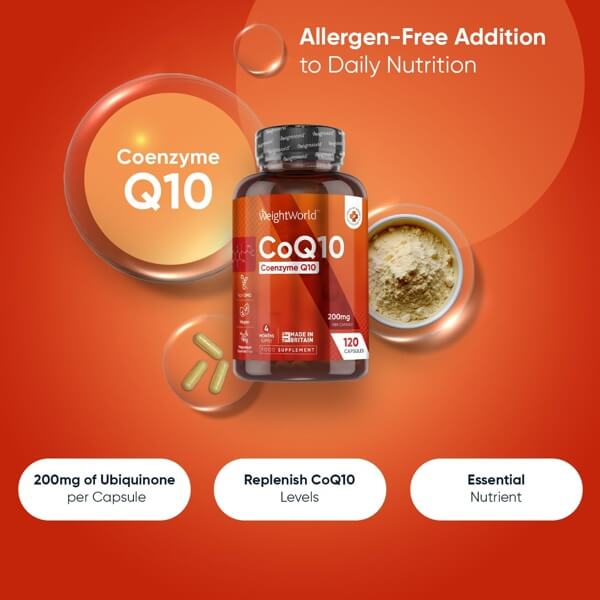
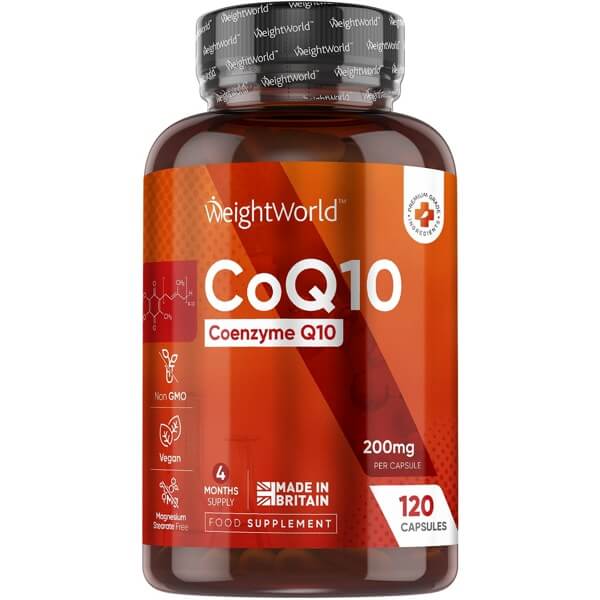
CoEnzyme Q10 200mg 120 High Absorption Capsules by WeightWorld
200mg CoQ10 vegan capsules by WeightWorld. 4-month supply supports heart health and energy. UK-made, gluten-free, non-GMO. GMP-certified quality.
Side Effects and Interactions
CoQ10 is well-tolerated and is not associated with any serious side effects.
“The safety of CoQ10 supplementation hasn’t been well established yet. We are operating under the assumption that the substance is safe to take, unless and until we discover otherwise.” – Devon Peart, RD
Some people experience:
- Mild digestive discomfort
- Insomnia if taken late in the day
- Mild headaches
- Rashes (uncommon)
Side effects are uncommon and usually minor. They’re more likely if supplementing at high levels.
CoQ10 Interacts with Certain Medications:
Blood thinners: CoQ10 has mild blood-thinning effects, potentially enhancing warfarin.
Blood pressure medications: CoQ10 may lower blood pressure, possibly causing levels to go too low when combined with antihypertensive drugs.
Insulin and diabetes medications: CoQ10 might improve insulin sensitivity, affecting blood sugar levels.
Consult your GP before starting CoQ10 if you take prescription medications or have existing health conditions.
Best CoQ10 Supplements in the UK (2025 Picks)
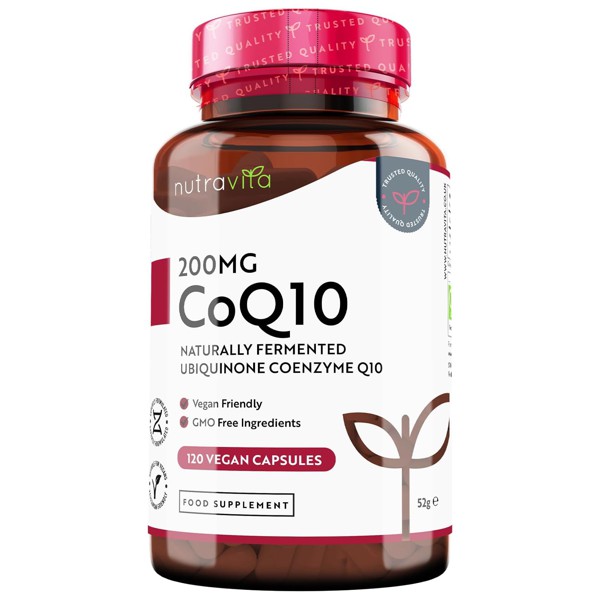
Nutravita CoQ10 200mg – 120 Capsules
Why we recommend this:
- High-potency 200mg ubiquinone
- 4-month supply (excellent value)
- Manufactured in the UK to GMP standards
- Vegan-friendly and allergen-free
- Naturally produced by fermentation
Immunity & Antioxidants
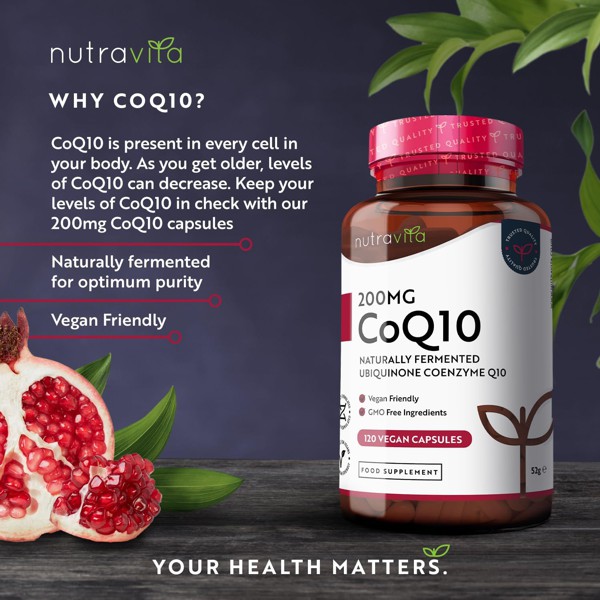
CoEnzyme Q10 200mg Fermented Ubiquinone 120 Capsules by Nutravita
Discover our premium 200mg CoQ10 supplement featuring naturally fermented ubiquinone for optimal absorption. Each bottle provides 120 vegan capsules - a full 4-month supply. Manufactured in the UK to strict quality standards, our CoEnzyme Q10 supports heart health, energy production, and antioxidant protection.
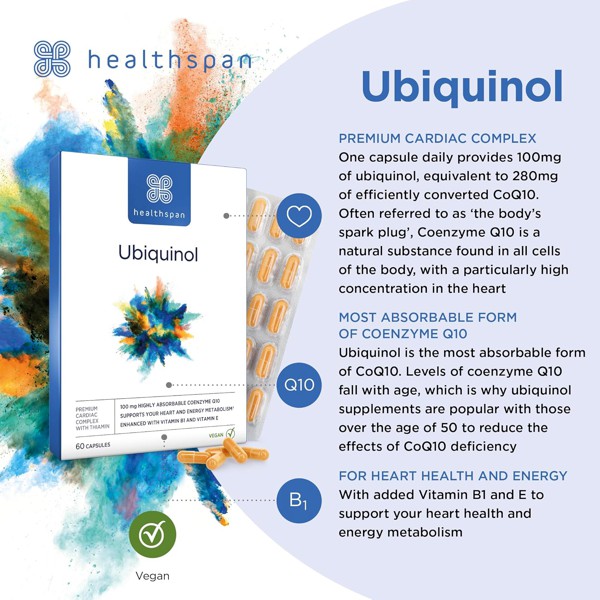
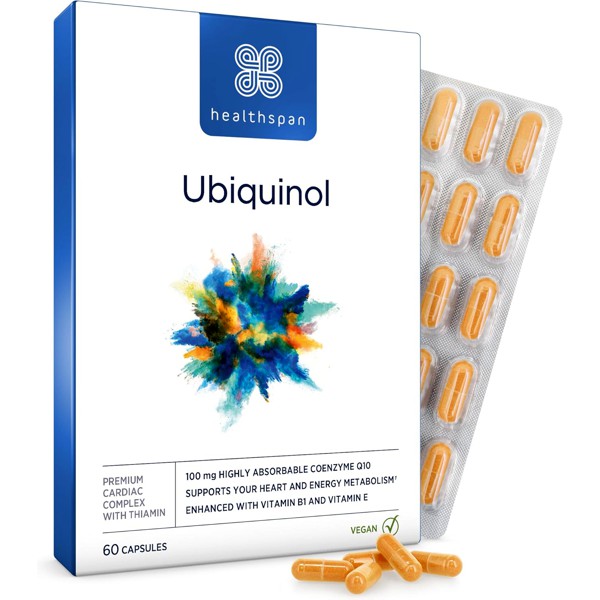
Healthspan Ubiquinol 100mg – Optimal Absorption
Why we recommend this:
- Contains active ubiquinol form (ideal for over-40s)
- Enhanced absorption formula with vitamin B1
- 100mg ubiquinol equivalent to 280mg of CoQ10
- Made in the UK with quality guarantees
- Trusted brand with excellent customer reviews
- Suspended in sunflower seed oil for maximum absorption
Immunity & Antioxidants
Ubiquinol 100mg Coenzyme Q10 with Vitamin B1 60 Capsules by Healthspan
Highly absorbable Ubiquinol - the active form of CoQ10 - supports heart health, energy production, and cellular vitality. Our vegan formula combines 100mg Ubiquinol with Vitamin B1 for enhanced cardiovascular function and natural energy metabolism. Ideal for adults 40+ and those on statins.
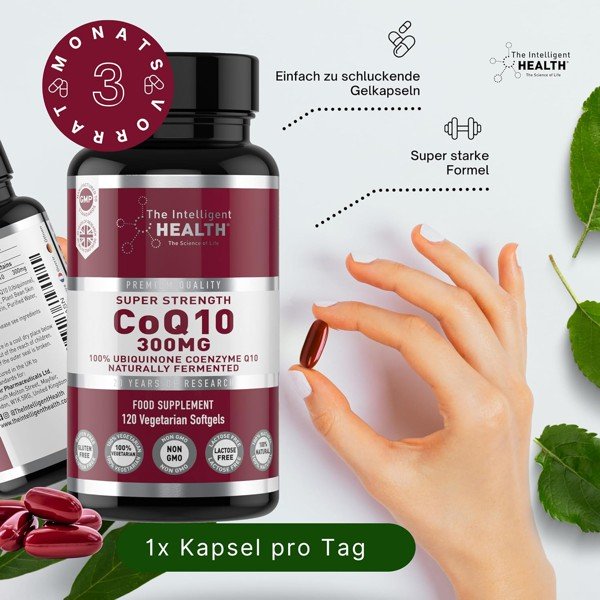
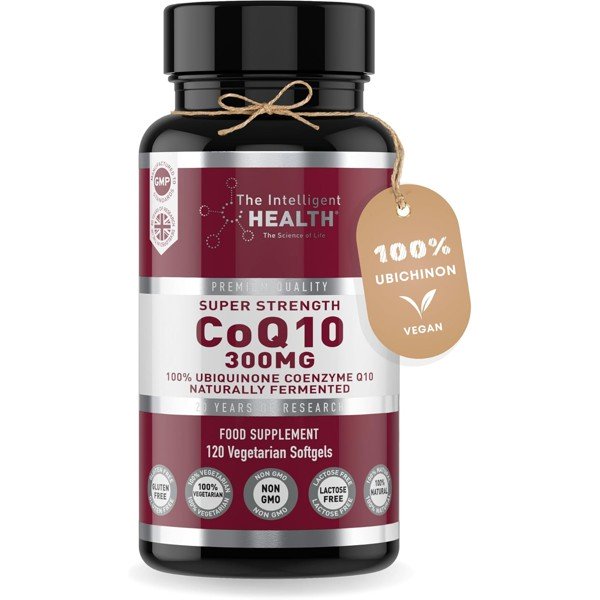
The Intelligent Health Ubiquinone 300mg – High Absorption
Why we recommend this:
- Super strength 300mg dose in high-absorption softgel format
- Naturally fermented, vegan-friendly formula
- Made in the UK to GMP standards
- 120 capsules for excellent value and long-term use
Immunity & Antioxidants
Ubiquinol High Absorption 300mg CoQ10 by The Intelligent Health
Our Ubiquinol High Absorption supplement delivers CoQ10 in its most bioavailable form, providing cardiovascular support and cellular energy production. Each vegan capsule contains 100mg ubiquinol (equivalent to 280mg standard CoQ10) plus Vitamin B1 for enhanced metabolism. Ideal for adults over 40, statin users, or anyone seeking increased energy and heart health support.
Tips for Choosing a CoQ10 Supplement
Select the best supplement this way:
Consider your age: If over 40, ubiquinol offers benefits as the body’s ability to convert ubiquinone declines with age. However, current studies note no significant difference between forms regarding absorption.
Check the formulation: Look for oil-based softgels or formulations containing black pepper extract (piperine). Evidence suggests the body absorbs ubiquinol best when dissolved in quality vegetable oil.
Verify quality: Choose brands with third-party testing, Good Manufacturing Practice (GMP) certification, and UK manufacturing.
Consider value: Compare cost per daily dose rather than bottle price.
Compatibility: Check for vegetarian/vegan capsules and allergen information.
Production method: CoQ10 created using fermentation method makes this naturally sourced and the highest quality available.
Important Limitations to Understand
CoQ10 may modestly lower elevated cholesterol levels, reduce migraine, and improve energy levels, although the evidence for these uses remains preliminary or mixed.
Like other supplements, CoQ10 has been studied for all kinds of reasons, including many not listed here. But research is limited, and there’s no conclusive evidence to show that the supplement has any other benefits.
“Most people don’t need CoQ10 supplements, but CoQ10 may be able to help if you live with migraines or heart disease.” – Cleveland Clinic
Strong Evidence Exists For:
- Cardiovascular support (particularly with heart failure)
- Energy production at cellular level
- Antioxidant protection
- Safe long-term use
Evidence is Preliminary or Mixed For:
- Statin side effect reduction (uncertain)
- Cholesterol level reduction (modest)
- Migraine reduction (preliminary)
- Athletic performance (mixed results)
Final Thoughts
The substantial body of clinical trial evidence strongly supports the use of CoQ10 – whether in the form of CoQ or CoQH2 – for people with plasma CoQ10 levels below 1 mcg/mL, as well as for a range of conditions, including low energy, mitochondrial disease, inflammation, infections, toxin exposure, and declining organ function.
CoQ10 offers substantial scientific backing for cardiovascular health, energy production, and cellular protection. Adults over 40 benefit from supplementation to offset natural decline.
Whether supporting heart health, boosting energy levels, or addressing specific conditions, CoQ10 offers benefits with minimal risk when used appropriately.
Consult your healthcare provider before starting CoQ10, especially if taking medication or having existing health conditions. Supplements work best as part of a comprehensive approach including nutritious diet, regular physical activity, quality sleep, and stress management.